Springs · Whitby
Garage Door Track Repair or Replacement in Whitby
You bought the house with a door that sticks near the top of its travel.
In plain words
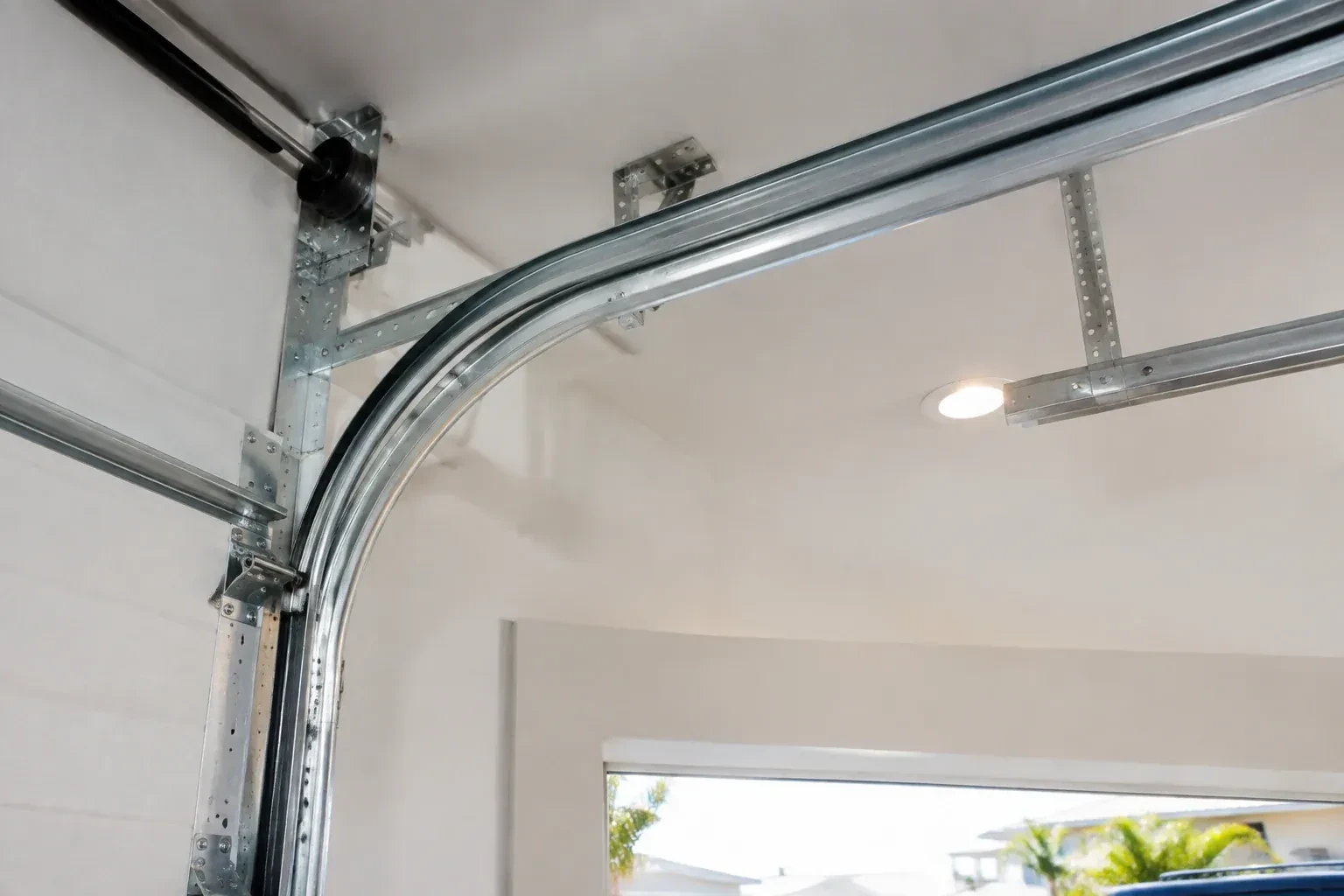
Vertical track is fixed to the jamb in one of two ways, and the assessment begins by reading which one your door has. Bracket-mounted track hangs on a few L-shaped jamb brackets, each lag-screwed into the wood, and can be shifted a little at each bracket to set spacing and plumb. Angle-mounted track uses a full-height continuous angle and is common where sideroom is tight. Either way the vertical run ends at a flag bracket that also carries the horizontal track and, on a torsion door, the spring shaft bearing. Track repair works with those fixings, tightening, replacing or repositioning them so the run sits true.
How the visit goesHalfway up, the door lurches and one roller rides onto the lip of the channel. Near the curve the track looks wider than the rest, and the door hesitates in the same place on the way down.
Garage Door Track Repair or Replacement
How the visit goes
Reading the track system
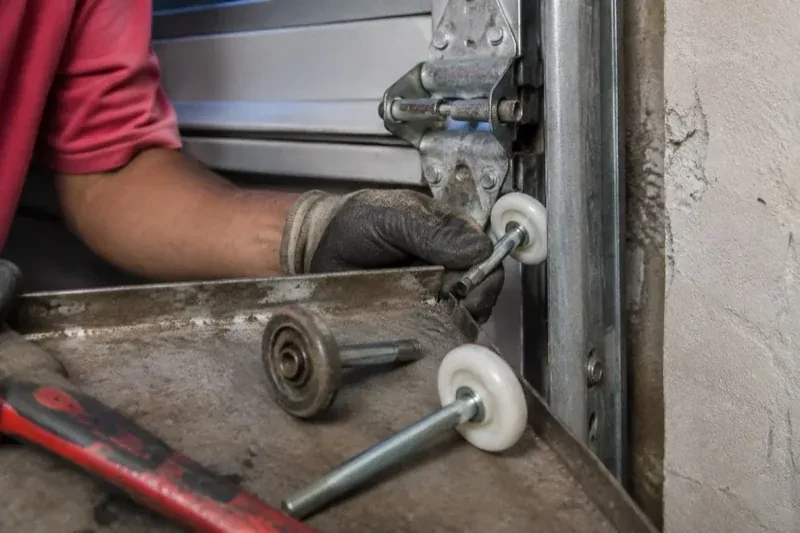
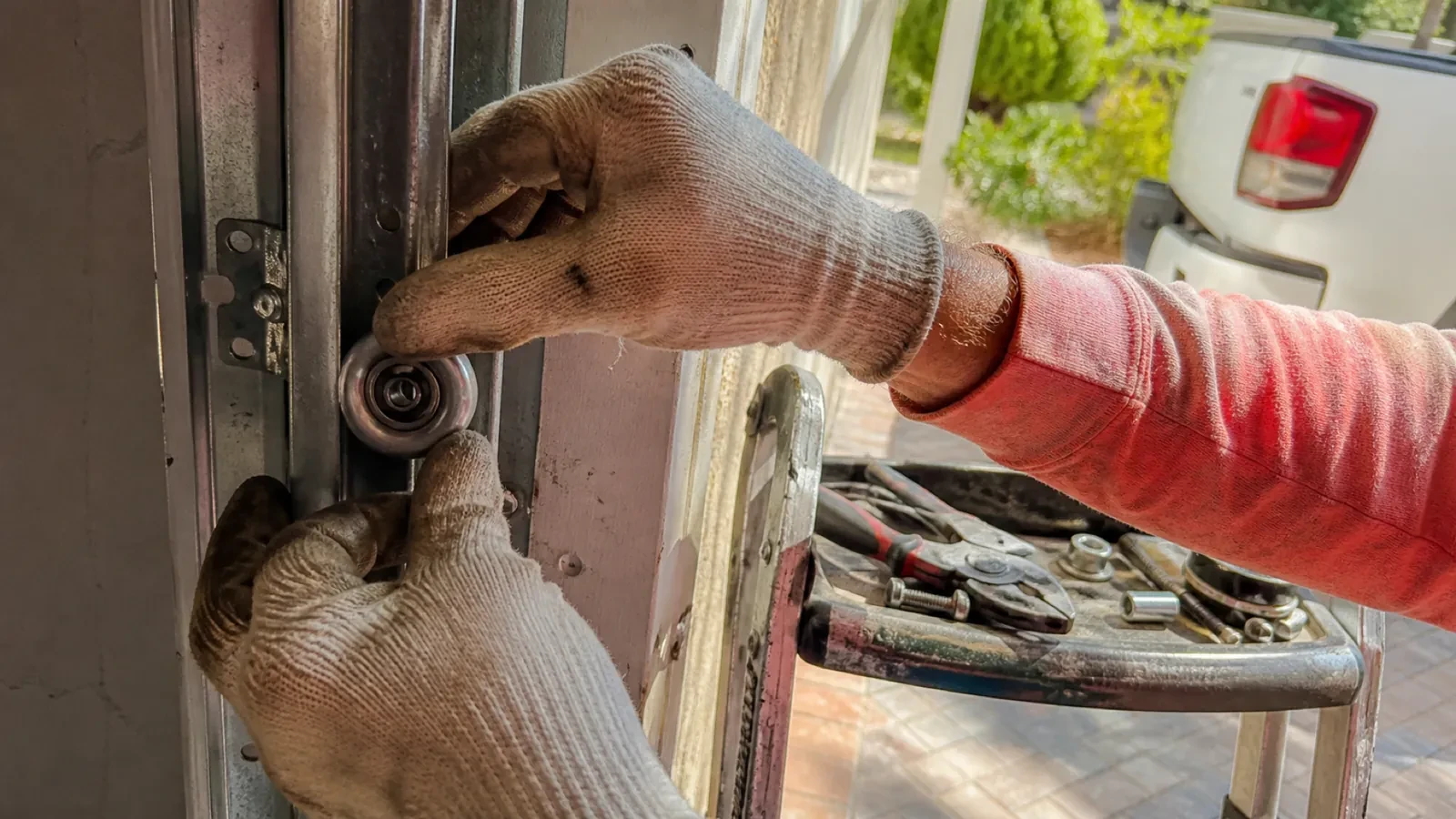
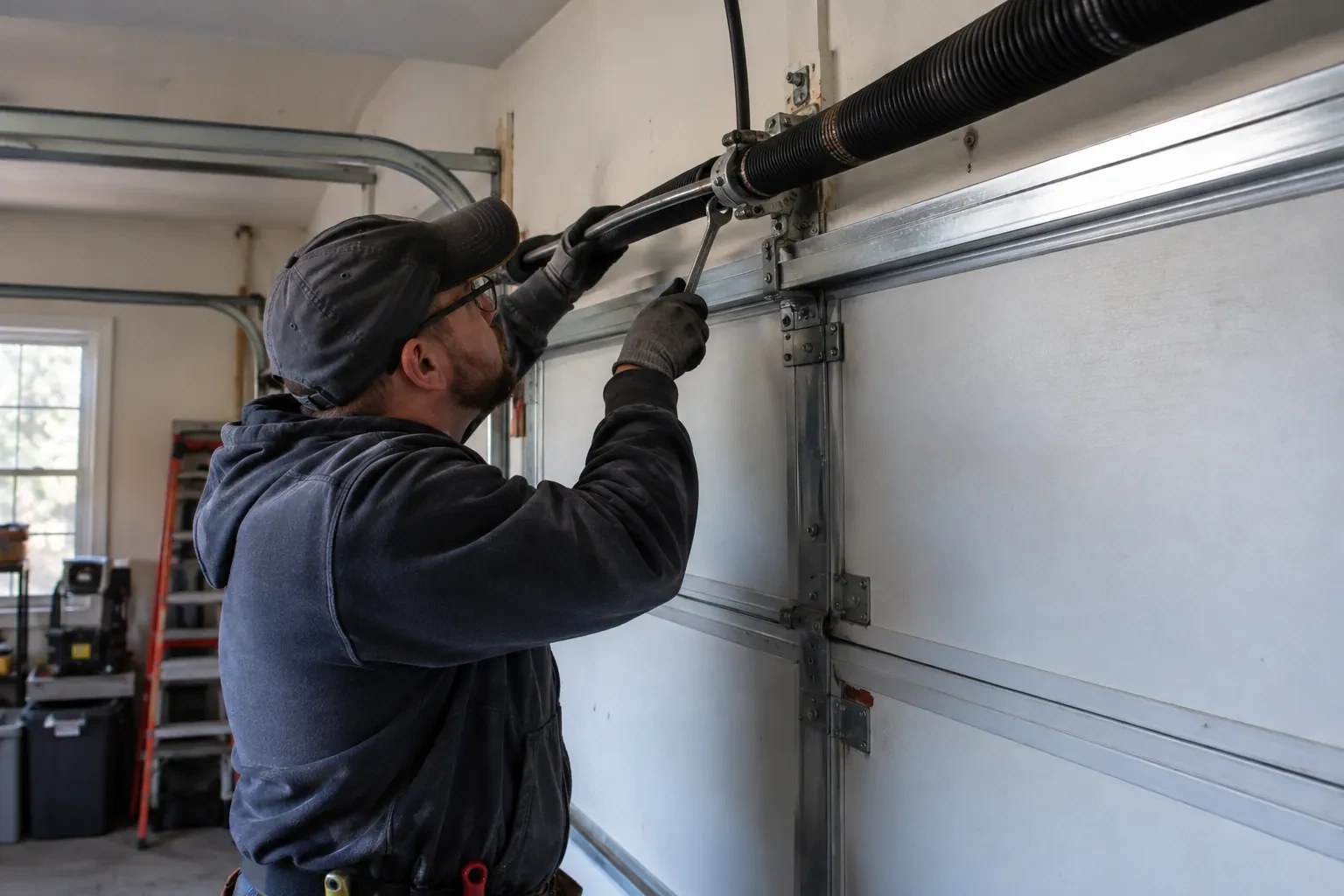
Track comes in families, and the replacement parts have to belong to the same one. The technician notes the profile, two-inch on nearly all residential doors and three-inch on some heavy ones, and the radius of the curve, typically 12 or 15 inches, which sets how much headroom the door uses. The layout is identified as standard lift, low-headroom dual track or high lift, and the vertical run as bracket-mounted or on a continuous angle. The spring type matters too, since a torsion shaft bearing usually rides on the flag bracket at the top of the vertical track. These details decide what is ordered and how the work is sequenced.
Setting the geometry
With the pieces in place, the technician sets the track to the door rather than to the wall. Each vertical run is plumbed, the gap to the door edge is matched side to side, and the top of each run is eased away from the jamb by the small amount that lets the door seal at the stop when closed and release on opening. The horizontal runs are levelled to each other and squared to the verticals, and the distance between the two tracks is checked at the floor, at the curve and at the rear so the door is neither pinched nor loose anywhere in its travel. Every bracket is then tightened in that position.
The record of the track profile and layout
Before leaving, the technician tells you what the door runs on: two-inch or three-inch track, the radius of the curve, whether the layout is standard, low-headroom or high lift, and which pieces were straightened or replaced. Write it inside the cover of the door manual or on a card by the opener. Any future part, a roller, a hinge, a section of track, is then ordered to match rather than measured from scratch, and a technician years from now can read at a glance how the door was set up. If the jamb was repaired or a hanger moved to a joist, that goes on the same note.
Garage Door Track Repair or Replacement
In the van
Jamb brackets or continuous angle
Winding bars and track clamps
Horizontal track with curve
Replacement rollers and hinges
Track pliers and dead-blow hammer
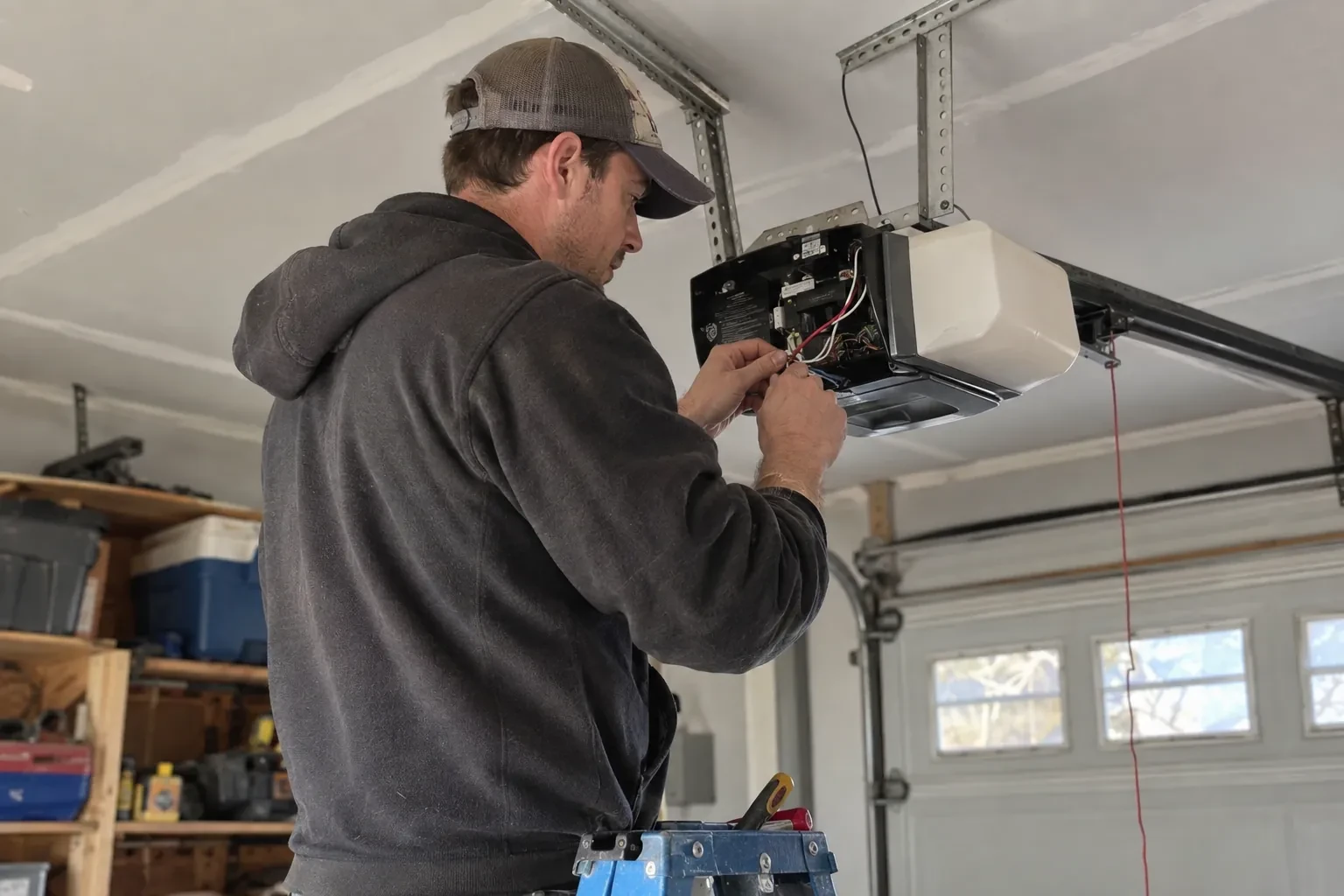
Garage Door Track Repair or Replacement
What affects the quote
Straighten or replace, piece by piece
A dent dressed in place is labour only, while a kinked, cracked or rusted length means a new piece of track. The quote lists which pieces get which treatment.
Springs that have to be unloaded
Work at the flag bracket or on the curve means winding the torsion springs down and back up. That adds time, and the quote says whether it applies to your repair.
Condition of the jamb wood
Where the jamb is soft or split at the floor, sistering or replacing the lower length is carpentry added to the track work, and the lumber and fasteners are listed on their own line.
What to have ready
- Is it a single or a double door, and roughly how tall?
- Do you have the door's manual or a label with its model?
- Is anything stored against or hung from the overhead track?
Garage Door Track Repair or Replacement: questions
QuestionsWhat is the track made of, and what sizes are there?
It is galvanized steel folded into a channel that the roller wheels ride in. Residential doors almost always use two-inch track, with three-inch reserved for heavier or wider doors. The curved piece comes in a radius, commonly 12 or 15 inches, that sets how much headroom the door uses. Replacement pieces are ordered to the same profile, gauge and radius as the rest of the set.
How is the vertical track attached to the wall?
Two ways are common. Bracket-mounted track uses several L-shaped jamb brackets, each lag-screwed into the wood jamb, which lets the track be adjusted a little at each bracket. Angle-mounted track bolts to a full-height continuous angle, often chosen where sideroom is tight. In both cases the fasteners bite into the jamb, so the condition of that wood matters as much as the track itself.
Does a heavy insulated door need heavier track?
Usually the standard two-inch track handles a residential insulated door well, provided the gauge matches what the door maker specified and the brackets and hangers are properly fixed. Very heavy or oversized doors, and some carriage-style wood doors, are set up on three-inch track or on heavier-gauge two-inch. If a heavier door was hung on the light track from an earlier door, flexing and spreading follow, and the technician will say so.
Related services
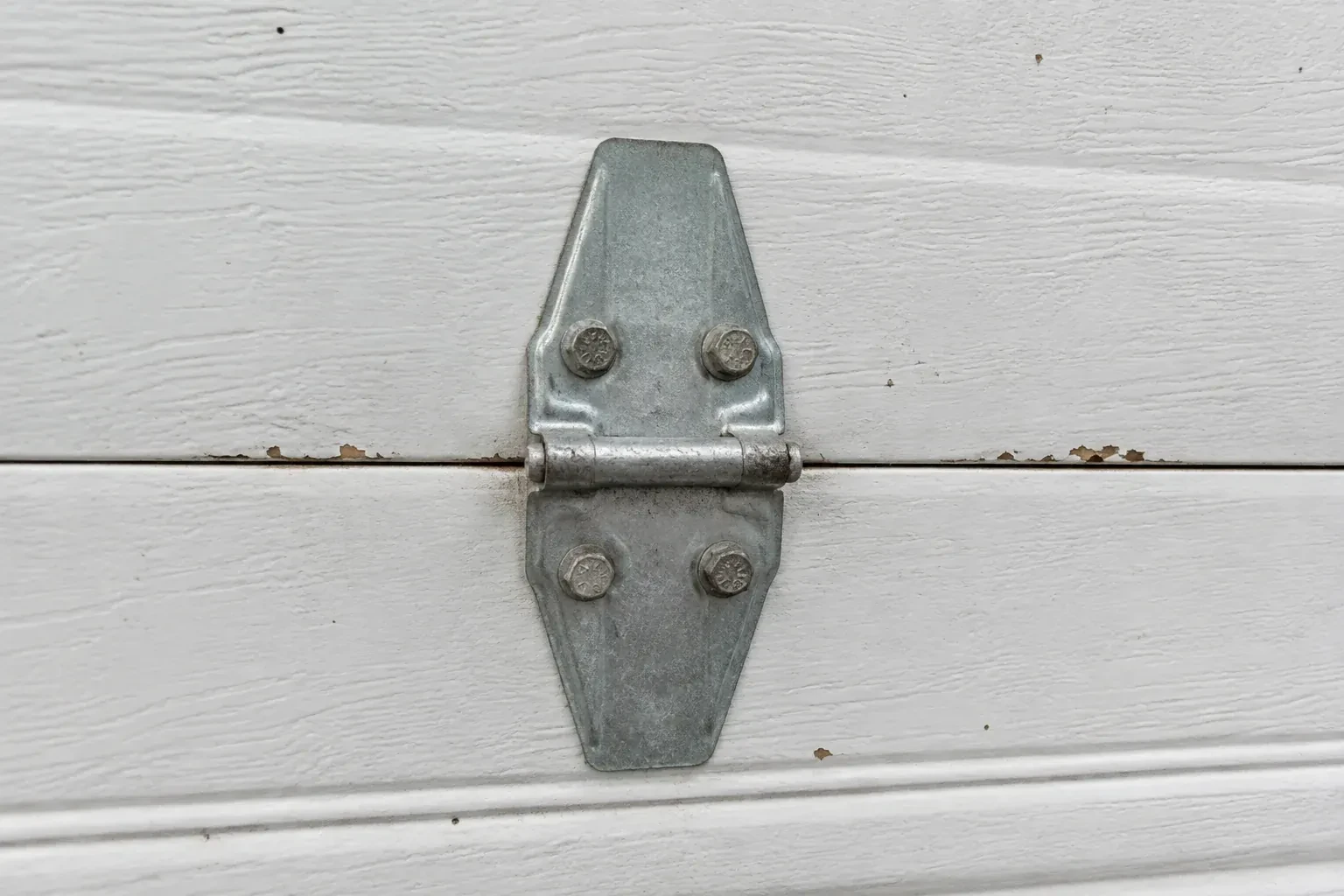
- Garage Door Hinge ReplacementEvery time the door goes up there is a sharp pop from the same spot, about a metre off the floor, and the whole door gives a little shudder.
- Garage Door Cable ReplacementSomeone left the snow shovel leaning in the opening and the door came down on it.
- Torsion Spring ReplacementOn a cold morning the remote does nothing useful: the light comes on, the motor turns briefly, the door stays shut.