New Doors · Whitby
New-Construction Garage Door Installation
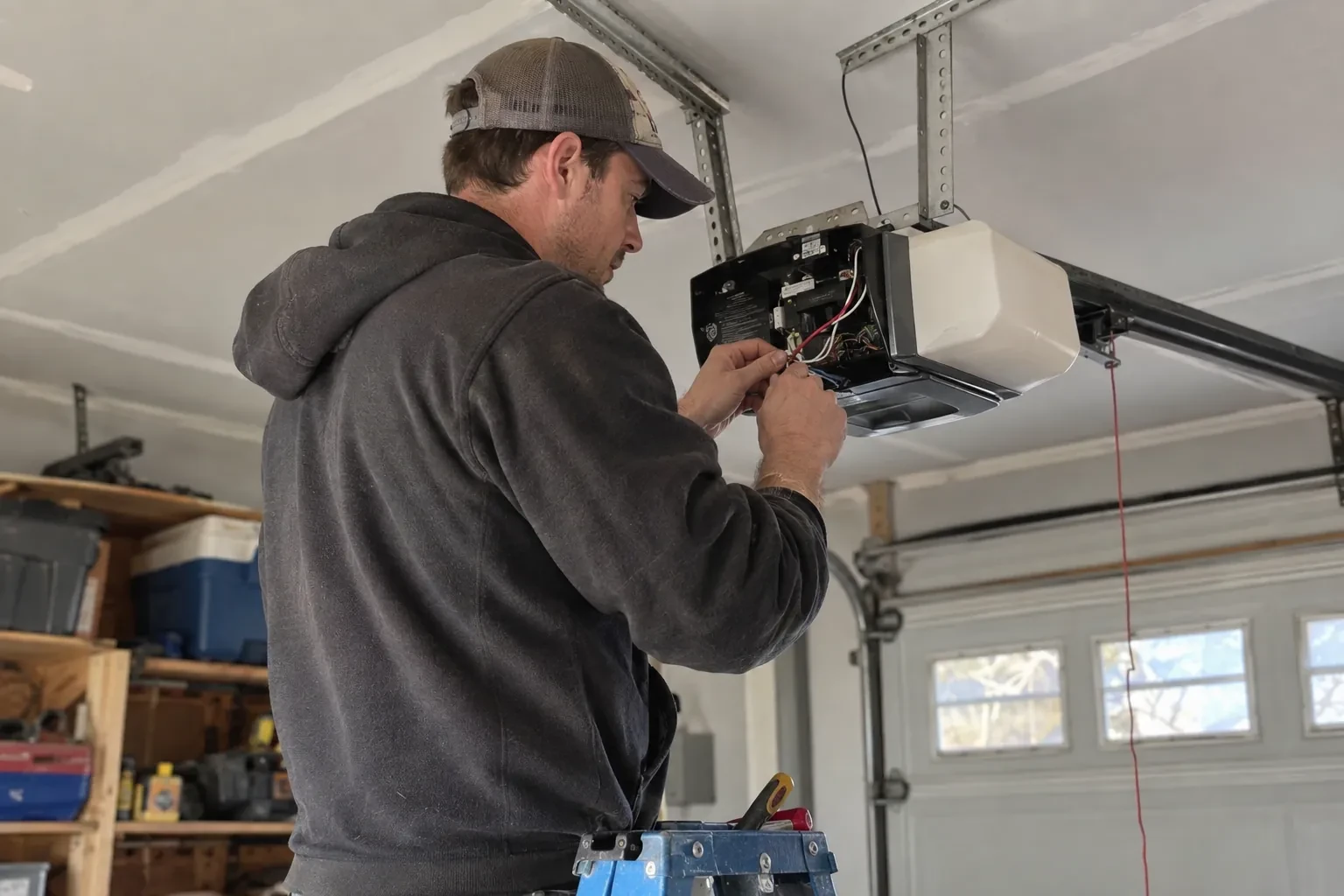
Power and low-voltage wiring are being roughed in while the garage is open.
In plain words
When an electric operator is included, door installation and electrical preparation meet at several points. The ceiling receptacle, operator support, wall control route and sensor locations are confirmed before equipment is mounted. The sectional door itself is assembled, tracked and counterbalanced first, because the motor is intended to move a balanced system. The operator is then connected with appropriate door reinforcement, its travel is set, and the reversal and photoelectric functions are checked during commissioning.
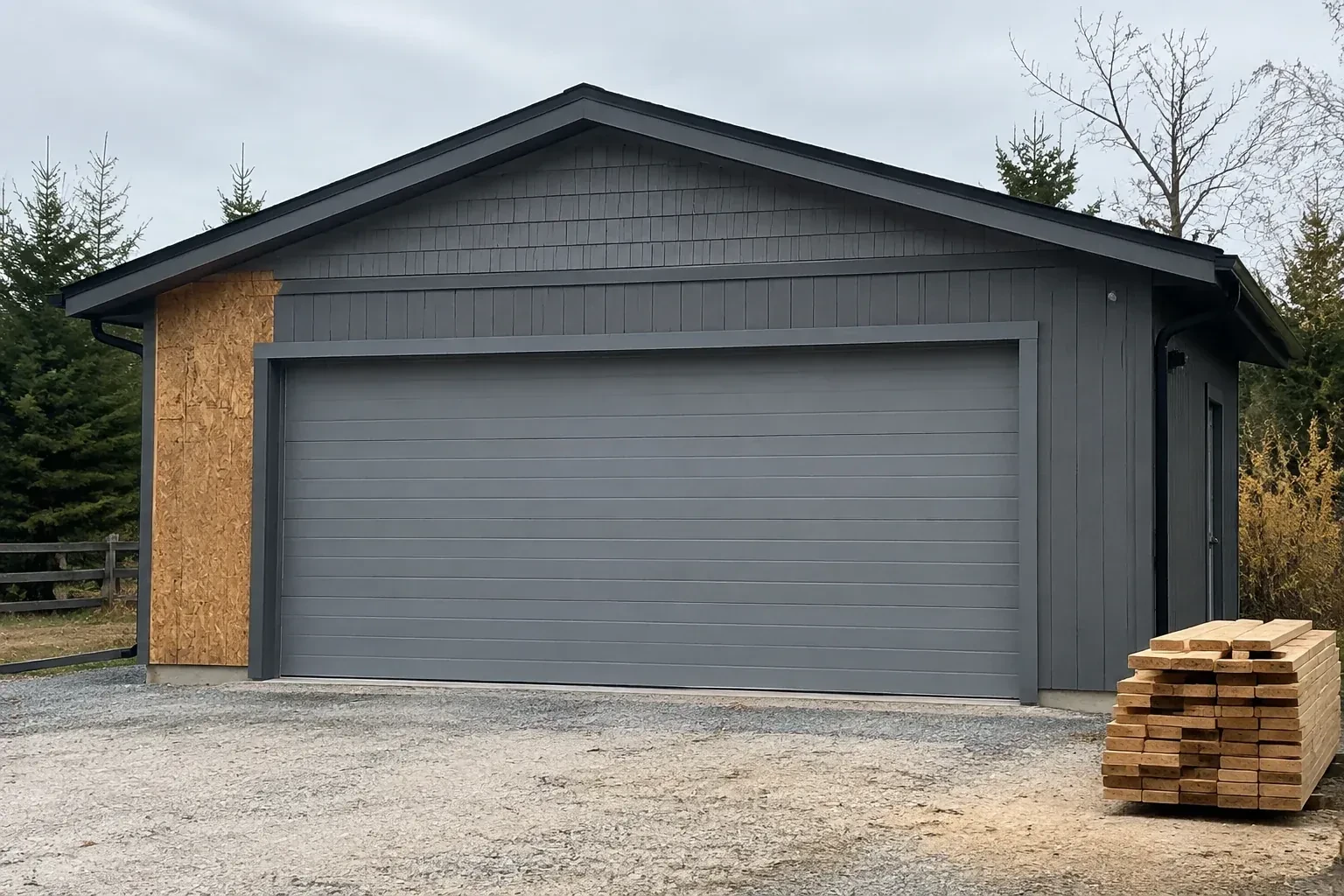
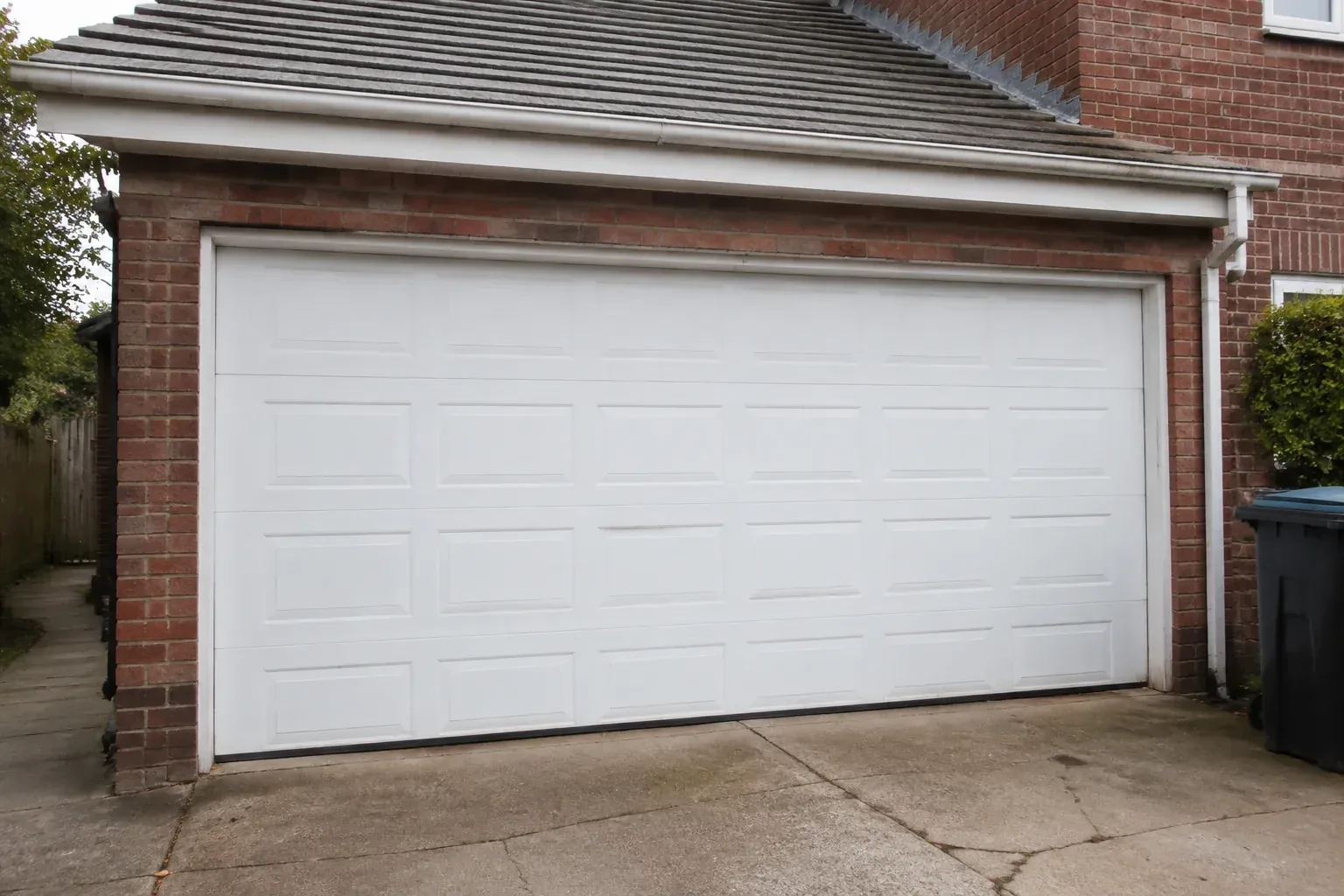
How the visit goesTwo new garage openings sit side by side on the same elevation. Their door sections, window layouts and tracks need consistent alignment while each system remains properly matched to its own size and weight.
New-Construction Garage Door Installation
How the visit goes
Measuring the finished opening
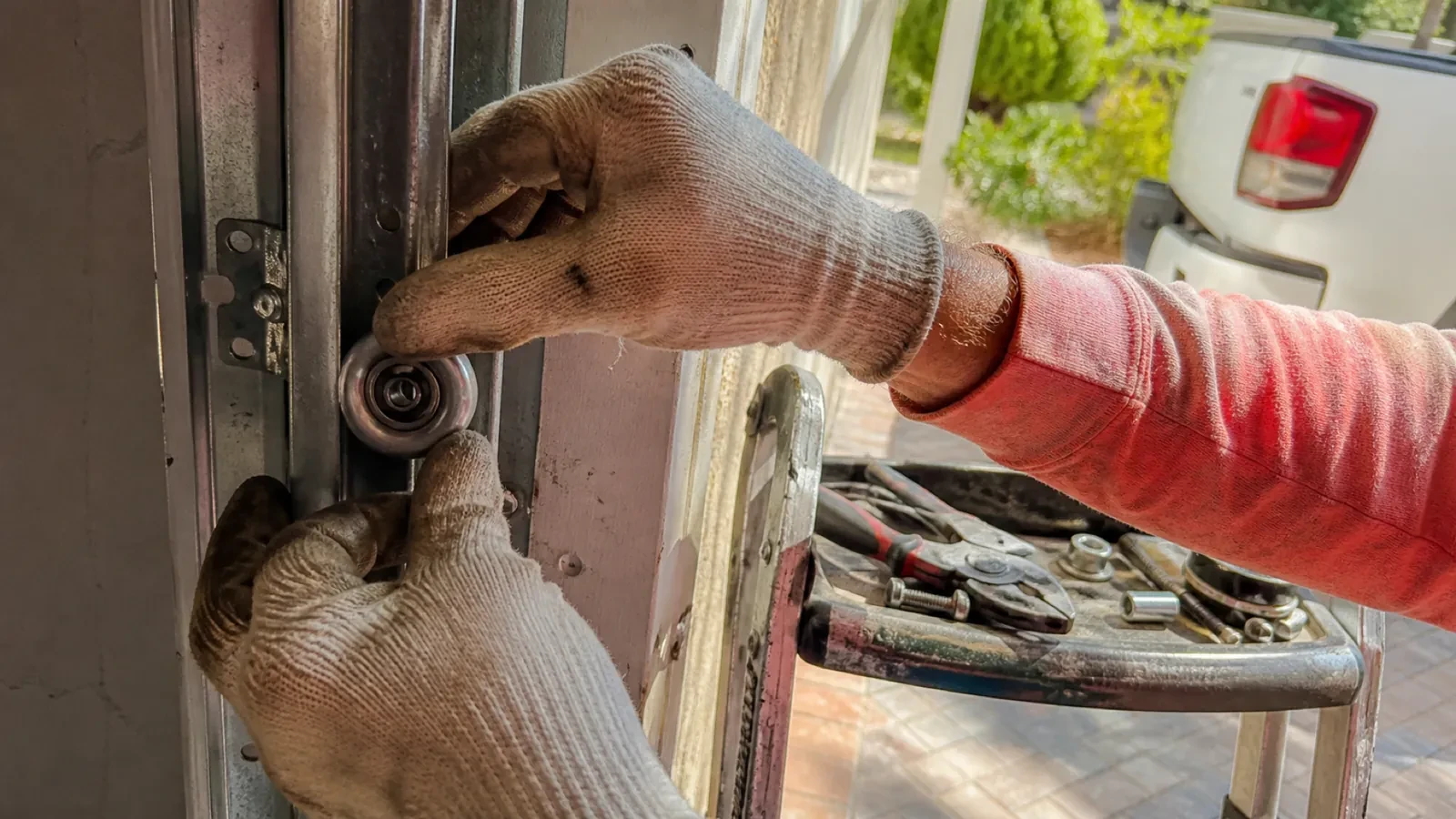
Field measurements begin at the surfaces the door will actually meet. The installer records width between the finished jambs and height from the finished floor to the header at several points, checking for level, plumb and square rather than relying on one reading. Trim thickness and cladding returns are noted because they affect clearances and exterior seals. These dimensions are compared with the selected door size and drawings. Any difference is resolved with the responsible project party before matched sections, tracks and counterbalance parts are committed to the opening.
Closing the weather gaps
Weather sealing is fitted after the door sits correctly in the opening. The bottom retainer and compressible seal meet the finished floor, while perimeter stop moulding contacts the exterior face without squeezing the sections so tightly that movement binds. Section-joint seals and glazed openings are checked as part of the selected door construction. The installer views the closed door from inside for visible gaps and adjusts the seal position where the building surfaces allow. Trim, caulking or cladding work assigned to another trade is identified separately for project closeout.
A door that feels balanced by hand
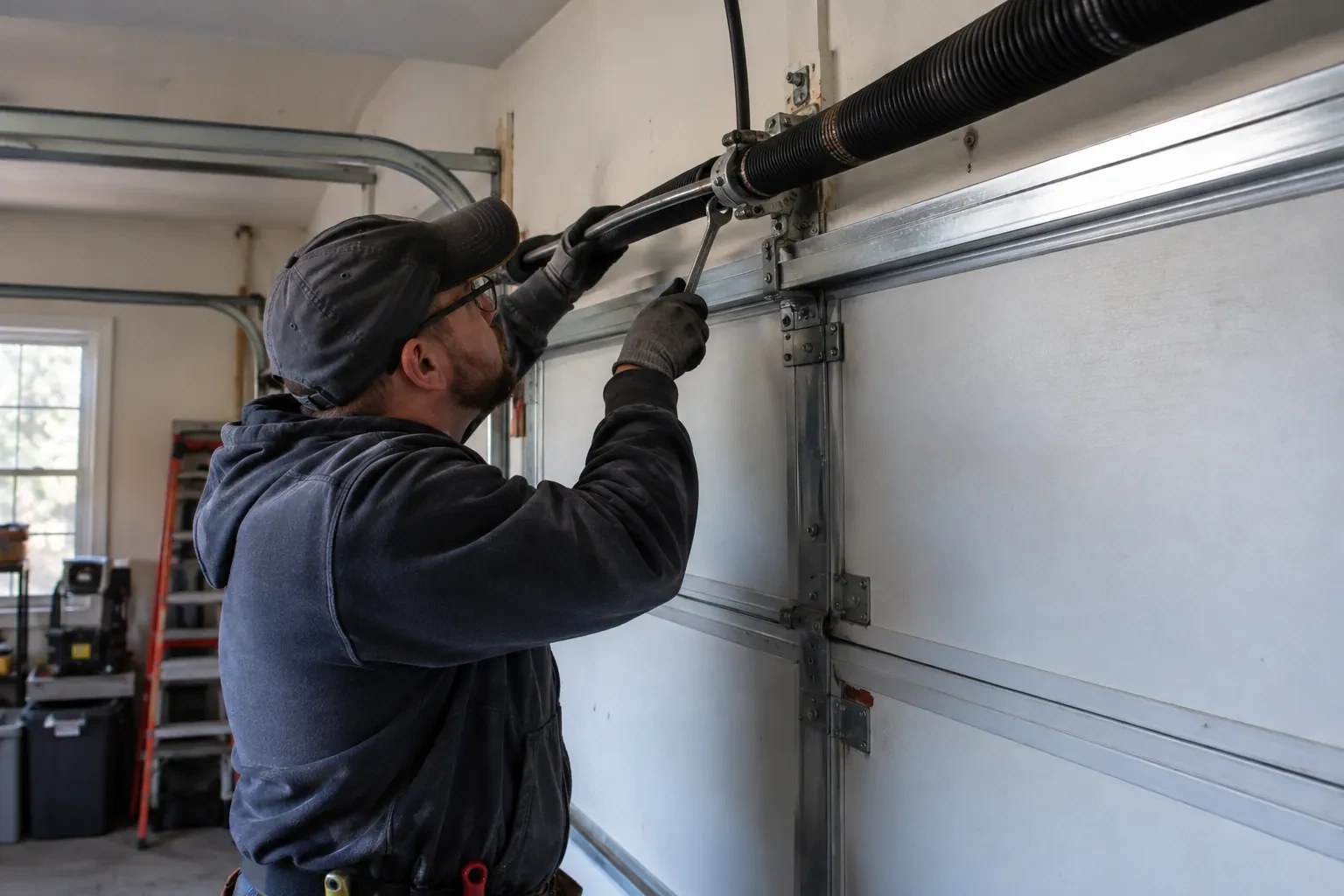
After installation, the door's weight is managed by its counterbalance system rather than by the user's arms or the electric operator. With the operator disconnected, the door should travel through the tracks with controlled effort and remain level. That balanced behaviour is an important reference for future care: a noticeable change in lift effort, movement or door position deserves assessment. The owner also knows where the manual release is and how to use the designated handle or gripping points while keeping hands away from section joints and moving hardware.
New-Construction Garage Door Installation
In the van
Track hangers and bracing
Bottom and perimeter seals
Counterbalance springs
Torsion shaft and bearings
Lift cables and drums
New-Construction Garage Door Installation
What affects the quote
Window design and glazing
The number, placement and type of windows affect manufacturing, section layout and door weight. Privacy, daylight and alignment across several doors can add selection and coordination work.
Perimeter trim and weather sealing
Bottom seal, stop moulding and section seals can be named in the door scope. Exterior caulking, cladding returns or custom trim may remain with another trade.
Operator and drive type
Manual operation and powered operation are different scopes. A selected ceiling-mounted or shaft-mounted operator adds equipment, supports, connection hardware, setup and commissioning to the project.
What to have ready
- Will the garage include a vehicle lift or unusually tall parking?
- Are the jambs, header, spring support and ceiling attachments complete?
- Where are the operator receptacle and control wiring planned?
New-Construction Garage Door Installation: questions
QuestionsDoes all framing need to be complete first?
The jambs, header, spring anchoring area and overhead attachment points used by the door system need to be complete, accessible and accepted by the responsible project party. Their locations depend on the selected track and counterbalance arrangement. If drywall or cladding will cover them, coordination happens before closing the surfaces. Structural design or framing changes remain separate project responsibilities, guided by the building drawings and door requirements.
Can a sectional door work with limited headroom?
Often it can, provided the available space is measured before the hardware is selected. Low-headroom track arrangements change how the top section turns and where tracks sit above the opening. Beams, lights, ducts and an operator rail all share that zone, so their positions are mapped together. The door size, section construction and product instructions determine the suitable configuration for the actual ceiling conditions.
Can the finished door still be operated manually?
Yes. A properly counterbalanced sectional door is checked by hand, whether or not an electric operator is added. With powered equipment, a manual release disconnects the operator so the designated handle can be used; the door is closed first, since an open or unbalanced door can move unexpectedly once released. Handover includes a demonstration of disconnection, movement and reconnection under the product instructions. The release path and lifting area should remain accessible rather than being blocked by storage.
Related services
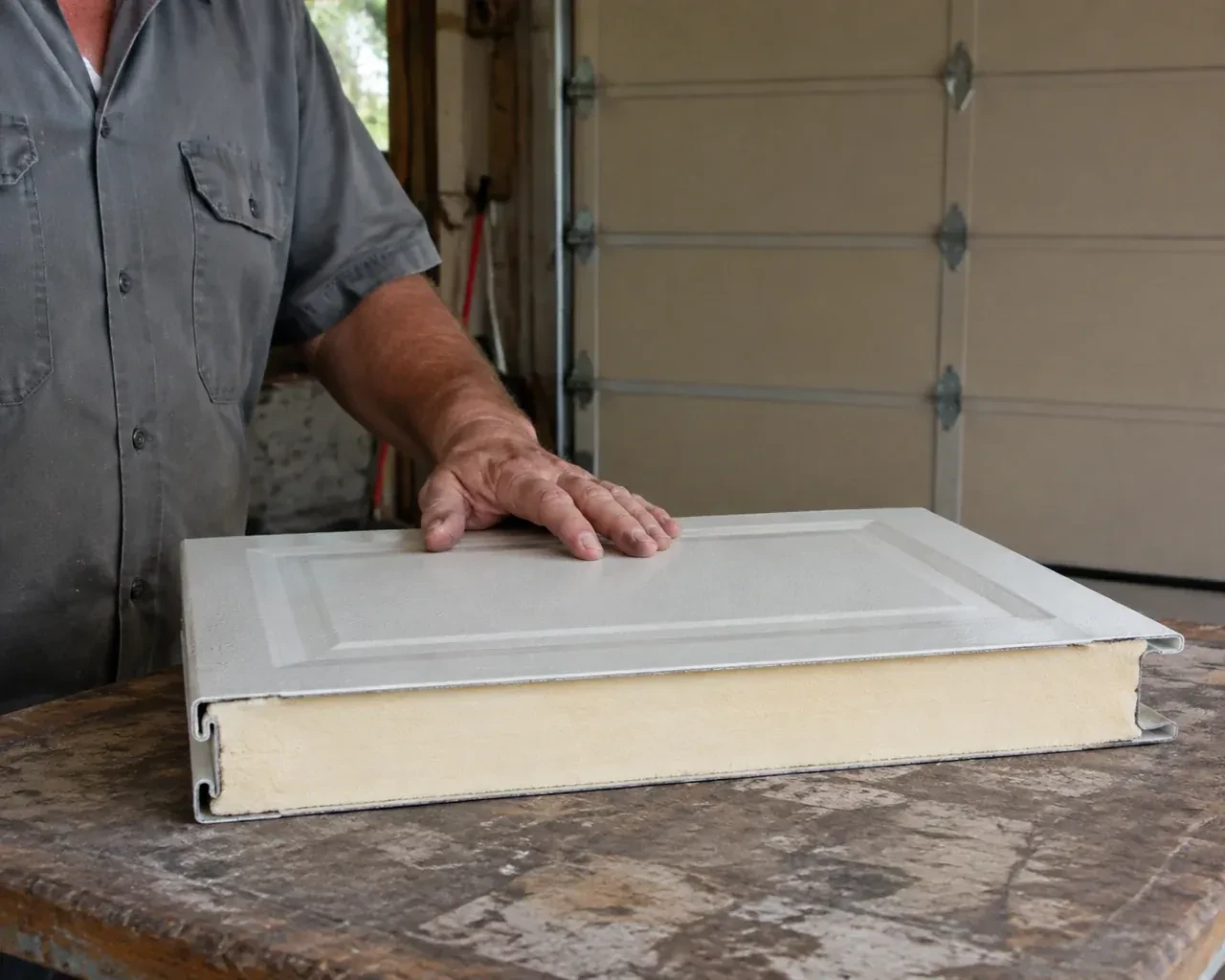
- Insulated Steel Garage Door InstallationYour garage is becoming a workshop, but the thin single-skin door rattles, sweats and lets outdoor temperatures shape the whole room.
- Wind-Rated Garage Door ReplacementA recent wind event left one section slightly creased, a strut twisted, and several track fasteners loose.
- Carriage-House Garage Door InstallationThe existing door has reached the point where panels, rollers and finish all look tired.