Repairs · Whitby
Garage Door Manual Lock Repair
The outside handle wobbles in your hand and the inside knob spins round and round with nothing attached.
In plain words
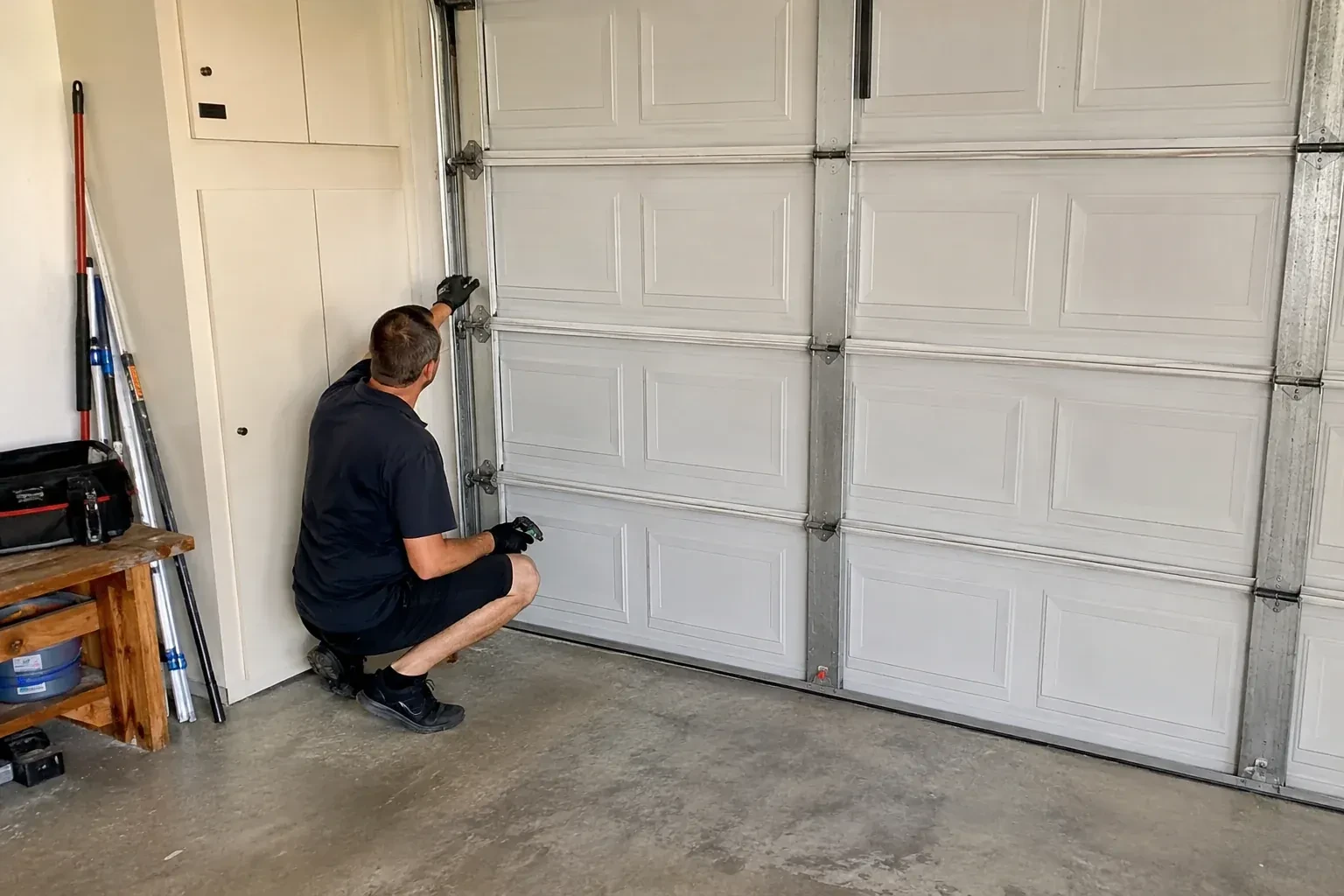
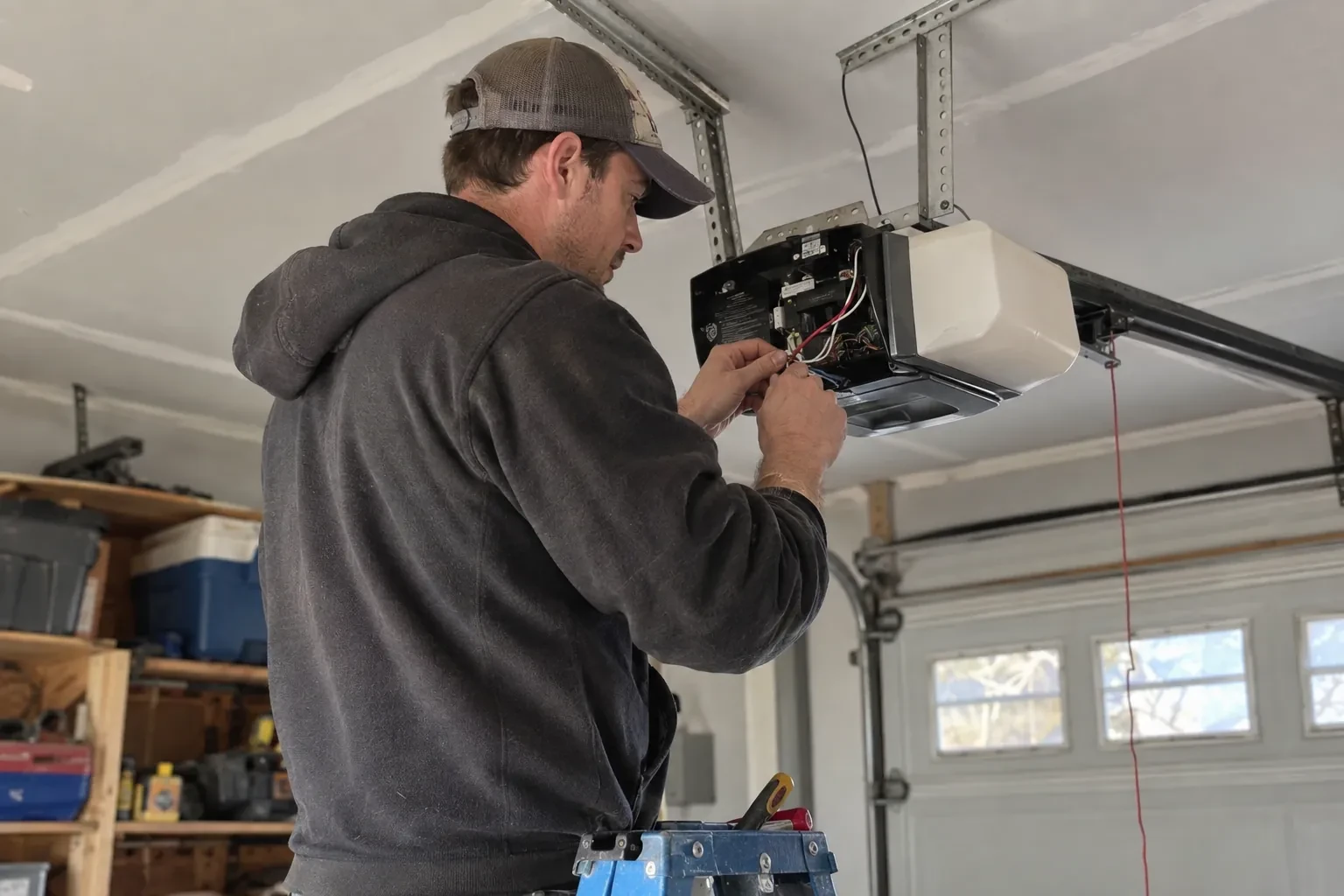
The visit runs in a settled order. On the phone you describe the lock, the door, whether an opener is fitted and whether the lock is currently jammed. On site the opener is disconnected, the door is closed by hand and checked for level. The lock is then examined piece by piece: handle, spindle, centre mechanism, bars, guides, cylinder, fasteners and the track slots. Adjustments are made first, worn parts replaced second, and the lock is cycled from both sides with the door shut. Finally the opener is reconnected, the door runs full cycles, and you are shown how the lock and the opener are meant to be used together.
How the visit goesThe power is out in a storm, you pulled the red cord and lowered the door by hand, and now you want to lock it. The slide bolt on the inside edge is welded in place by years of rust and refuses to budge.
Garage Door Manual Lock Repair
How the visit goes
Signs the opener and the lock have met
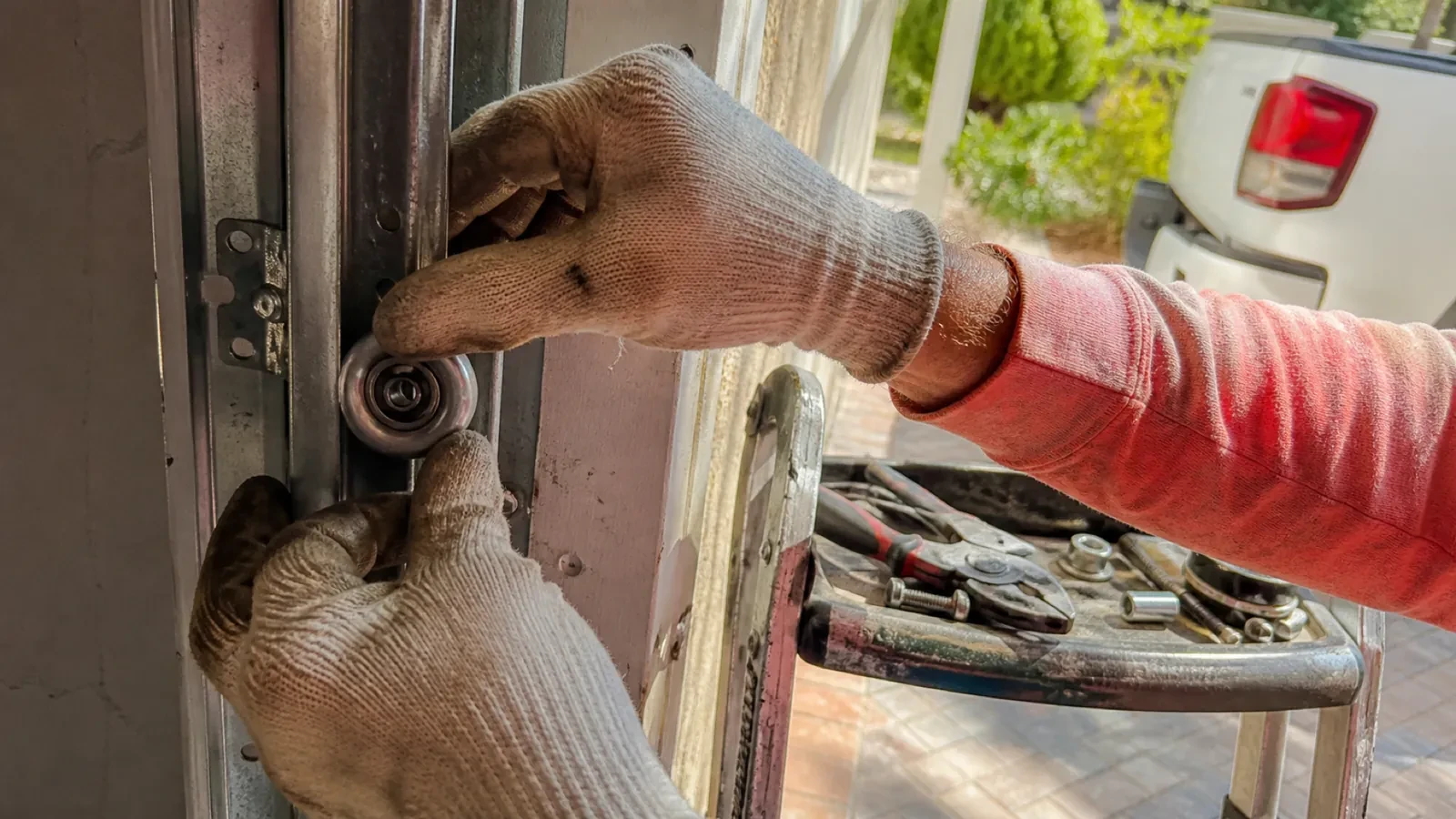
When an automatic opener shares the door, the technician looks for evidence that the two have collided: a bar bent at the track, a lock body pulled part-way from the section, a crease above the lock, a bent opener arm or a bracket strained at the top panel, and an opener that labours or reverses. The current arrangement is noted as well. Has the lock been disabled as opener makers direct, left live with no reminder, or removed altogether? Does the wall console have a lock-out feature the household knows about? These observations decide what is repaired and, just as importantly, how the door will be set up so the same thing does not happen again.
Rebuilding or replacing the centre mechanism
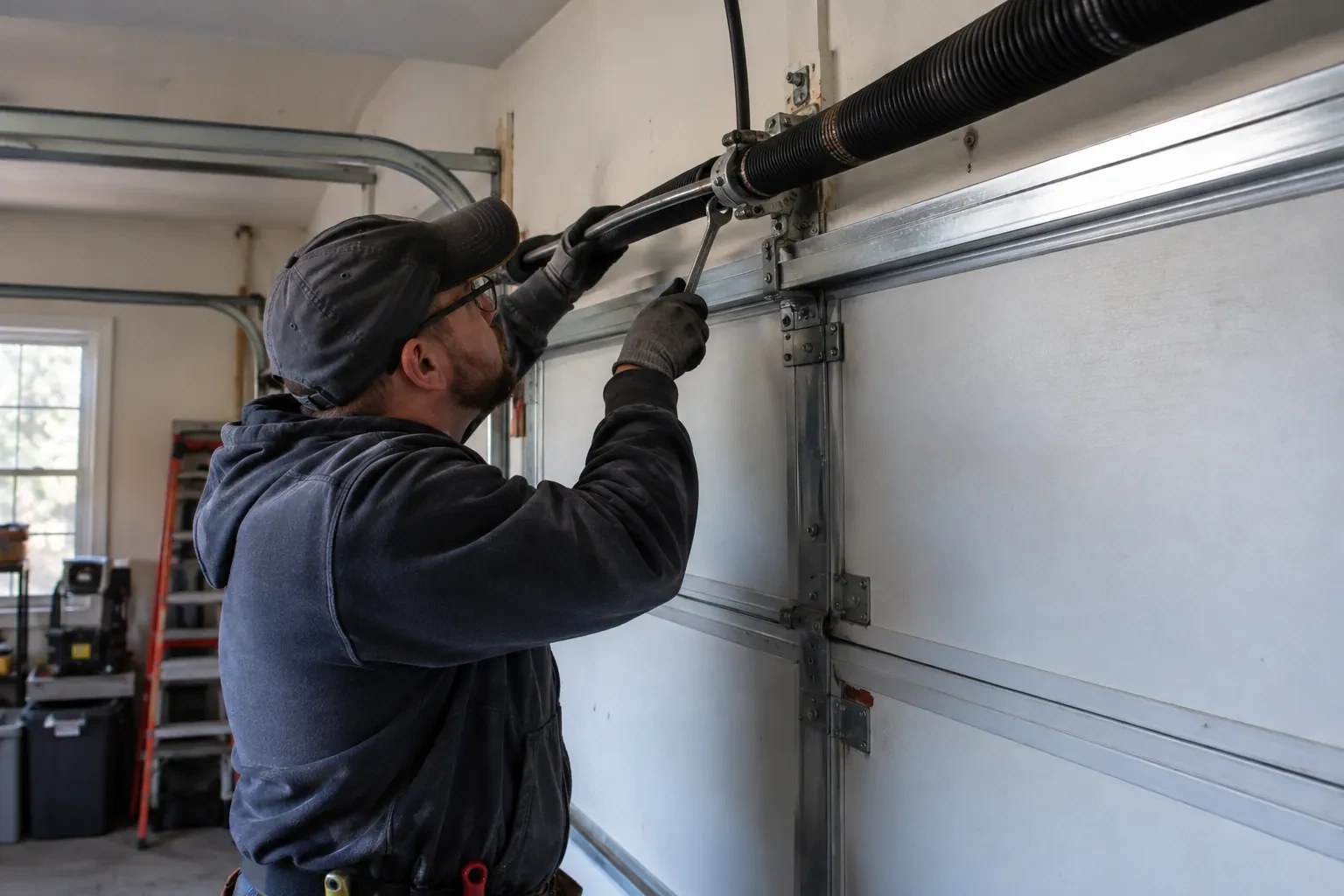
Inside the door, the cover comes off the centre lock body. A broken return spring is replaced and the cam checked for wear; where the cam has rounded off or the body has cracked, a complete mechanism of matching pattern is fitted so the existing handle and bars line up with it. The spindle is checked for twist and replaced with one of the correct length for the door's thickness, and the inside knob or turn handle is secured with a fresh set screw onto a flat. Everything is then operated from both sides with the door shut, adjusting the bar connections until a quarter turn throws both bars fully and releases them cleanly.
A record of what was fitted
Before the technician leaves you get a plain account of the work: which lock type is on the door, what was adjusted, which parts were renewed, the cylinder and keyway details, how many keys were cut, and how the lock and the opener have been set up to work together. If the bars were disabled at your request, that is written down too, so a future technician or a new owner knows why they are fixed back. Keep the note with the door manual or on a card by the opener. It turns any later service into a short conversation and saves someone measuring the door's thickness and bar length from scratch.
Garage Door Manual Lock Repair
In the van
Carriage bolts and backing plates
Track lock-slot punch
Key blanks and rekeying pins
Spring-steel lock bars
Opener lock-out reminder label
Garage Door Manual Lock Repair
What affects the quote
Whether an opener shares the door
A powered door adds the coordination step: removing or disabling the bars, demonstrating the console lock-out, or installing an automatic deadbolt if you choose one. Each is priced as chosen.
One door or two
A garage with two single doors, or a house with a second garage, doubles the hardware to check and often the parts to fit. Doing both in one visit is efficient and quoted as such.
Adjust, repair or replace
A guide reset or a cylinder rekey is a small job; a new mechanism or a complete handle set with bars is a larger one. The inspection settles which is needed before anything is quoted.
What to have ready
- Does the key go in and turn, or is it stiff or spinning freely?
- Do you want to be able to lock the door by hand during a power outage?
- Is there an automatic opener on this door?
Garage Door Manual Lock Repair: questions
QuestionsWhat is an automatic garage door lock, and does it replace the manual one?
It is a motorised deadbolt, offered as an accessory by some opener makers, that slides a bar into the track each time the door closes and withdraws it before the door opens, all controlled by the opener. It gives the physical security of a manual lock without the need to remember it. It can sit alongside a manual lock kept for outages, or take its place entirely.
Why should the opener never run with the manual lock engaged?
Because the opener is strong enough to lift a door heavier than a person, and it has no way of knowing a bar is in the track. It pulls, the bar bends, the lock body tears at its screws, the section can crease and the opener's gear or trolley takes the shock. Opener makers ask for manual locks to be disabled or removed when a motor is installed for exactly this reason.
What kinds of manual locks are found on garage doors?
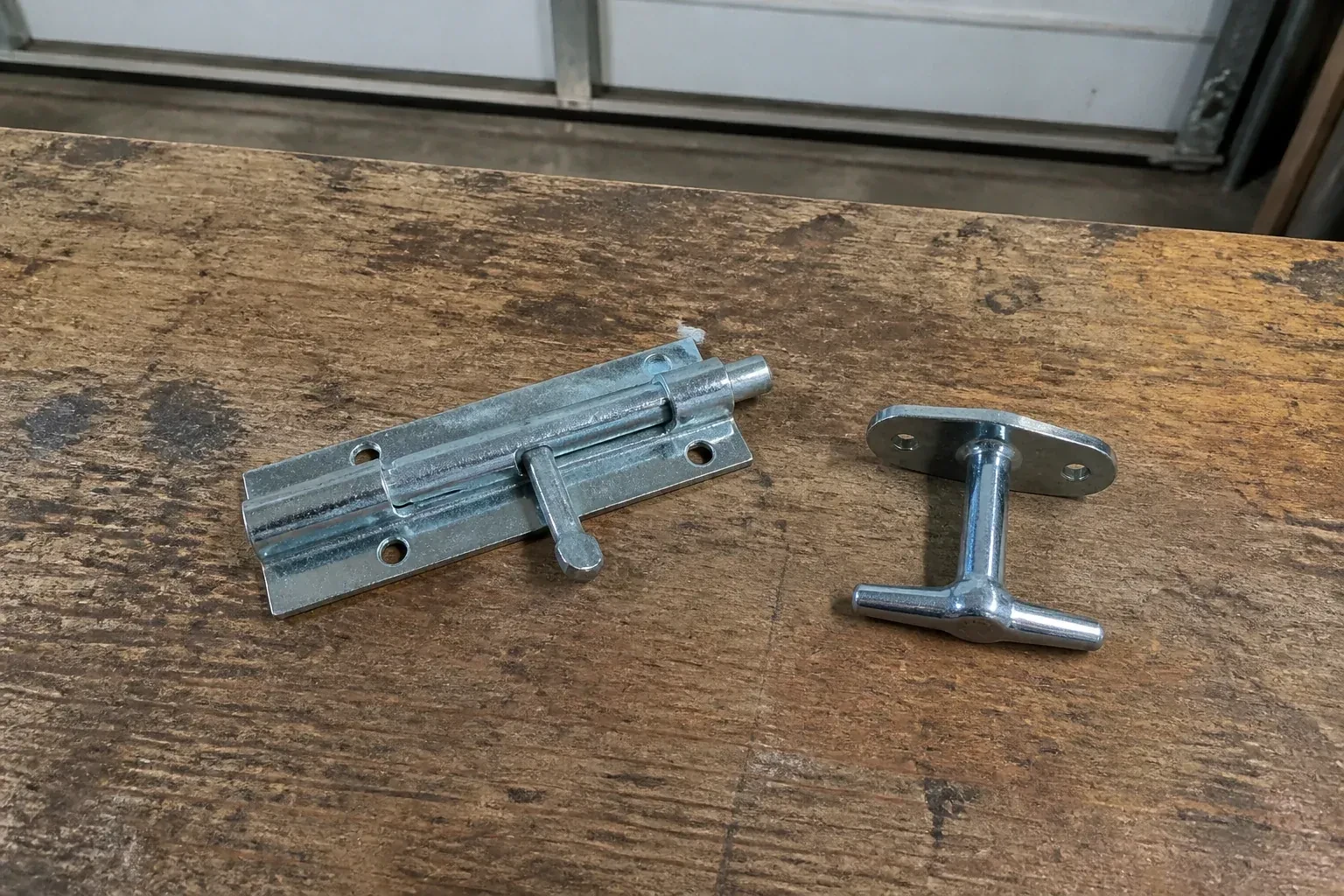
Two are common on sectional doors. An inside slide bolt sits on the door's edge and shoots sideways into a slot in the vertical track; some are spring-loaded snap latches that lock on their own when the door closes. An outside keyed T-handle turns a centre mechanism that throws a bar into each track, though some models pull a cable to release a spring latch instead. Some doors add a keyed cylinder on the side to work the slide bolt from outside.
Related services
- Garage Door Tune-UpTwice this week the door started closing, stopped a metre from the floor and reopened on its own.
- Off-Track Garage Door ResetThe door came down fine but with a scraping noise, and now the vertical track on one side is bowed away from the wall.
- Garage Door Panel ReplacementRust has crept along the bottom edge of the lowest section.