Openers · Whitby
Garage Door Opener Replacement
The opener in the ceiling is older than the car parked under it.
In plain words
Choosing the drive is the decision that shapes daily life with the new opener. A chain drive is the familiar workhorse, sturdy and simple, with a little more sound. A belt drive runs on a reinforced rubber belt and is the answer for a garage under a bedroom. Direct-drive units move the motor itself along a stationary chain inside the rail and have very few moving parts. A wall-mount operator sits at the end of the torsion shaft and leaves the ceiling completely clear. The technician matches the drive to your door's weight, your ceiling, how close the garage sits to living space and how you use the door.
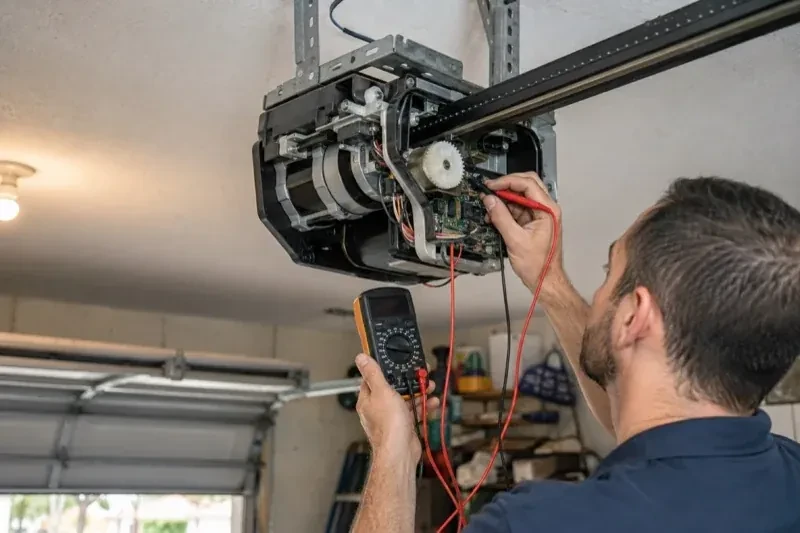
How the visit goesPress the button and the motor hums, but the door stays exactly where it is. Under the housing there is a dusting of white plastic shavings, the sign of a stripped drive gear, and this is the second time it has happened.
Garage Door Opener Replacement
How the visit goes
Headroom, framing and where the rail will hang
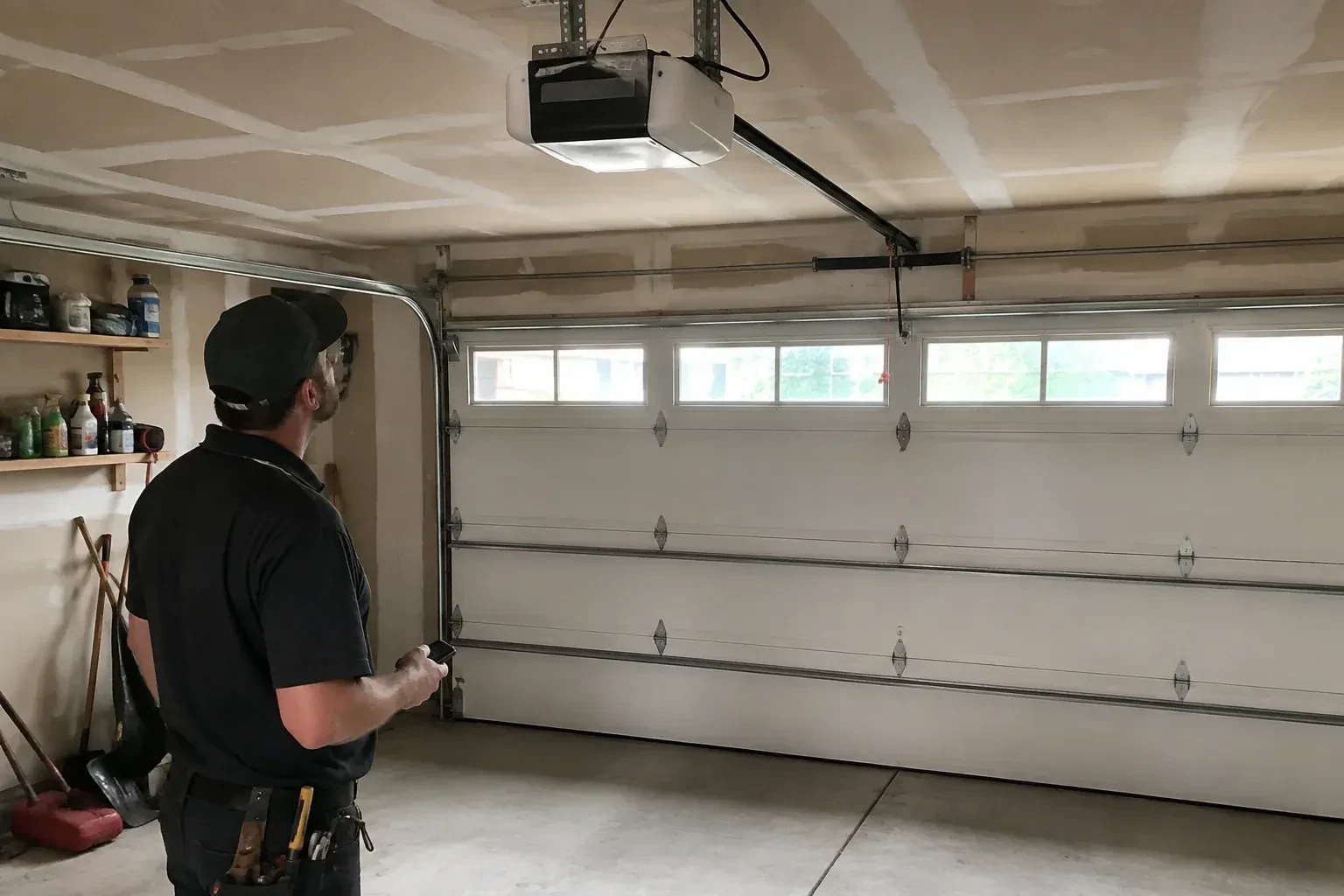
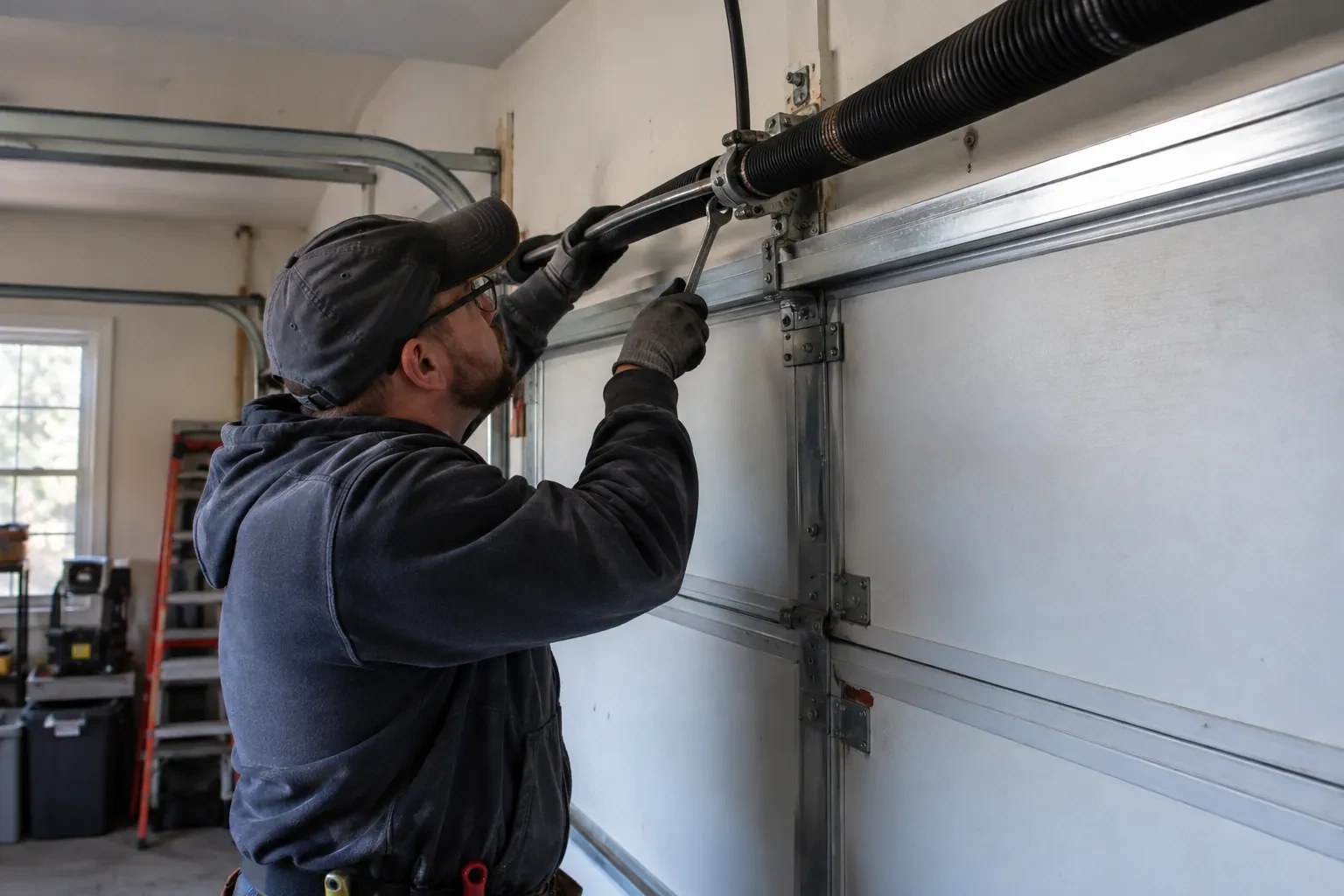
Looking up tells the technician how the new opener will fit. The gap between the top of the open door and the ceiling decides whether a standard rail has room or a low-headroom arrangement or a wall-mount operator is the better fit. The wall above the door is checked for solid framing to take the header bracket, and the ceiling for joists or trusses to carry the angle iron that hangs the head. Door height matters too: a 7 ft door takes a standard rail while an 8 ft door needs an extension. Storage racks, lights and ducts in the path of the rail are noted so nothing gets in the way on the day.
Taking the old operator down
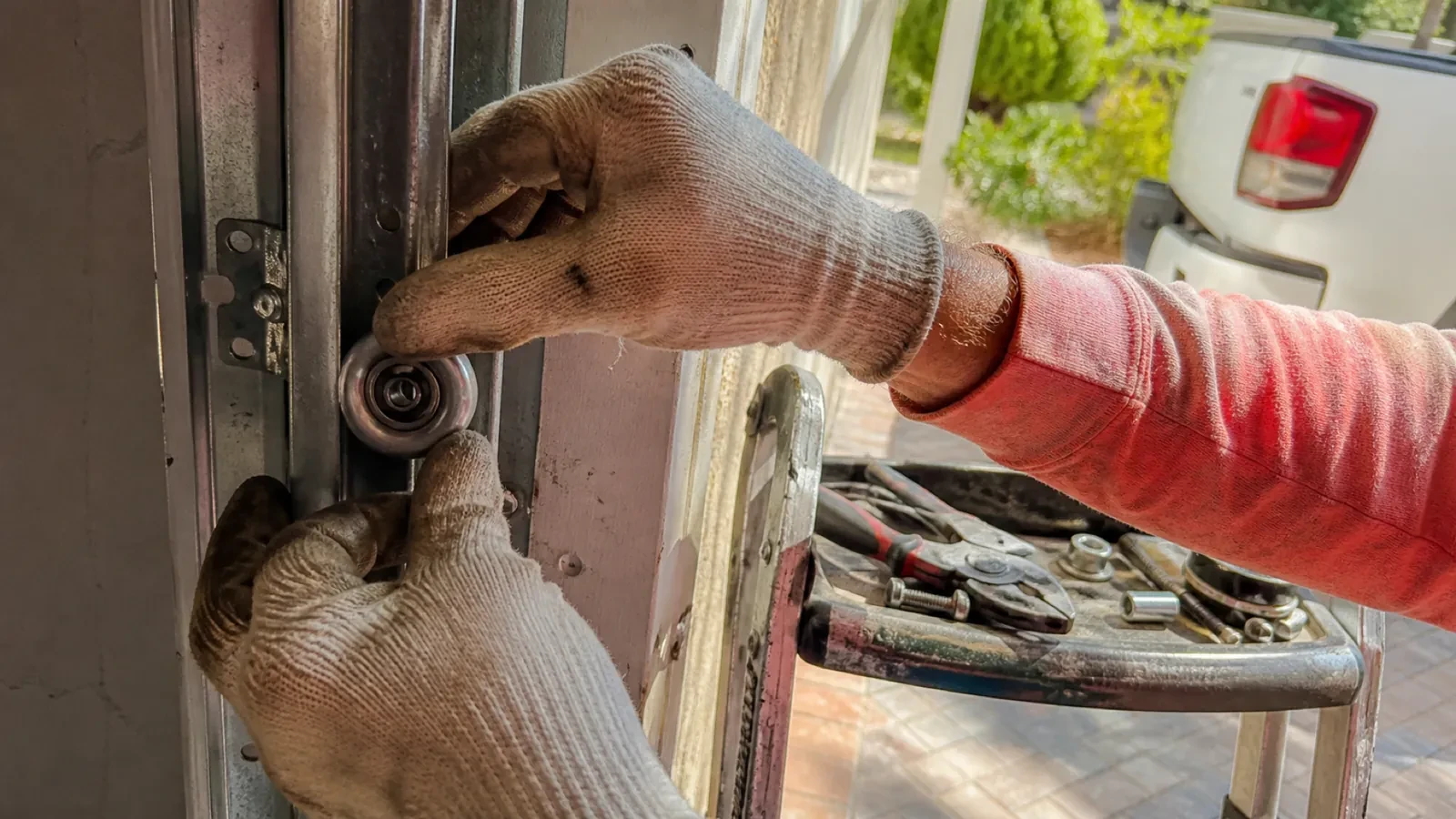
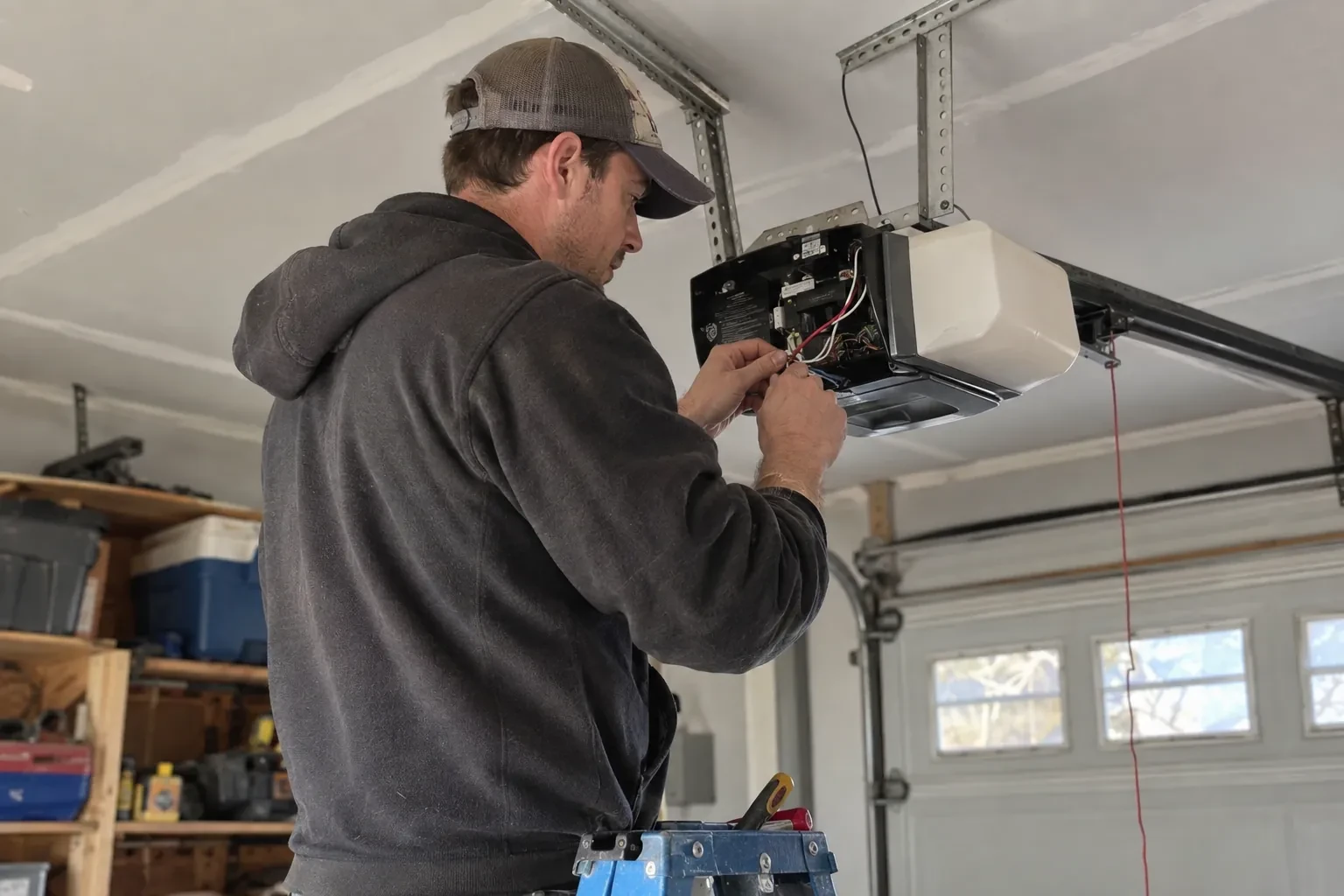
Removal starts with the power cord pulled and the release cord tugged so the trolley is free of the door. The door arm is unbolted from the door bracket, the rail is freed from the header bracket above the door, and the head unit is unbolted from its angle-iron hangers and lowered by hand. Old photo eyes, their wire and the wall control come off unless they are being kept, and any old door bracket that differs from the new one is removed. The technician leaves the door closed and resting on the floor throughout, so it is never balanced on a half-connected arm while the ceiling work is under way.
A door that stops for anything in its way
What you have when the technician leaves is a door that reverses on its own if it touches something or if the beam near the floor is broken. That protection is only as good as the last test, so keep a monthly habit: lay a 2x4 flat where the door meets the floor and run it down from the console, then separately swing a broom handle through the photo-eye beam while it closes. In both cases the door should return to fully open. If it ever hesitates or keeps closing, stop using the operator and have it looked at, since the cause can be a setting, the opener, or the door itself.
Garage Door Opener Replacement
In the van
Chain or reinforced belt
Low-voltage bell wire and staples
Wall control console
Rail sections and trolley
Door arm and door bracket
Garage Door Opener Replacement
What affects the quote
Drive type
A chain drive, a belt drive, a direct-drive unit and a wall-mount operator sit at different points on the equipment list, and the choice is shaped by noise, ceiling space and door weight.
Detached or unheated garage
An operator rated for deep cold, a cold-rated lubricant and sometimes a heavier battery are chosen for a garage that sees winter temperatures, and those choices show in the equipment list.
Removing and recycling the old unit
Taking down the old head, rail, hangers, sensors and wiring, and carrying them away for metal and electronics recycling, is labour that appears on the quote alongside the installation.
What to have ready
- How many remotes do you need, and do any vehicles have built-in opener buttons?
- Has a power outage ever left you unable to open the door?
- Is there a bedroom or living space above or beside the garage?
Garage Door Opener Replacement: questions
QuestionsWhat is a wall-mount opener and who is it for?
It is the operator that lives on the wall rather than the ceiling. Fixed where the torsion shaft ends, it rotates the shaft to raise and lower the door, and nothing hangs overhead. It suits cathedral and low ceilings, garages with lofts or lifts, and anyone who wants a very quiet door. Because there is no trolley holding the door shut, it comes with a powered deadbolt on the track and a monitor that stops the door if a lift cable slackens.
How should I prepare the garage before the visit?
Move vehicles out onto the driveway, bring any car that needs its built-in buttons programmed, and clear the floor under the door's path and the area beneath the old opener and rail so ladders can stand safely. Take bikes and boxes off shelves that hang near the ceiling line. Know where the electrical panel is, and have the phones that will use the app on hand with your Wi-Fi password.
What do timer-to-close, vacation lock and motion lighting do?
Three conveniences you set from the console or the app. Timer-to-close counts down after the door opens and shuts it again after the minutes you choose, so a door left up at bedtime closes itself. Vacation lock disables every handheld remote until you release it, useful when a remote stays in a parked car or the house is empty for a week. Motion lighting brings the lamps on as you walk in and dims them after a delay.
Related services
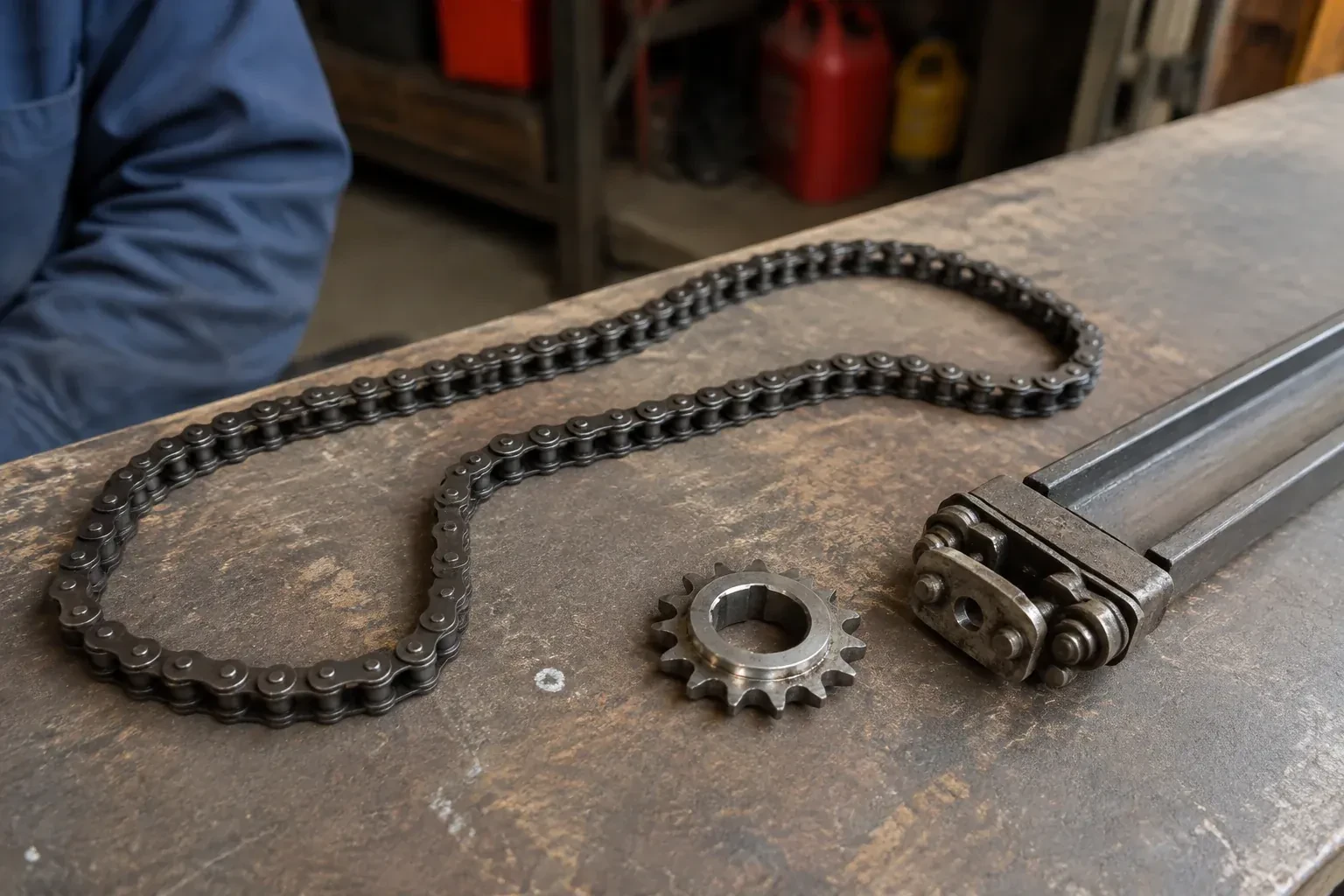
- Chain-Drive Opener RepairThe motor runs, you can hear it working, but the door never moves.
- Belt-Drive Opener RepairAfter the power came back you pulled the red cord to get the car out.
- Photo-Eye Sensor Alignment or ReplacementSince shelving went up along the garage wall, the door will not close and both sensor lights are dead.