Garage Doors in Whitby, OntarioQuiet doorsfor early risers.
When the bedroom sits above the garage, every rattle at six in the morning is personal. For households in Whitby we track each sound to its source: dry rollers, a loose hinge, a chain that has stretched, an opener rail rubbing the ceiling. Fix those and the door becomes something you stop noticing.
When the bedroom sits above the garage, every rattle at six in the morning is personal. For households in Whitby we track each sound to its source: dry rollers, a loose hinge, a chain that has stretched, an opener rail rubbing the ceiling. Fix those and the door becomes something you stop noticing.
Explained before, tested after.
Customers in Whitby sometimes worry they will be sold a new door when a repair would do. Our practice is the opposite. Repairs are the first choice whenever the panels and frame are sound; replacement is recommended only when the door has genuinely reached its end, and we show you why.
For homes and businesses in Whitby, we handle the full range of garage door work: broken springs and cables, off-track doors, openers and remotes, weatherstripping, tune-ups and new door installation. Our technicians arrive with the common parts on the van, walk you through what they find, and leave the door running smoothly and the garage tidy.
17years in business
24/7open every day
Explanation before action. You will know what is worn, why it failed and what the options are before a single bolt is turned. Questions are welcome at every step.
A tidy garage. Drop cloths where needed, old parts bagged, floor swept. We leave the space as we found it, only with a working door.
Choices, not pressure. If a repair will do, we say so. If a replacement makes more sense, we explain why and let you decide.
In Whitby we work on garage doors of every age and size: single and double residential doors, insulated and uninsulated, wood and steel, plus commercial rolling and sectional doors. The service pages explain the repairs, replacements and installations that apply to each.
About 25% of homes in Whitby were built in 1980 or earlier, according to the 2021 Census.
Newer homes
Households in newer neighbourhoods often use the garage as the main entrance every day, which puts far more cycles on the door in a year than an older single door would see. A tune-up schedule matched to that use keeps the springs and opener working within their design.
Single-detached houses make up about 70% of homes in Whitby (2021 Census).
Mostly houses
Single-detached homes give a technician room to work: a driveway for the van, side room beside the tracks and a clear header. That means spring replacement, opener installation and full door replacement can each be finished in one visit with the door properly secured throughout.
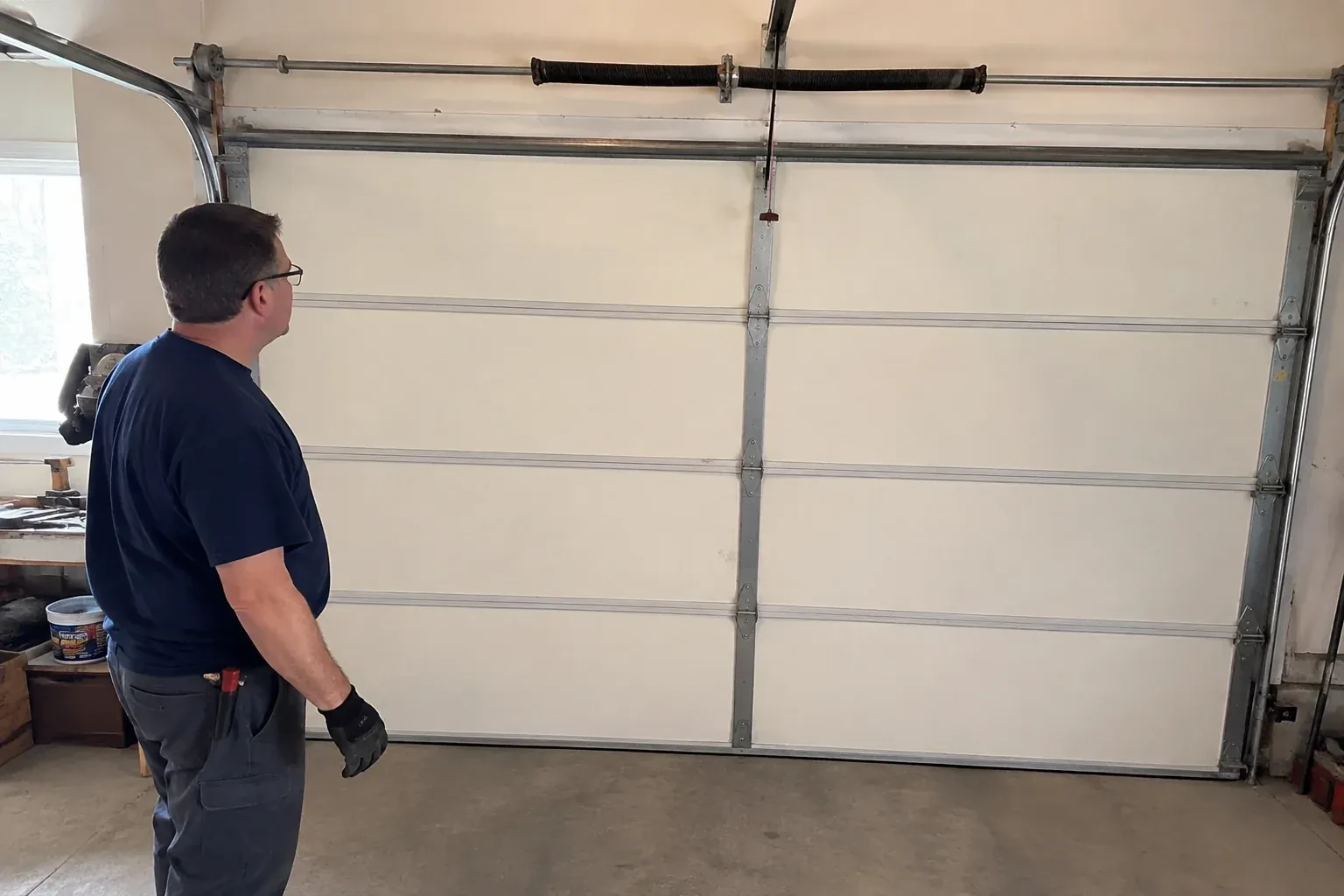
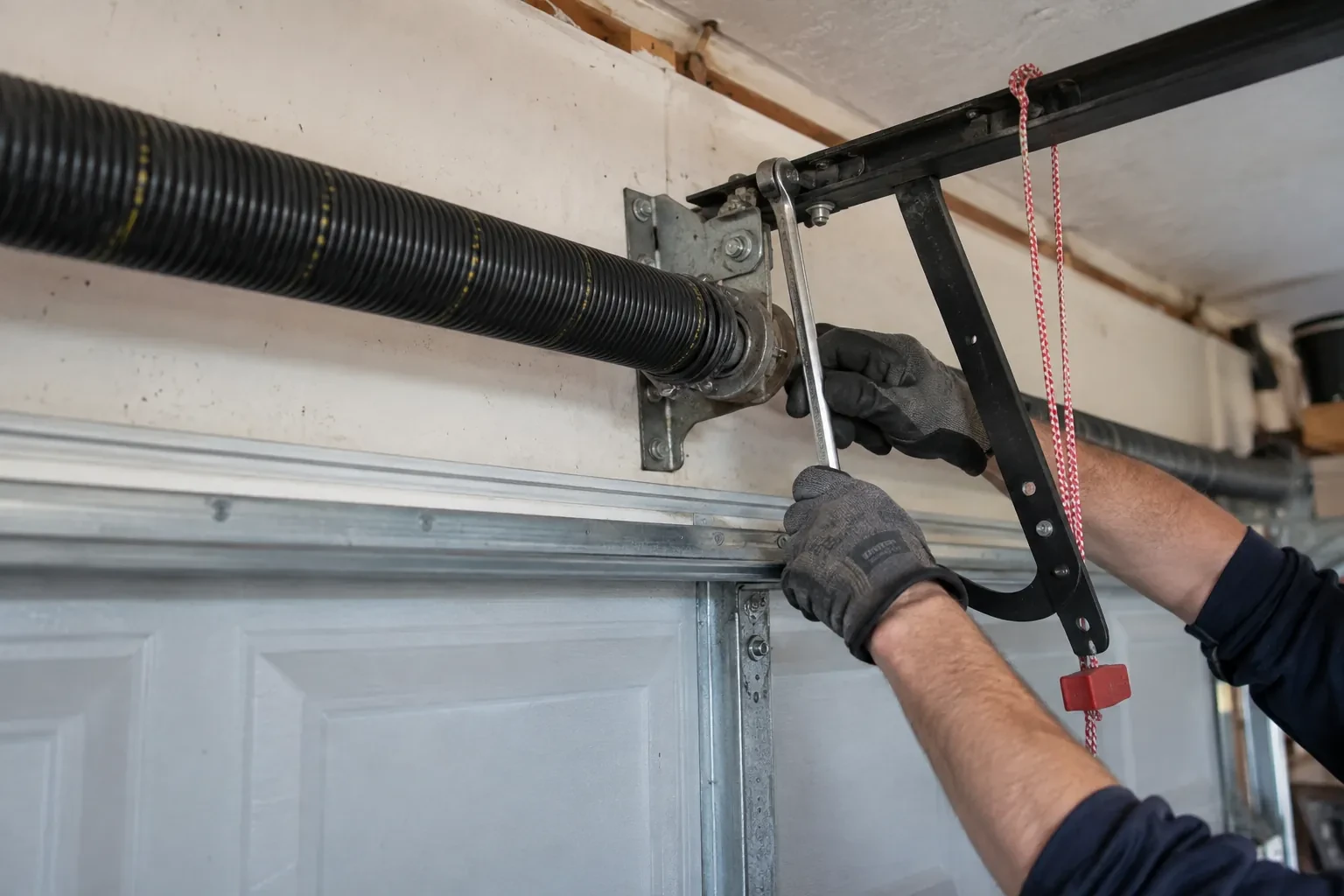
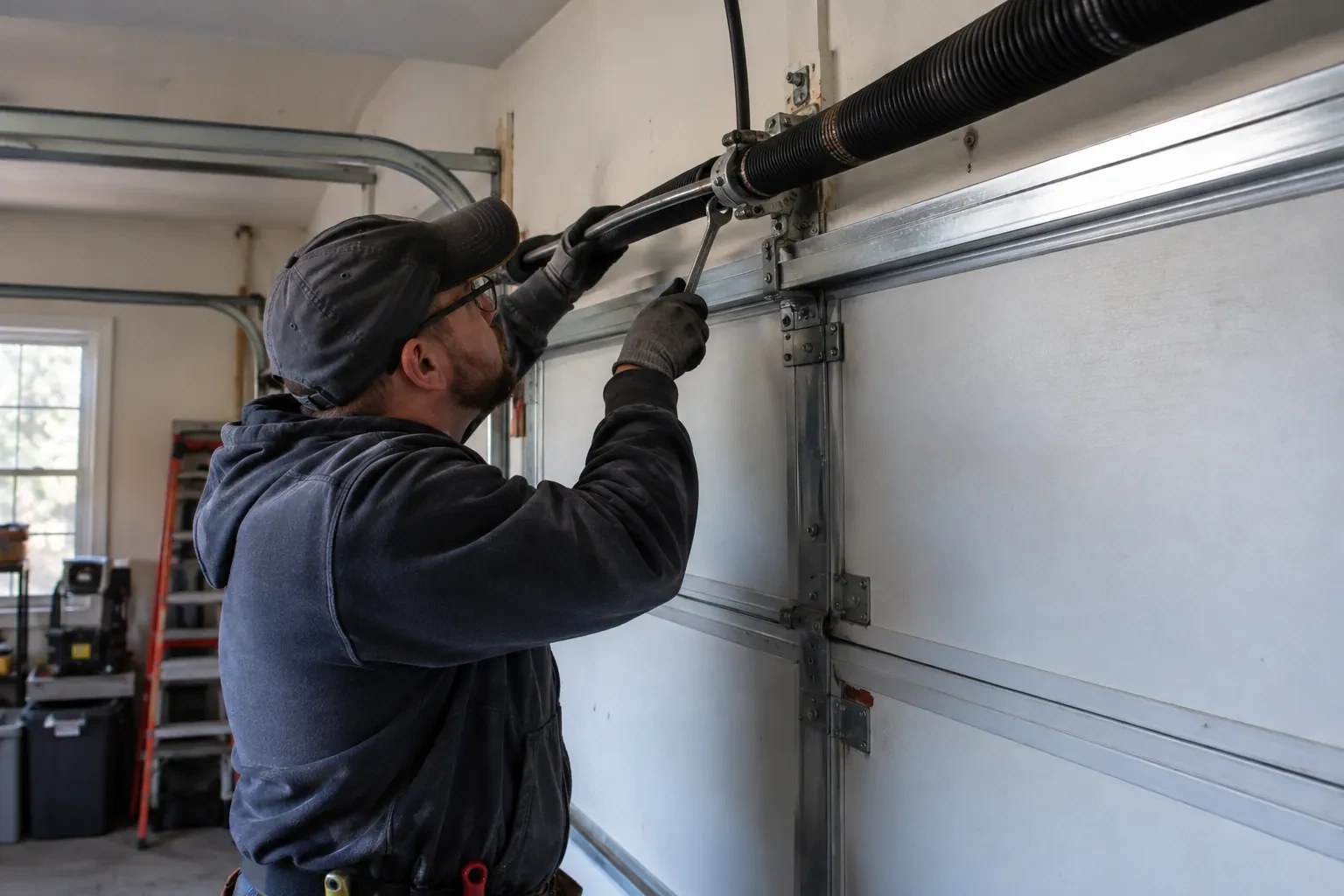
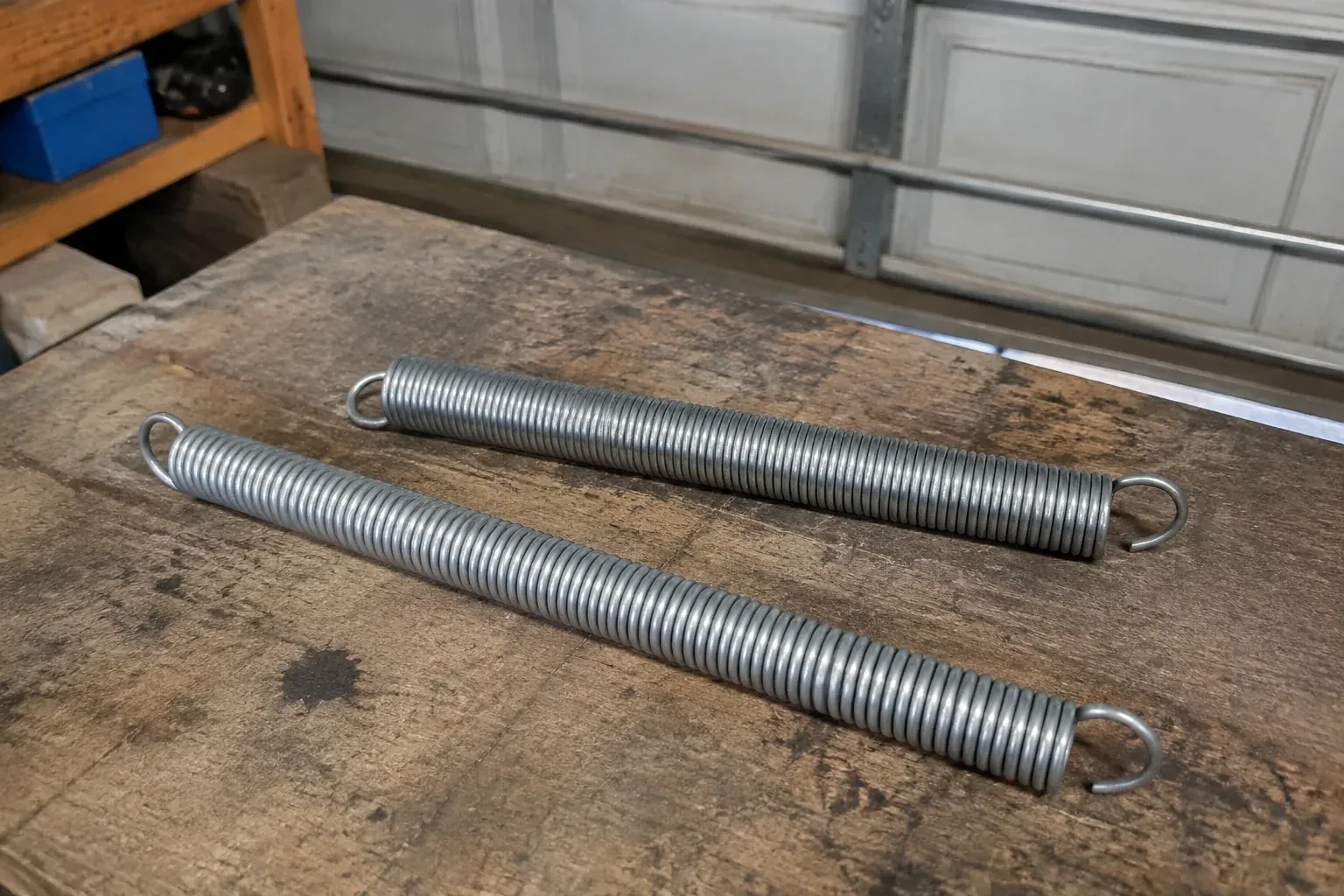
Extension springs run along the sides and stretch as the door closes. They should have a safety cable threaded through them so a break does not send steel across the garage. We replace the springs, fit the cables and set them evenly.
WhyFor a household here, the most valuable feature is often the simplest: a message that says the door has been open for ten minutes on a January night.
The current double door shudders when pressure changes outside, and daylight appears briefly along one edge.
WhyA high-lift project can often retain sound door sections while changing the hardware that guides and balances them.
How a visit goes
Describe the property, the hardware and what has changed, and the visit starts from what you have seen.
01
Arranging the visit
We agree a time that suits you and confirm what we will bring. If a photo helps, send one; a crooked door or a snapped spring is easy to spot.
02
Looking before deciding
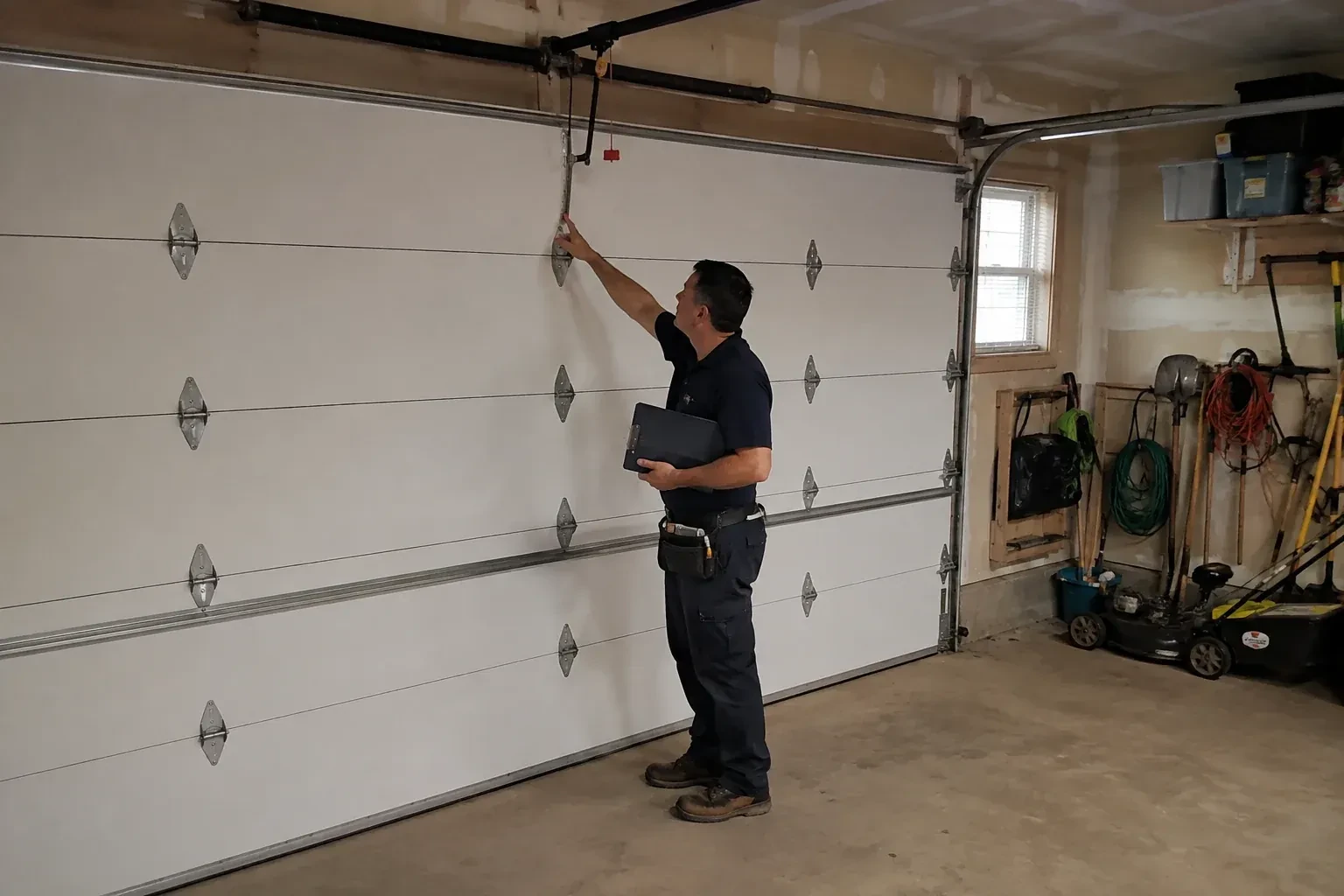
The technician inspects the door from the tracks to the opener, checks the spring size and condition, and notes anything else that is wearing.
03
Doing the work properly
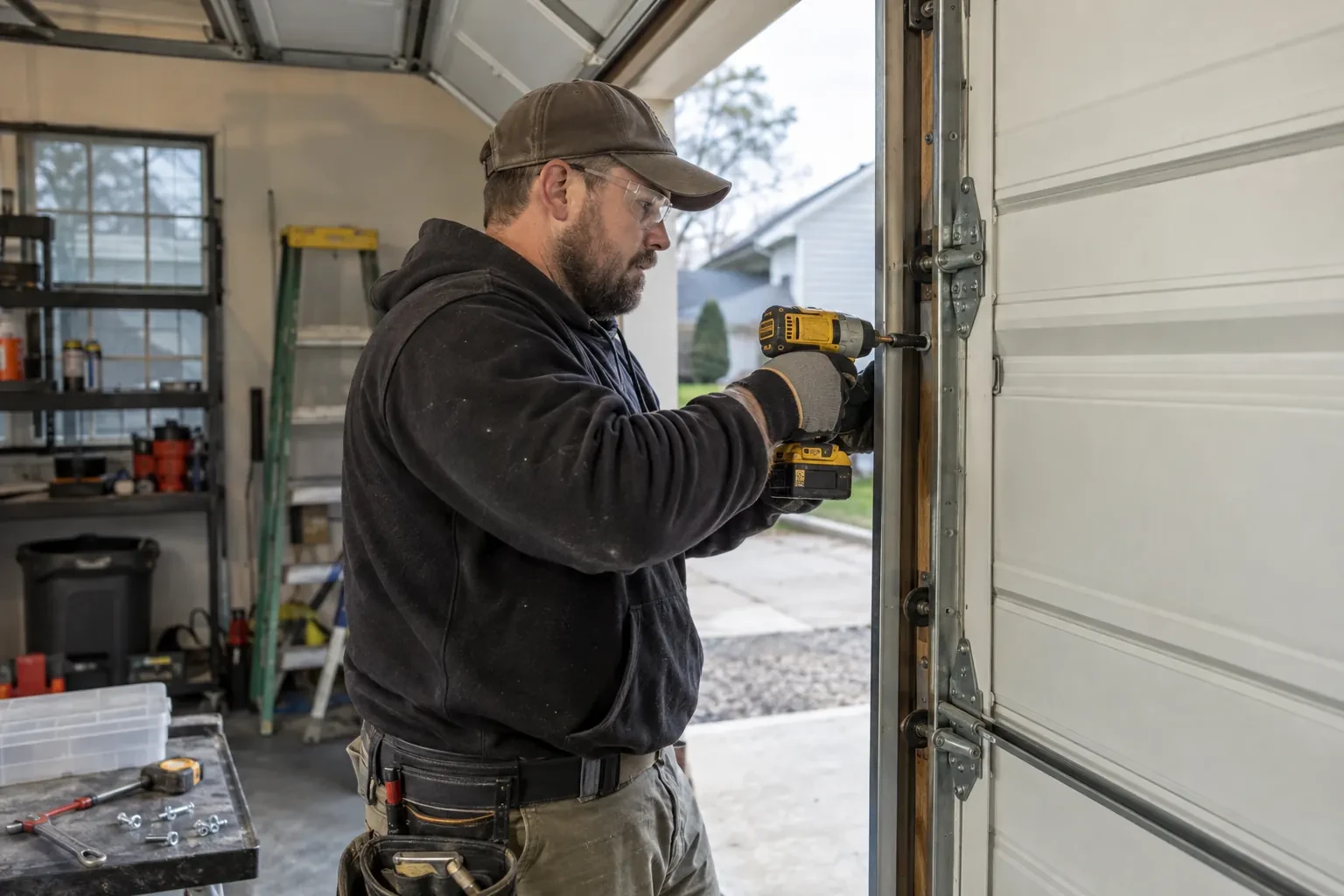
Springs are wound to the correct turns, cables seated on their drums, hardware tightened, and the balance confirmed so the door stays where it is left.
An entrance. Not an afterthought.
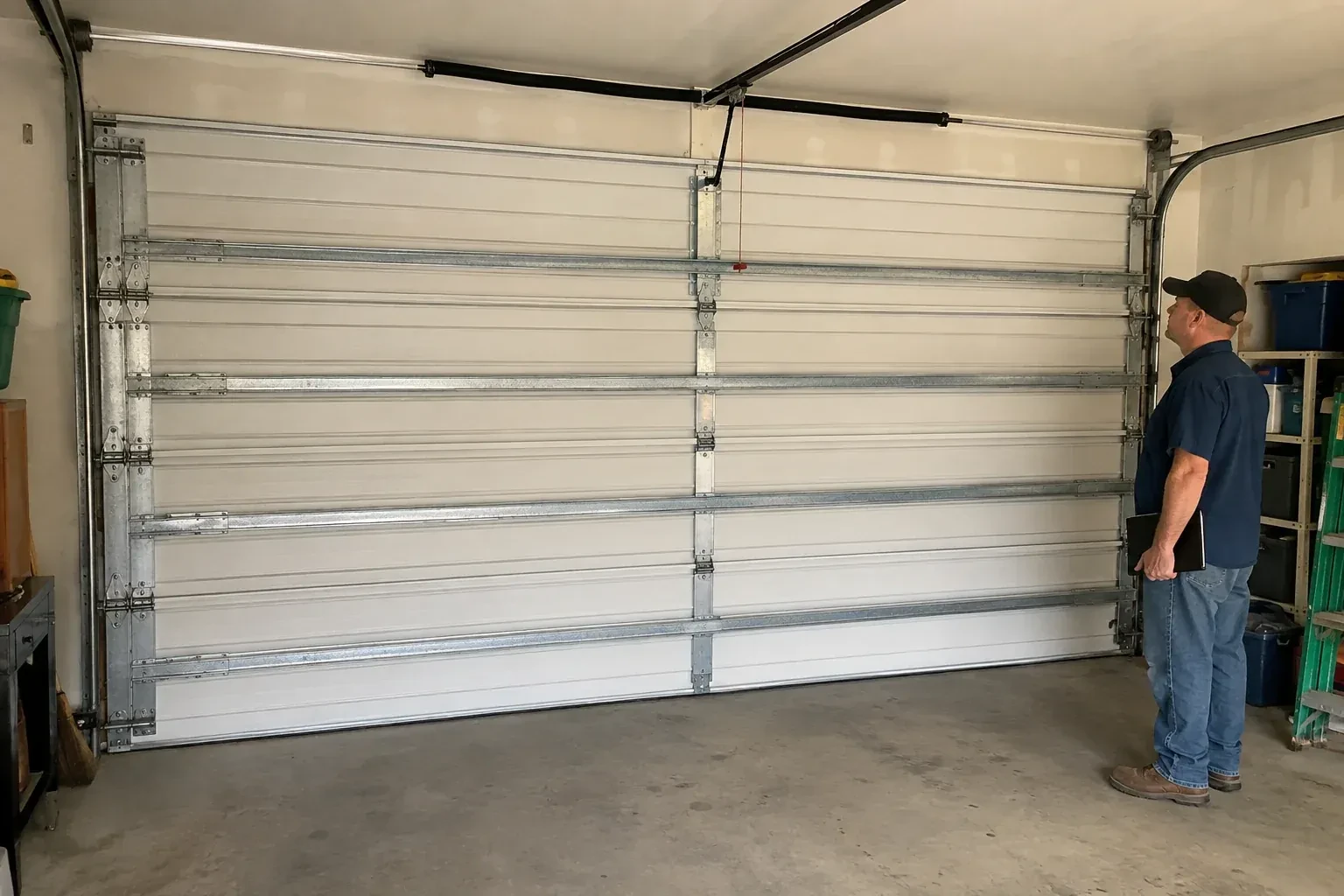
1/10Garage Door Safety Inspection
During the power outage you pulled the red cord and tried to lift the door by hand. It felt like lifting a piano, and when you let go part-way it sank back toward the floor on its own.
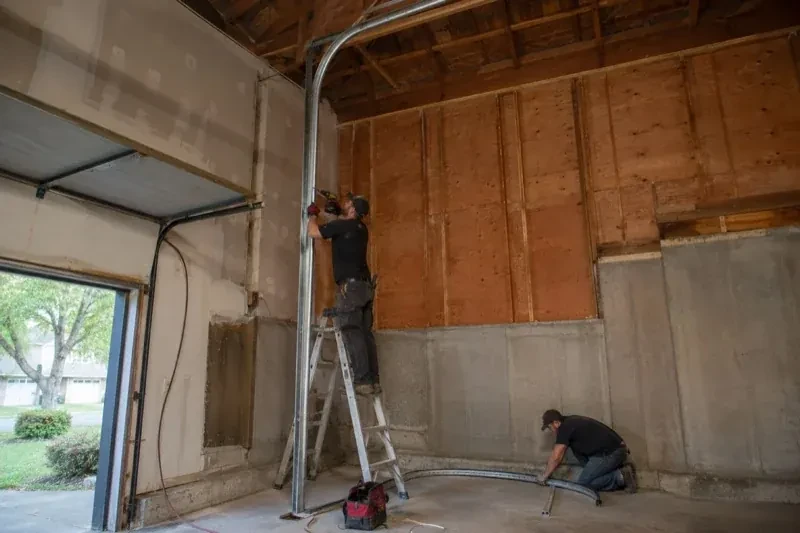
The door came down fine but with a scraping noise, and now the vertical track on one side is bowed away from the wall. Two screws have pulled out of the wood and the roller nearest the floor has no rail around it.
Halfway up, the door lurches and one roller rides onto the lip of the channel. Near the curve the track looks wider than the rest, and the door hesitates in the same place on the way down.
The car bumper kissed the door on the way in. The bottom panel has a dent, the bracket in that corner sits crooked, and the cable on that side has jumped and gone slack, so the door reverses every time it tries to close.
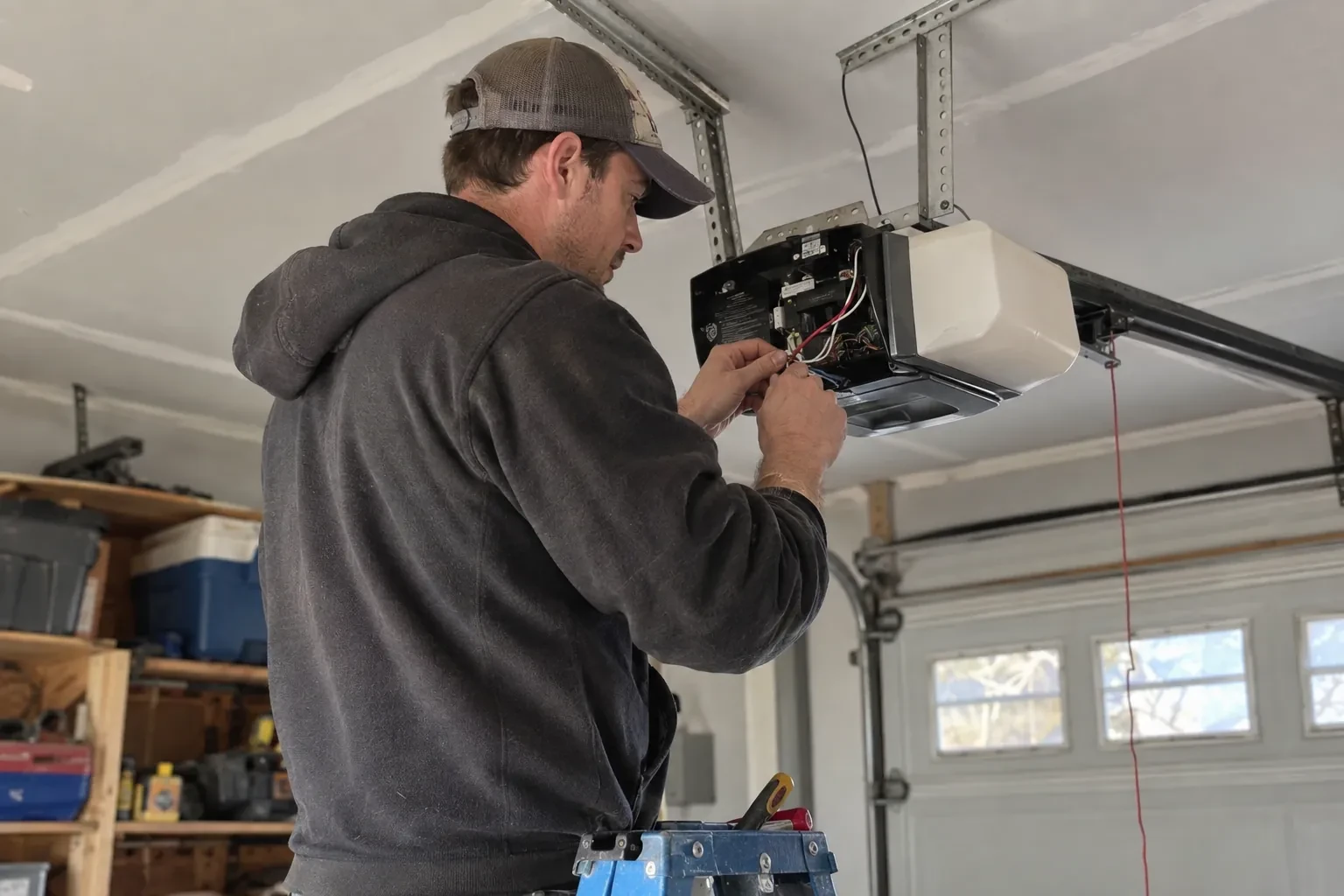
The rail shakes when the door runs. The steel straps holding it to the ceiling have worked loose, the chain rattles the length of the garage, and a bolt has already dropped onto the hood of the car.
A contractor is coming to work in the garage on Thursday while you are away. Handing over a remote means chasing it back afterwards, and the keypad code is the one your whole family uses. What you want is access that ends when the job does.
The current double door shudders when pressure changes outside, and daylight appears briefly along one edge. Its tracks are light, the jamb material is aging, and no one knows which reinforcement was originally specified.
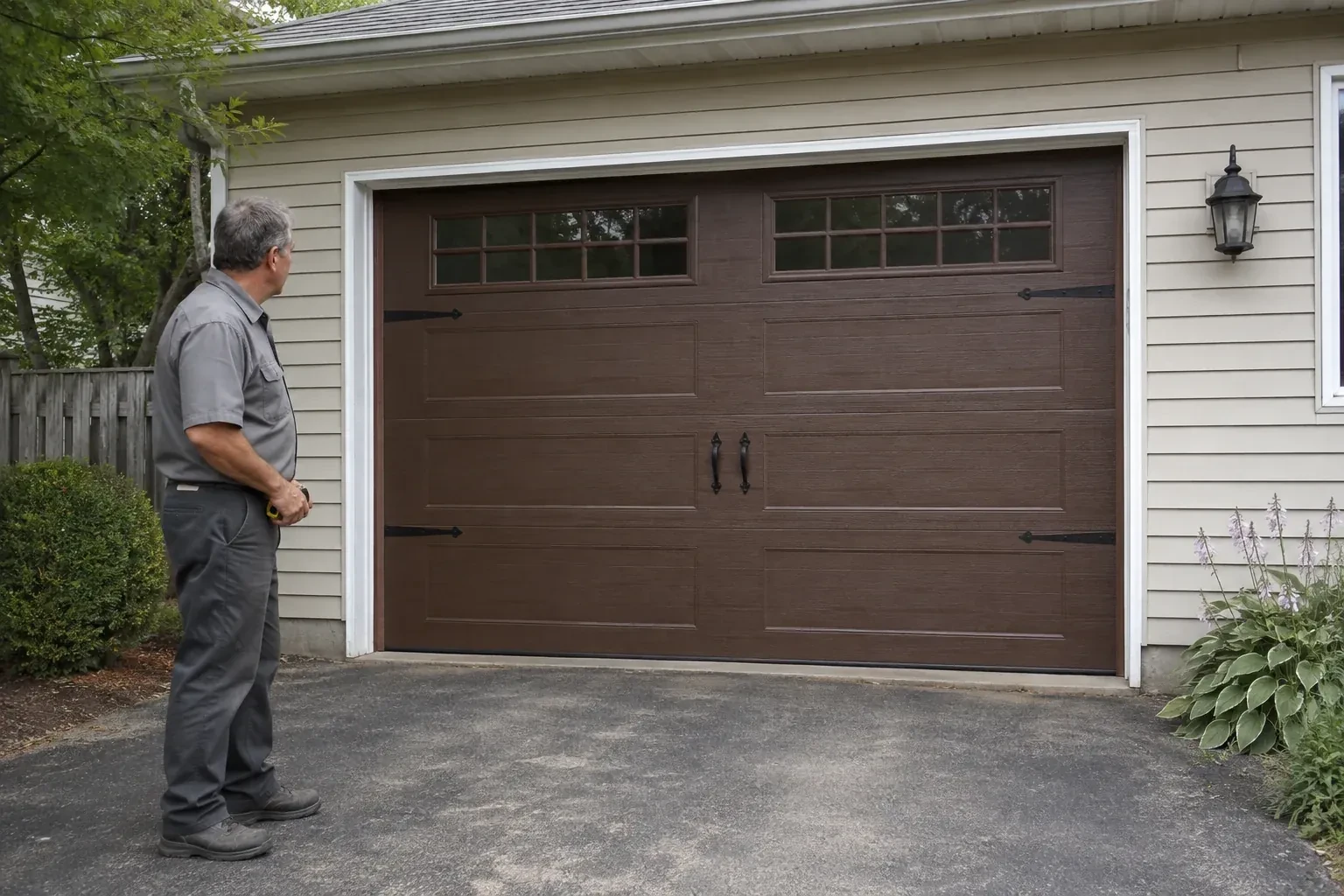
A front elevation update has brought new trim, lighting and a deeper colour palette, leaving the garage door as the remaining piece. Its pattern and finish now need to join the overall composition.
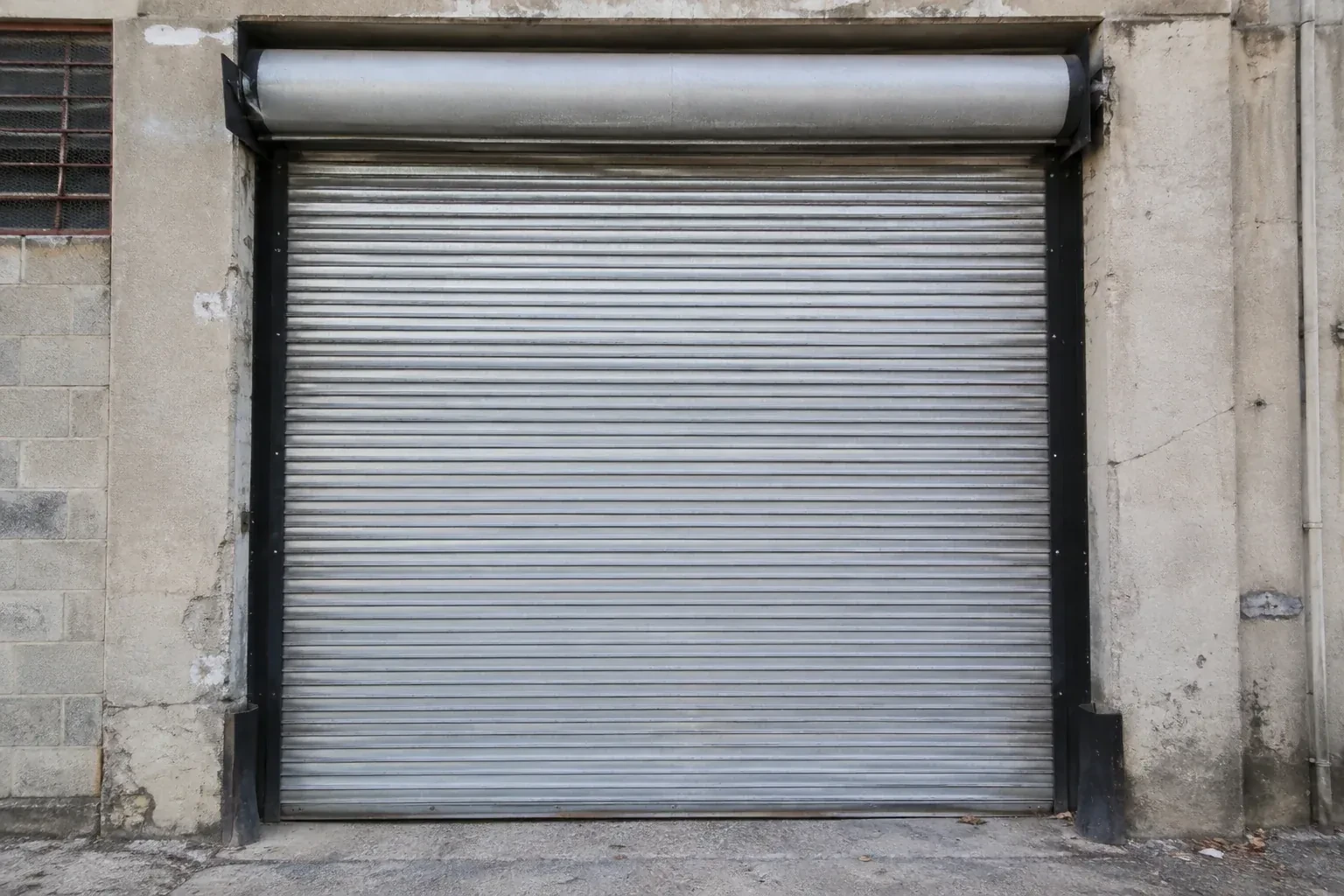
A lift truck clipped the lower curtain during unloading. Now two slats are bowed, an endlock catches halfway up, and each attempt to cycle the door pulls the damaged section farther toward one guide.
A garage project has reached the measurement stage, and overhead clearance is the deciding detail. The current springs, drums and tracks were built for standard lift, while the intended use calls for additional vertical travel.
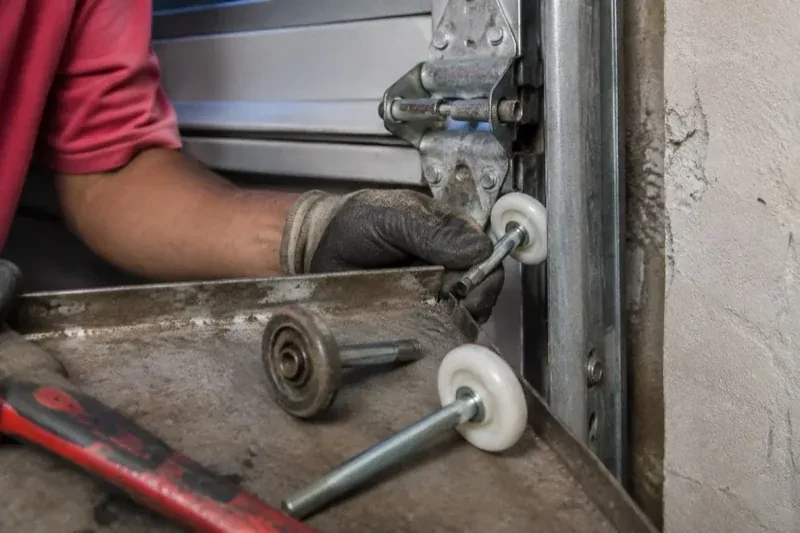
The moving metal-on-metal points get a light coat: the spring coils, the hinge knuckles, the roller bearings and the pins at the bottom brackets. A silicone or lithium product made for doors is used, then the door cycles a few times to carry it in. The tracks are the exception; they are cleaned and left bare, since a slick track lets the wheels skid and holds grit against them.
Will the door be as good as it was before?
In most cases it comes back better, because the reset includes truing the track, replacing worn rollers and correcting the misalignments that had been building unnoticed. The exception is a section creased by an impact: it may work perfectly well after the reset yet keep a visible dent, and the technician will tell you whether it is sound or worth replacing at some point. You are shown the door running before the visit ends.
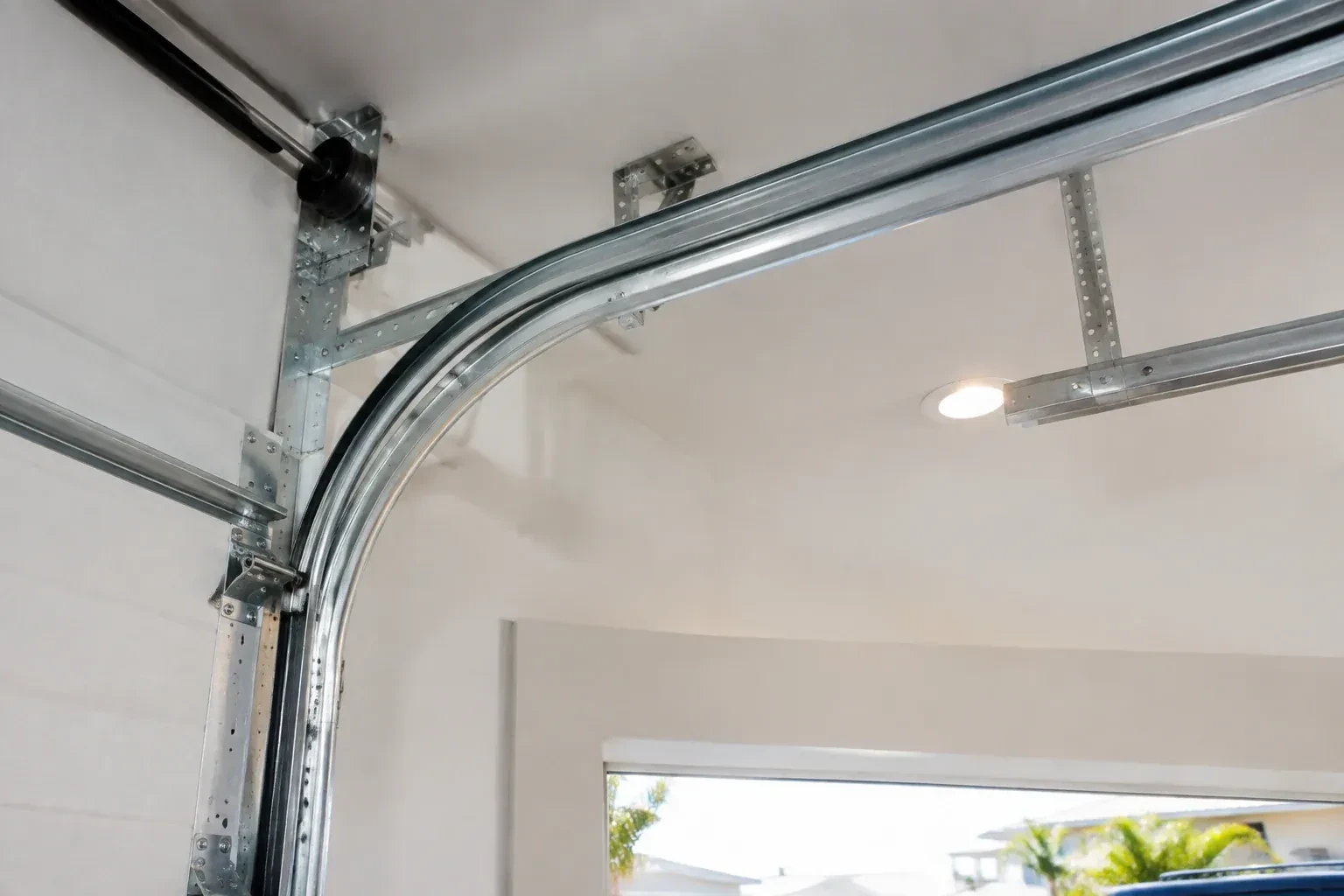
How is the vertical track attached to the wall?
Two ways are common. Bracket-mounted track uses several L-shaped jamb brackets, each lag-screwed into the wood jamb, which lets the track be adjusted a little at each bracket. Angle-mounted track bolts to a full-height continuous angle, often chosen where sideroom is tight. In both cases the fasteners bite into the jamb, so the condition of that wood matters as much as the track itself.
Why do cables rust faster than the rest of the door hardware?
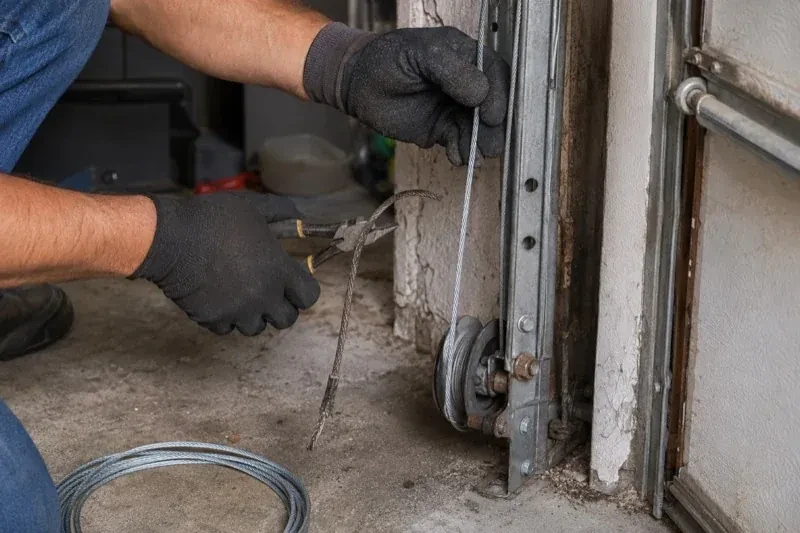
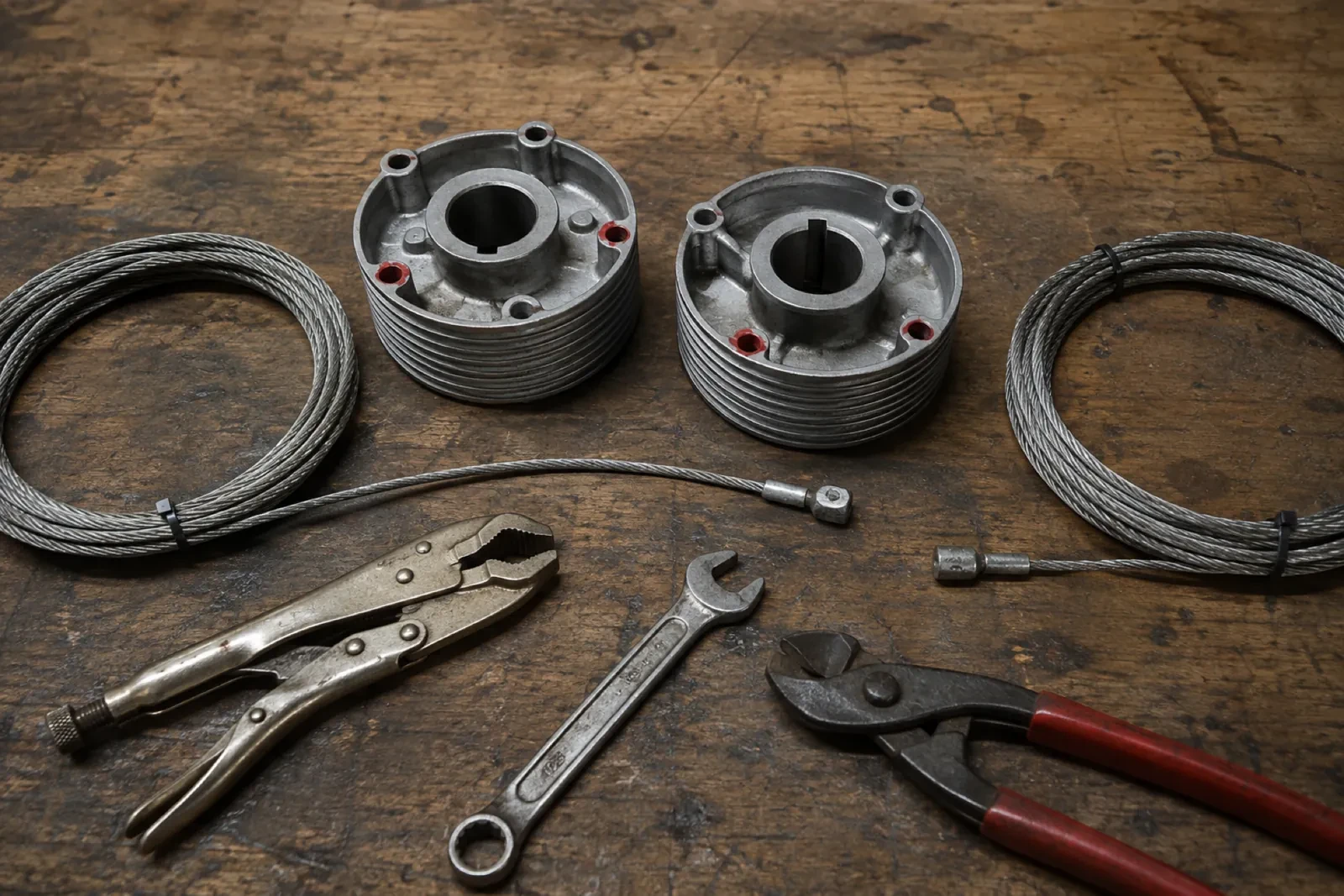
Because of where they live. The bottom loop of each cable sits at floor level in the corner of the garage, exactly where slush and road salt drip off the car and pool through the winter. Salt water works into the strands and rusts the cable from inside, so it looks thin and brown near the bracket while the upper run still looks new. Keeping that corner clear and lightly lubricated slows it considerably.
My opener is decades old. Can the chain drive still be repaired?
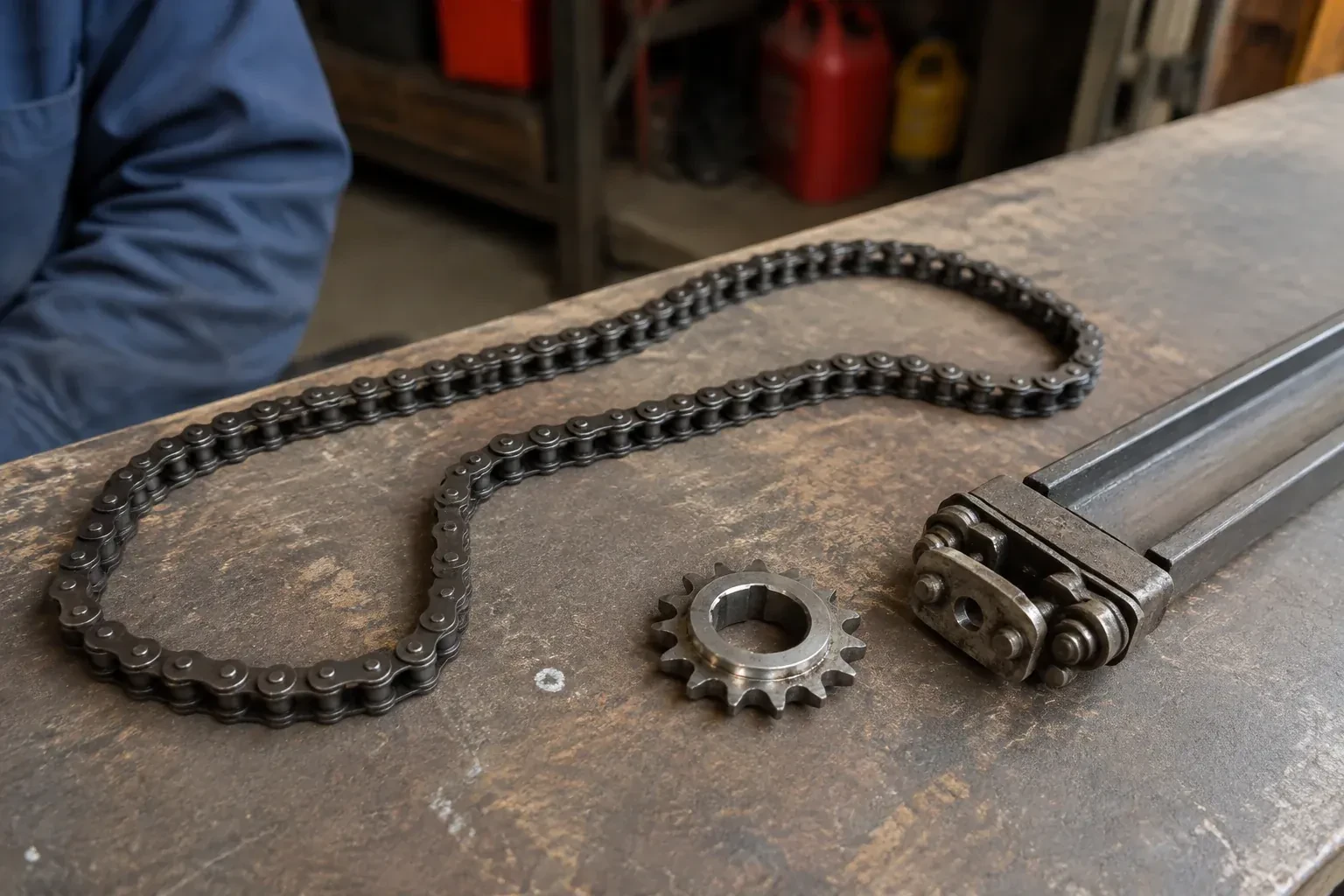
Often, yes. Gear kits, sprockets, chains and trolleys are still made for many older heads, and tension, phase and limits can be set on almost any unit. The limit is parts: some makers no longer support units made before the mid-1990s, and those also lack the photo-eye protection expected today. The technician checks parts availability for your model and lays out repair beside renewal so you can decide with the facts.
Does the hub need its own power?
Yes, from a small plug-in adapter that goes into the same ceiling receptacle the opener uses. There is no battery in the hub itself, so it stays online as long as the receptacle is live. If that receptacle has no spare socket, an approved splitter can be used, or an electrical contractor can add a second receptacle. The adapter should carry a recognized Canadian approval mark, which the technician checks before plugging it in.
Can a wind-rated door be ordered in a custom width, or only in fixed standard sizes?
Manufacturers build wind-rated panels and reinforcement kits around a set of common opening widths, and most homes fall inside that range without any special order. An unusual opening, a converted carriage house or a hand-built garage, sometimes needs a custom width, which lengthens lead time and narrows the track and hardware options available. Measuring the opening early in the visit shows which category a particular door falls into.
Will my current garage door opener stay in place?
That depends on its supported door size and weight, rail arrangement, condition, controls and safety features. The assessment compares its product information with the selected door and checks whether the attachment can be reinforced correctly. When it remains, travel and force are reset for the new balanced assembly. Any opener change is identified separately in the planned scope.
How can repeated vehicle damage be reduced?
Start with the impact pattern and traffic route. Guide guards, bollards, visible floor markings, mirrors, revised staging, vehicle-detection accessories or a different control position may help, depending on the site. Operators should report contact before more cycles spread a guide or curtain defect. Any protective addition must preserve required clearances and door operation.
Do the torsion springs change during conversion?
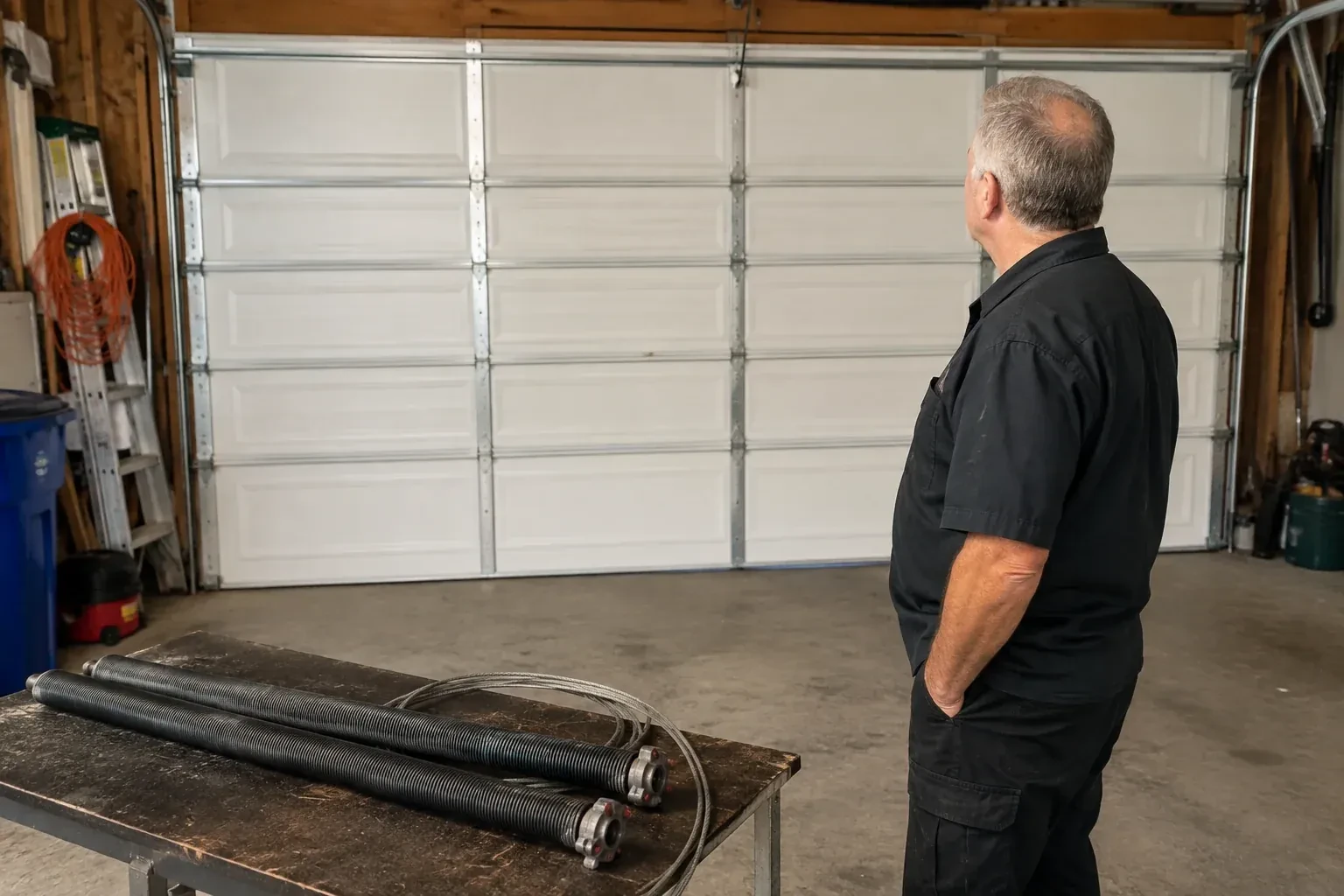
The spring specification is recalculated because track geometry and drum profile change the counterbalance requirement. Door weight, high-lift distance, cable travel, drum dimensions and desired use all inform the selection. Technicians then refine the installed setup through controlled manual-balance checks. Carrying over an old spring solely because it looks serviceable would leave out essential design information.
Request a visit
Customers in Whitby sometimes worry they will be sold a new door when a repair would do. Our practice is the opposite. Repairs are the first choice whenever the panels and frame are sound; replacement is recommended only when the door has genuinely reached its end, and we show you why.