Openers · Whitby
Chain-Drive Opener Repair in Whitby
The motor runs, you can hear it working, but the door never moves.
In plain words
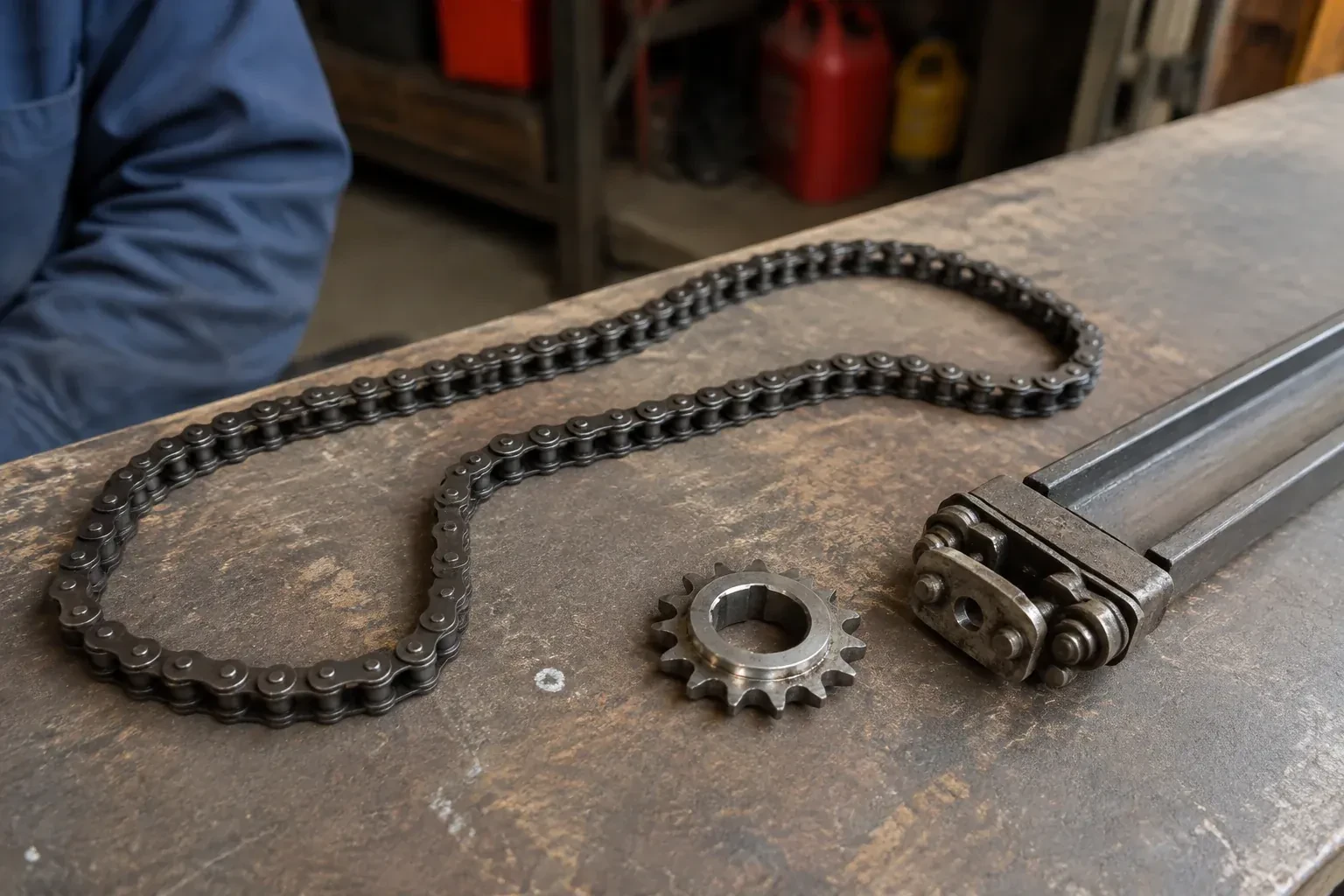
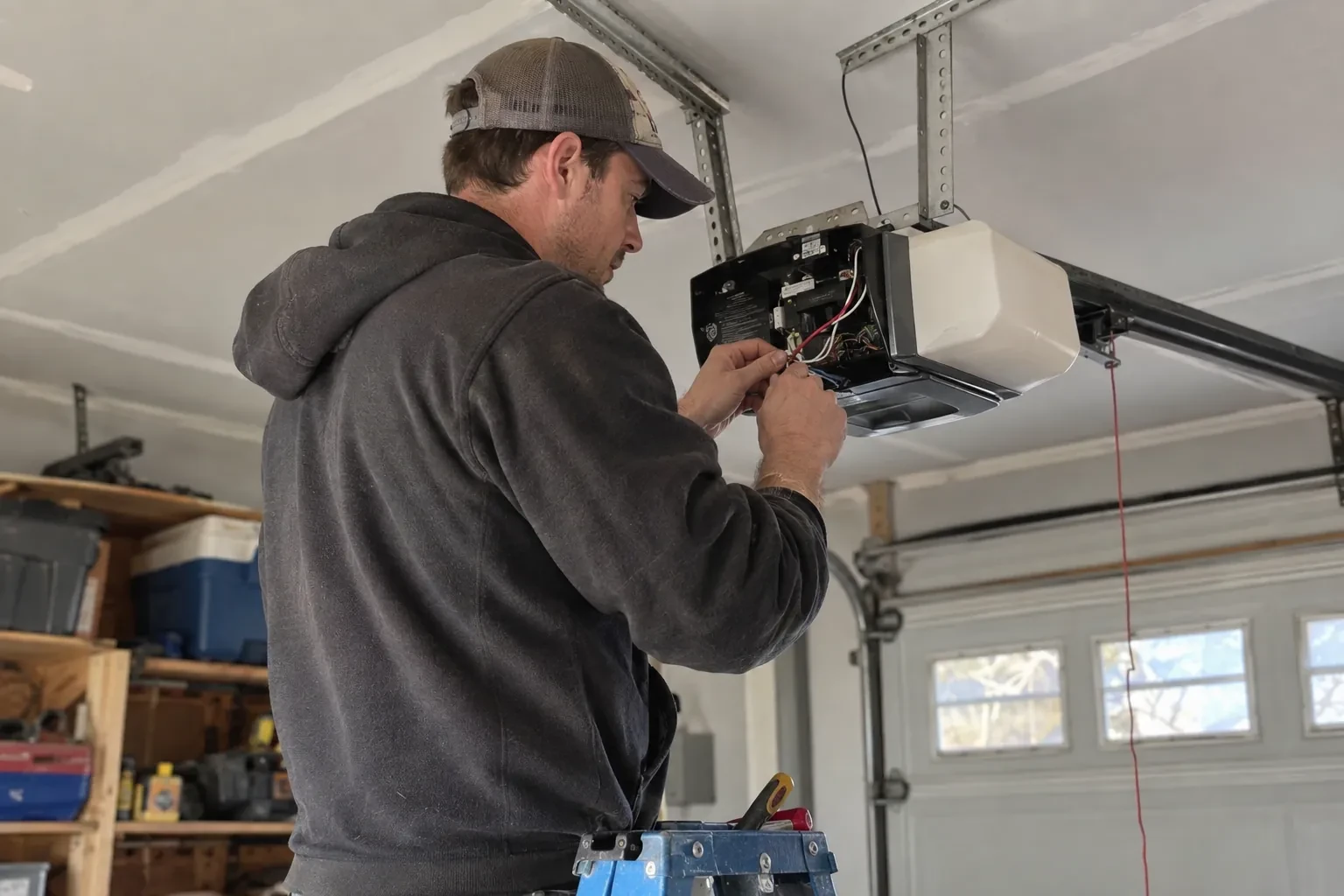
The trolley is the carriage that rides the rail carrying the door arm, and many chain-drive calls end there. If travel limits creep, the trolley runs onto the stop bolt at the end of the rail and the motor hums against it. If the chain was run off the sprocket, the trolley and the motor disagree about where the door is, and the door travels partway no matter how the limits are turned. The technician frees the trolley, puts the chain back in phase with the motor's closed position, resets the limits and confirms the release lever picks the door arm up cleanly.
How the visit goesThe rail shakes when the door runs. The steel straps holding it to the ceiling have worked loose, the chain rattles the length of the garage, and a bolt has already dropped onto the hood of the car.
Chain-Drive Opener Repair
How the visit goes
Sprocket at the head, idler at the door
The chain runs over two wheels: the drive sprocket on top of the motor head and an idler sprocket or pulley at the far end of the rail near the door. Both are inspected. Sprocket teeth that have worn into hooks let the chain ride up and skip under load, usually at the same spot every cycle, and a sprocket that has loosened on its shaft turns a fraction behind the motor. The idler is checked for a seized bearing or a groove worn off centre, which drags the chain to one side of the rail. Matching wear on chain and sprocket usually means both are renewed together so a new chain is not run over old teeth.
Setting the tension by the numbers
With the door closed and disconnected, the two nuts on the tensioner shaft at the trolley are used in order. The outer nut, nearest the door, is loosened until the chain droops below the rail, the inner nut is backed off to make room, and then the outer nut is turned to raise the chain until it sits at the height the opener's own manual calls for on that rail shape, measured at the rail's midpoint. The inner nut is tightened against it to lock the setting. Once the door is reconnected and closed some droop appears in the chain; that is normal provided the measurement returns with the door open.
Getting the chain drive through the cold
In a detached or unheated garage the drive has been set up for winter: force adjusted so the door moves at low temperature without the operator being oversensitive, the rail greased, and the door hardware lubricated before frost. Two habits help. Keep the threshold clear of snow and slush so the bottom seal does not freeze to the slab, and if the door reverses on a bitter morning, free the seal rather than pressing the button repeatedly; the operator is doing what it should. Expect the chain to sound a touch different at minus twenty, and let the garage warm before deciding something is wrong.
Chain-Drive Opener Repair
In the van
Inner and outer trolley
Sprocket and shaft assembly
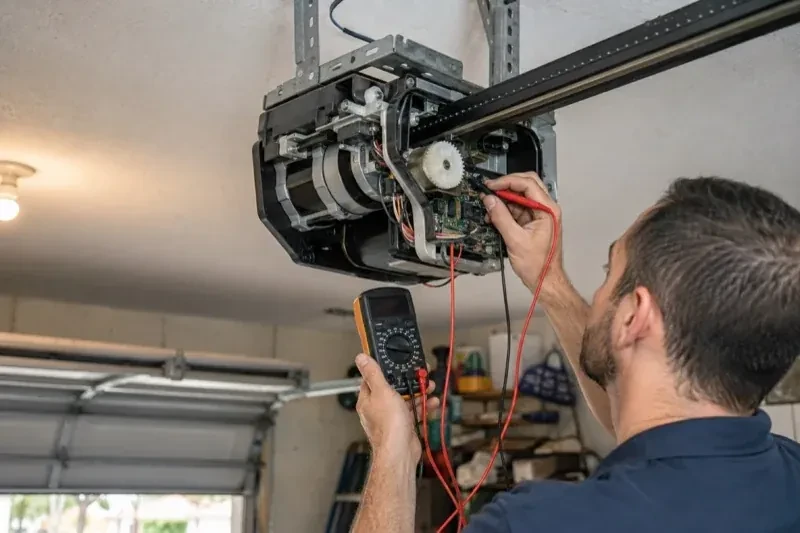
Motor start capacitor
Idler sprocket or pulley
Chain tensioner nuts and shaft
Chain-Drive Opener Repair
What affects the quote
Adjustment only, or parts as well
A visit that ends with tension, phase, limits and force set and the reversal tested is the simplest case. Each part fitted on top of that appears as its own line.
Two operators in one visit
A double garage with two chain drives, or a house and a detached workshop, share the travel and setup and are quoted as one visit with two repairs.
When the visit happens
An evening, weekend or holiday call costs the same amount as one on a weekday for a chain-drive repair. The exact figure is confirmed once the technician has looked at the chain, the rail and the gear kit in person.
What to have ready
- Do the photo-eye sensors near the floor show steady lights?
- Does the motor run when you press the button, and does the door move at all?
- With the red cord pulled, does the door lift by hand and stay about a metre up?
Chain-Drive Opener Repair: questions
QuestionsWhy does the door jerk or jump at the same spot every time?
A repeatable jolt at one point on the rail is usually a chain problem meeting a sprocket problem: a stiff link or a spread master link passing over worn sprocket teeth, so the chain rides up and drops a tooth. It can also be a burr or a splice plate on the rail where the trolley catches, or a roller on the door hanging up in the track at that height. The technician runs the door by hand first to tell the two apart.
My opener is decades old. Can the chain drive still be repaired?
Often, yes. Gear kits, sprockets, chains and trolleys are still made for many older heads, and tension, phase and limits can be set on almost any unit. The limit is parts: some makers no longer support units made before the mid-1990s, and those also lack the photo-eye protection expected today. The technician checks parts availability for your model and lays out repair beside renewal so you can decide with the facts.
Should I oil the chain?
Follow the opener's manual, and lean toward less. Many makers ask for the chain to be left dry or given only a very light treatment, because a heavily oiled chain collects grit that grinds the sprocket and drips onto the car. The grease that matters is white lithium on the rail where the trolley runs, renewed every two or three years, and on the gears inside the head, which the technician packs during a repair. Penetrating sprays are kept away from the whole drive.
Related services
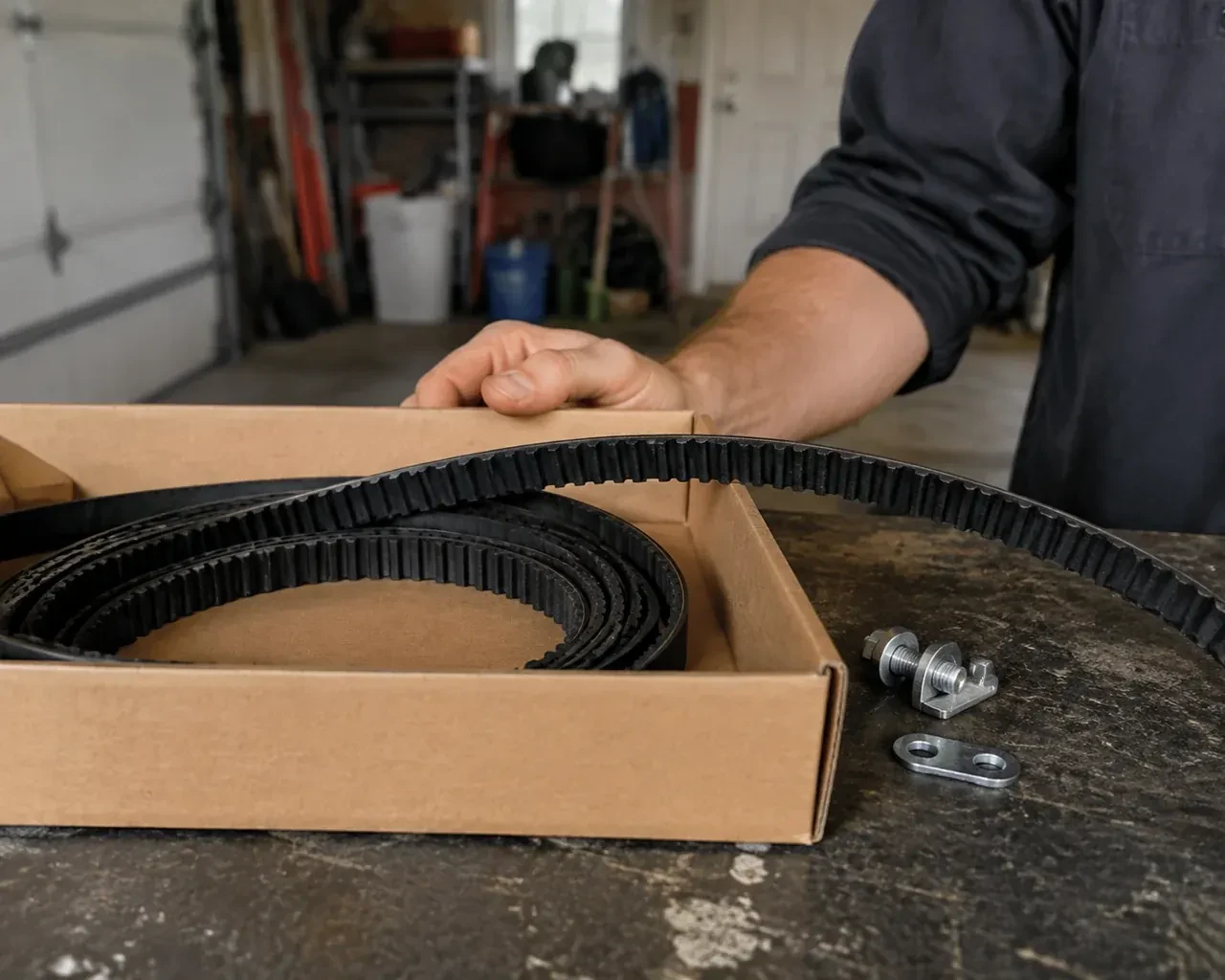
- Belt-Drive Opener RepairAfter the power came back you pulled the red cord to get the car out.
- Garage Door Opener ReplacementThe opener in the ceiling is older than the car parked under it.
- Photo-Eye Sensor Alignment or ReplacementSince shelving went up along the garage wall, the door will not close and both sensor lights are dead.