Springs · Whitby
Torsion Spring Replacement
On a cold morning the remote does nothing useful: the light comes on, the motor turns briefly, the door stays shut.
In plain words
The finished result is a door that behaves the way a good garage door should: it lifts by hand with light effort, stays where you leave it at mid-height, closes softly and lets the opener run with little strain. Reaching that point involves measuring the door, choosing a matched spring, winding it to the correct turns and testing the balance through the full travel. The technician then runs the opener's reversal test and lubricates the moving parts. You are left with a record of the spring installed, so future service starts from known specifications.
How the visit goesThe door drops the last stretch to the floor rather than settling, and when you stop it halfway by hand it slides down instead of staying put. Balance has drifted, and the spring is no longer holding its share of the weight.
Torsion Spring Replacement
How the visit goes
Understanding how the door is used
How the household uses the door shapes the spring that suits it. The technician asks how many times a day it typically opens, whether it is the main entrance to the home, and when springs were last replaced, if ever. A door cycled eight times a day accumulates use far sooner than a weekend garage. Age of the door and any previous partial repairs are also relevant, especially a single spring changed on a paired system. This conversation lets the customer choose between a standard-cycle spring and a higher-cycle option with a clear picture of what each means for them.
Fitting a matched pair
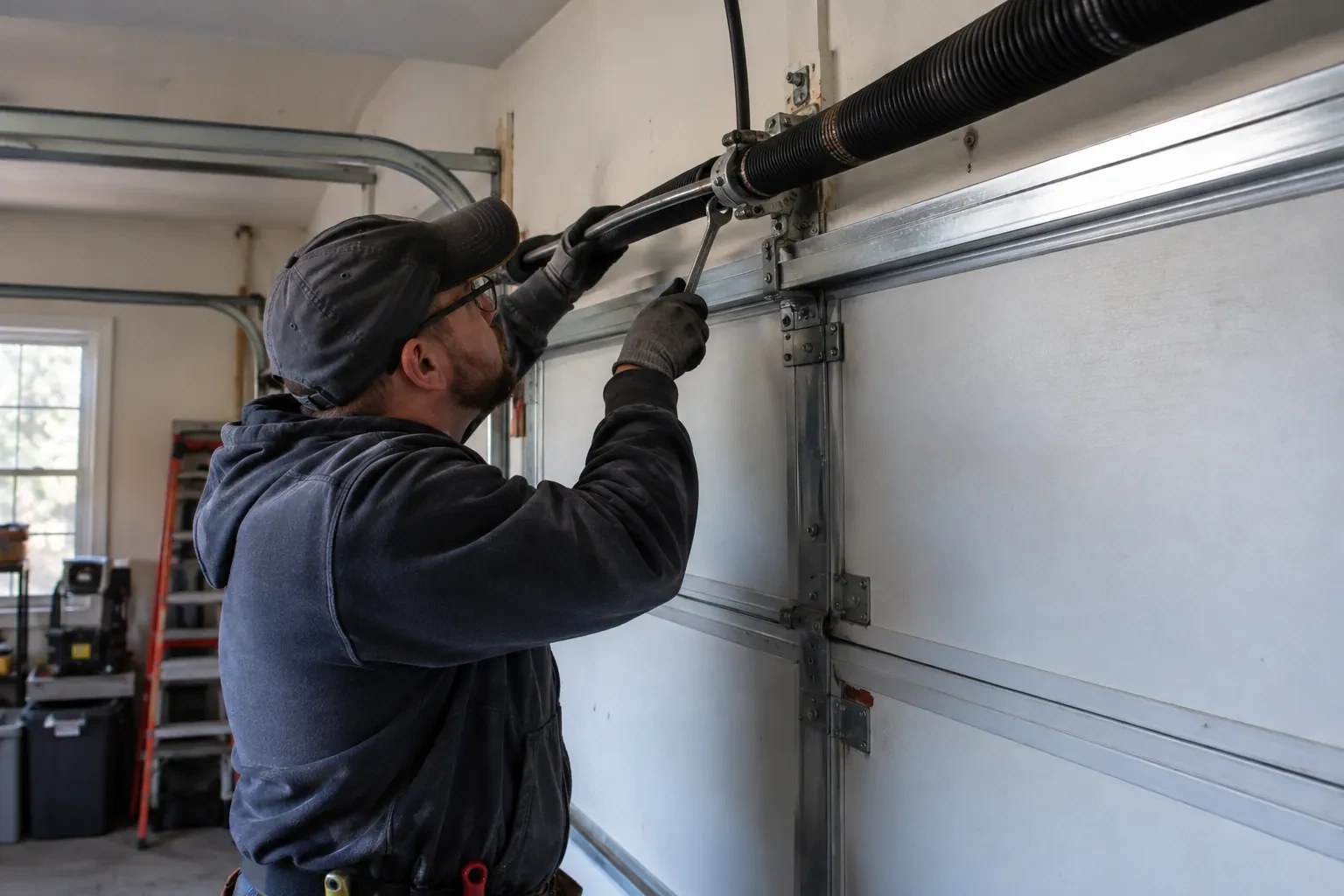
On a two-spring door the springs are installed as a set: one left-wound and one right-wound, mirrored on either side of the centre bracket, with matching wire size, diameter and length so each carries half the load. Both stationary cones bolt to the centre bracket and both winding cones face outward. The technician winds each spring the same number of quarter turns, alternating between them, so the shaft is never loaded unevenly. Once both are set, the door is balanced and tested as one system. Equal springs mean equal wear, so the pair reaches the end of its life together rather than one after the other.
Through the seasons
The new spring has been set for the door as it is today, and the seasons are part of its life. Cold mornings make steel and grease a little stiffer, so the door may feel marginally slower in deep winter while still balanced; lubrication in autumn helps. Slush and road salt carried in on tires settle on the bottom brackets and cable ends, so a rinse and a light spray in spring slow corrosion where the cables anchor. Summer humidity is easier on hardware but rewards a dry, clean track. Small seasonal habits like these let the spring reach its full rated cycle count.
Torsion Spring Replacement
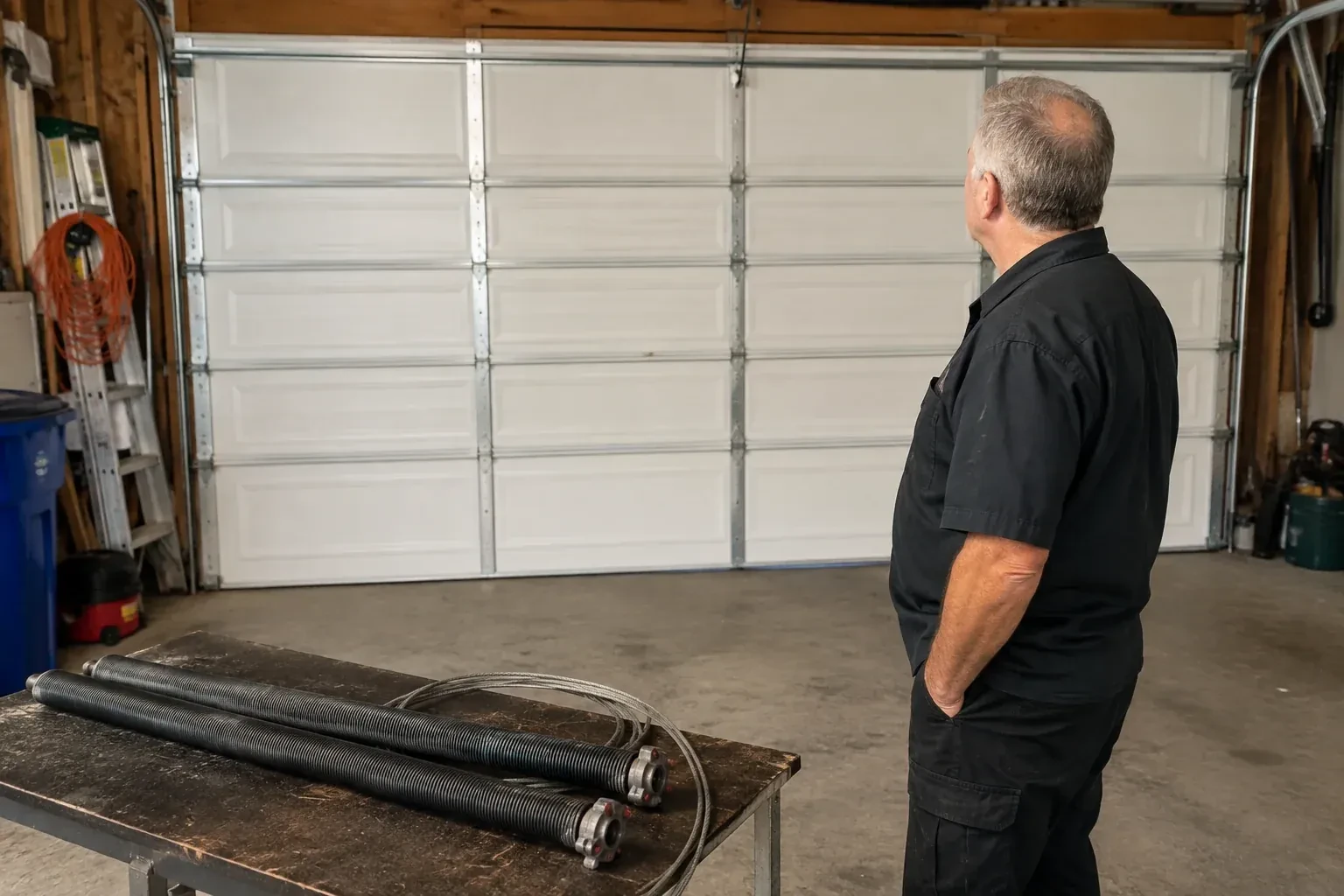
In the van
End bearing plates
Torsion springs, oil-tempered or galvanized
Winding bars
Wire gauge and tape measure
Locking pliers for the track
Torsion Spring Replacement
What affects the quote
Spring finish
Oil-tempered and galvanized springs suit different garages. A coated or galvanized spring for a damp or salt-exposed space is a choice the customer can make when the specification is discussed.
Age of the door and matching hardware
Older doors sometimes carry shaft diameters, bearing plates or drum patterns that are no longer common. Sourcing compatible hardware or adapting the mounting adds to the scope for these doors.
One spring or two
A single-spring door needs one spring; a paired system is usually replaced as a matched set of left- and right-wound springs. The number of springs and whether both are replaced is the largest single influence on the scope.
What to have ready
- Did you hear a loud bang before the door stopped working?
- How many springs are mounted above the door, one or two?
- Is the door currently closed, open, or stuck partway?
Torsion Spring Replacement: questions
QuestionsWhat other parts are often replaced with the spring?
The shaft is free during a spring change, which makes it the natural time to renew the centre bearing and end bearings if they grind or wobble. Lift cables that show fraying or rust at the bottom brackets are replaced so the new spring pulls on sound steel, and cracked or worn drums are swapped. On older doors, a corroded centre bracket or loose lag bolts may also be addressed. Each item is shown and explained before it is added.
What is the difference between galvanized and oil-tempered springs?
Oil-tempered springs are the traditional dark grey or black coil; they hold their tension well over time and are widely used. Galvanized springs have a zinc coating that resists rust, which is useful in damp garages, though they tend to relax slightly and may need a small adjustment after settling in. Both are available in standard and high-cycle ratings, and the technician can explain which suits your garage.
If only one spring broke, should both be replaced?
On a two-spring door both springs have completed the same number of cycles, so the intact one is usually close to the end of its life as well. Replacing the pair gives the door two matched springs sharing the load evenly and a fresh cycle count on both sides. The technician looks at the remaining spring's condition and the door's configuration, then explains the reasoning so you can choose the scope with a clear picture.
Related services
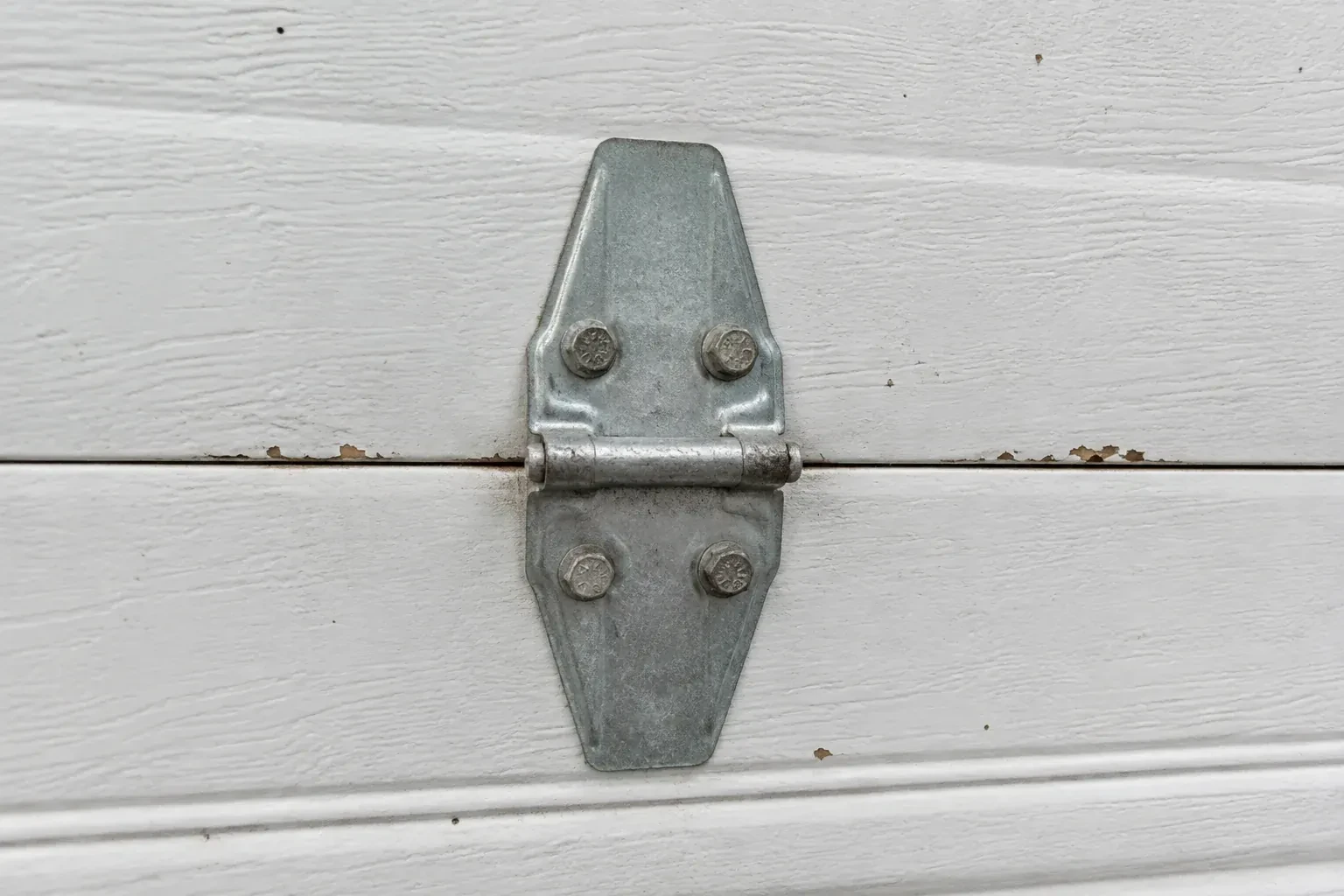
- Garage Door Hinge ReplacementEvery time the door goes up there is a sharp pop from the same spot, about a metre off the floor, and the whole door gives a little shudder.
- Garage Door Track Repair or ReplacementYou bought the house with a door that sticks near the top of its travel.
- Garage Door Cable ReplacementSomeone left the snow shovel leaning in the opening and the door came down on it.