Garage Doors
Understanding your door
Good advice is worth more than a sales pitch. In this section we explain how doors and openers work, what wears out and why, and how to tell a small job from a big one.
Straight talk
Will you tell me if the door should not be used?
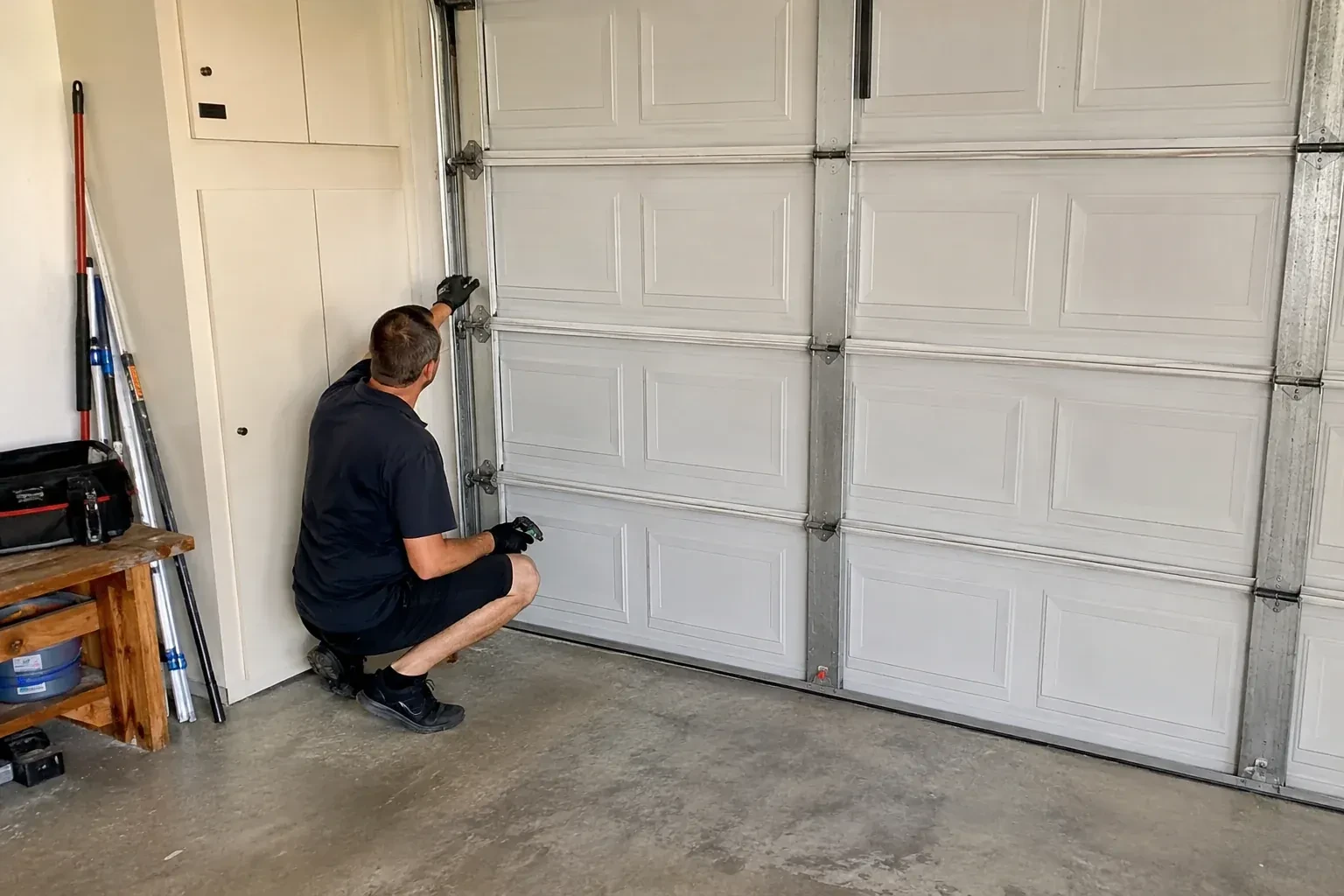
Yes, plainly and at the door. A slack or frayed cable, a gap in a spring coil, a door hanging crooked, a bracket pulling out of the framing or an opener that fails the reversal test are the kinds of findings that put an item in the stop-use group. When that happens you see the reason yourself, the door is left resting in a safe spot with the opener unhooked, and the fix is written up and quoted so it can be booked.
Is a tune-up worthwhile on a door that seems to work fine?
Yes, because a garage door wears quietly. Hinge pins run dry long before they squeal, screws back out a turn at a time, springs lose tension by degrees and sensors drift. A yearly tune-up keeps the door in the condition its maker intended, catches a fraying cable or a cracked hinge while it is a small job, and confirms the safety reversal is doing its work. It is the same logic as an oil change on a car that is still running.
Our shop's overhead door was hit by a delivery vehicle. Is this the same service?
Yes, with the extra weight and size of a commercial door taken into account. The door is secured, the impact damage to sections, track and brackets is assessed, and the reset is paired with whatever track or hardware replacement the strike requires. Because the opening usually needs to be secured before the premises can close for the night, tell the technician when you call so the right track profile and rollers arrive with them.
Is a panel the same thing as a section?
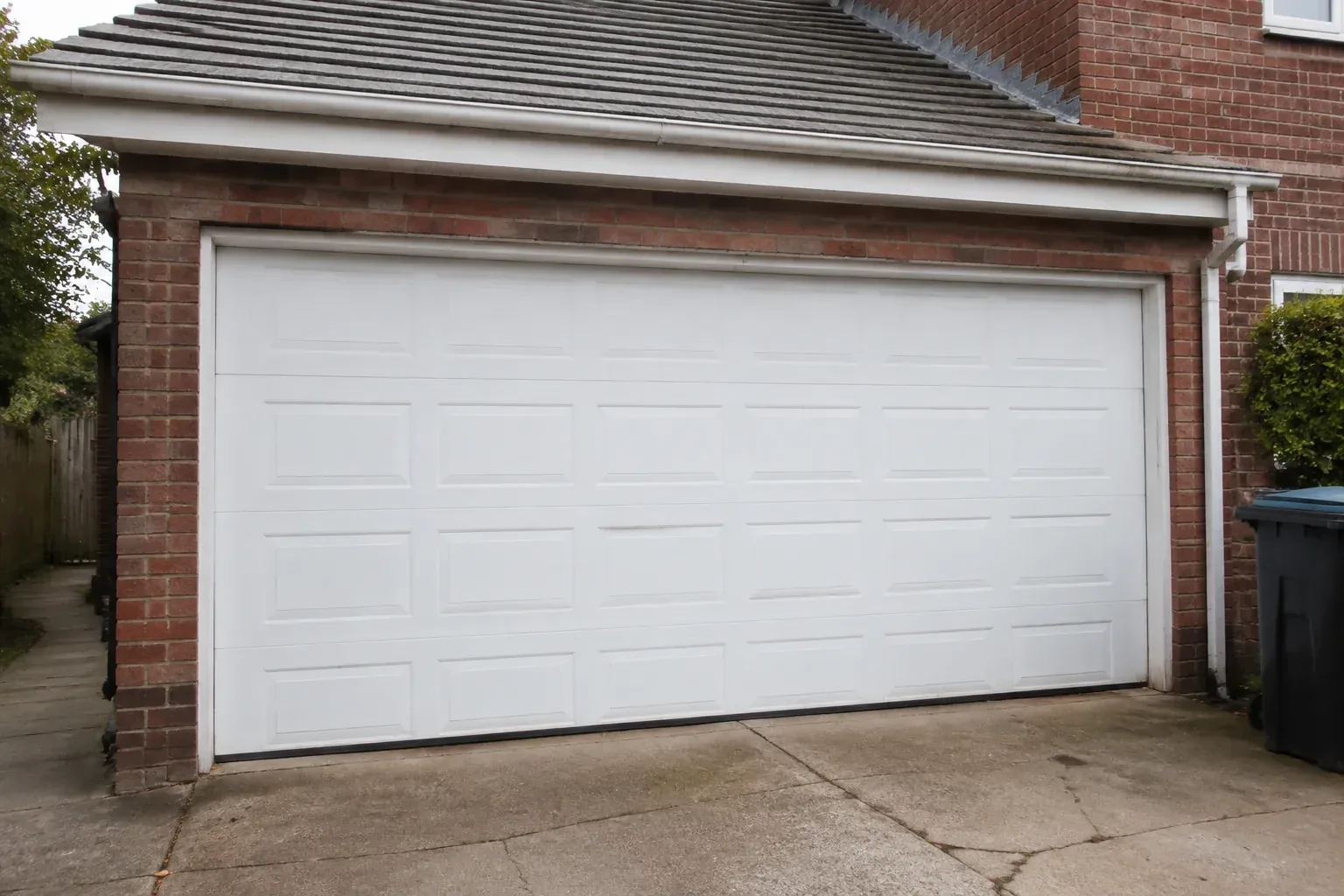
In everyday speech, yes: people call the horizontal pieces of a garage door panels. In the trade's own terminology a section is the full-width piece that hinges to its neighbours, and a panel is one of the raised or recessed shapes embossed across it, so a door might have four sections of four panels each. When you ask for panel replacement, the technician understands you mean the section, and will confirm which one.
My garage floor is uneven. What are the options?
Three, and they can be combined. A taller bulb-style seal compresses more and follows a modest dip or crown. A threshold seal fixed to the floor follows the slab's existing contour and gives the door a raised, consistent line to land on where it is dished or sloped. And where the floor has heaved or broken up badly, grinding or patching the concrete is a separate job that makes any seal perform better. The gap map from the first look shows which applies.
What is the difference between perimeter weatherstrip and the bottom seal?
The bottom seal is a rubber or vinyl strip fixed to the lower edge of the door itself and presses against the floor. Perimeter weatherstrip is fixed to the frame, running up both jambs and across the header, and the closed door presses against it from inside. They wear differently and are replaced separately, though it is common to renew both in one visit when each is showing its age.
What is an automatic garage door lock, and does it replace the manual one?
It is a motorised deadbolt, offered as an accessory by some opener makers, that slides a bar into the track each time the door closes and withdraws it before the door opens, all controlled by the opener. It gives the physical security of a manual lock without the need to remember it. It can sit alongside a manual lock kept for outages, or take its place entirely.
Can worn rollers make the door come off its track?
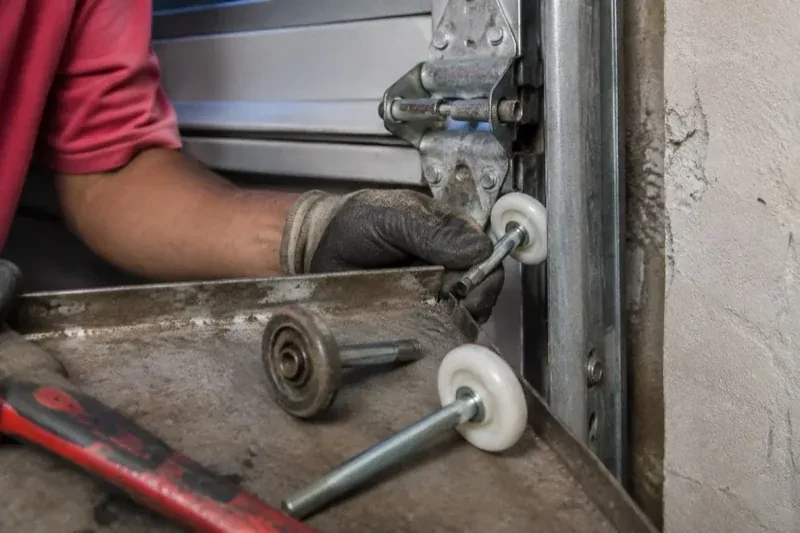
Yes, and it is one of the main reasons to replace them before they fail. A wheel worn oval, a bent stem, or a short stem sitting loose in a double hinge lets a section drift until the wheel climbs onto the track lip; from there a bump or a gust can carry it out entirely. A door hanging crooked is a far larger repair than a set of rollers. Fresh, correctly sized rollers seated in a squared track are what keep the door where it belongs.
What do the numbers stamped on garage door hinges mean?
They mark the joint the hinge belongs to, counted from the bottom. A 1 goes at the joint above the bottom panel, a 2 at the next one up, then 3, with 4 and 5 on taller doors. Each higher number stands the roller a little further off the door face, so the door leans into the jambs when closed and follows the track as it climbs. Centre hinges use the geometry of a 1.
What is the track made of, and what sizes are there?
It is galvanized steel folded into a channel that the roller wheels ride in. Residential doors almost always use two-inch track, with three-inch reserved for heavier or wider doors. The curved piece comes in a radius, commonly 12 or 15 inches, that sets how much headroom the door uses. Replacement pieces are ordered to the same profile, gauge and radius as the rest of the set.
What makes a cable fray?
Fraying is individual wires breaking, and it comes from two things: bending fatigue where the cable wraps the drum or pulley, and rubbing where it touches something it should not, such as a bent track edge, a rough drum groove, a seized pulley or a bracket sitting crooked after a bump. Corrosion speeds both. The technician looks for the rough edge so the new cable does not meet it.
What other parts are often replaced with the spring?
The shaft is free during a spring change, which makes it the natural time to renew the centre bearing and end bearings if they grind or wobble. Lift cables that show fraying or rust at the bottom brackets are replaced so the new spring pulls on sound steel, and cracked or worn drums are swapped. On older doors, a corroded centre bracket or loose lag bolts may also be addressed. Each item is shown and explained before it is added.
What is a safety cable, and does my door need one?
A safety or containment cable is threaded down the inside of each extension spring and fixed at the hanger behind and the bracket in front. It carries no load in normal use. If a spring snaps, the cable keeps the broken halves in place beside the track. Every extension-spring door should have one each side, and the industry's inspection checklist asks for it. Doors installed decades ago often have none; they are added with the new springs.
How often does a garage door need a balance adjustment?
There is no fixed interval; the door tells you. Many doors go years between adjustments, especially when they are lubricated and the springs were sized correctly. A hand test each season is the reliable guide: if the released door holds at about a metre and stays fully open, it is fine. When it starts to drift or sink, that is the time.
What do the blinking lights on the opener mean?
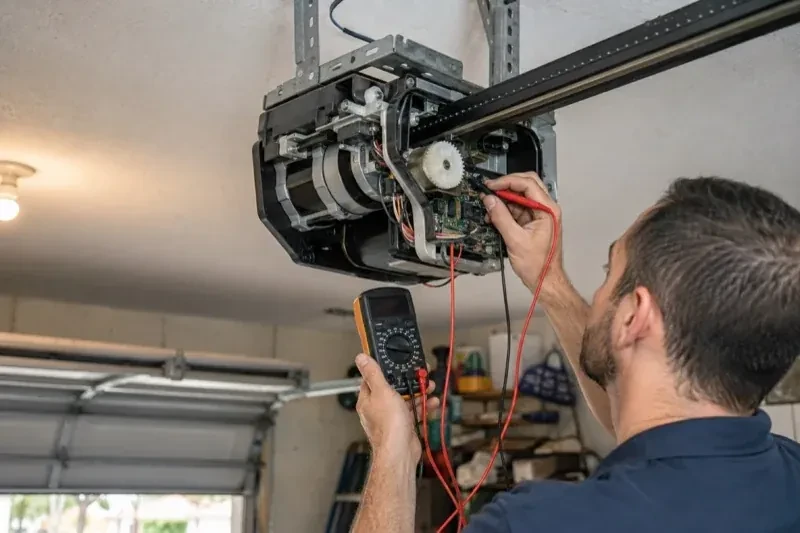
They are a diagnostic code. On openers made in roughly the past fifteen years, the head unit flashes its lights, or a pair of up and down arrows, in a counted pattern such as one flash then five. Each pattern corresponds to a fault family on the maker's chart for that model: sensor circuit obstructed or open, motor commanded but not moving, more force than allowed. The technician reads the pattern, then confirms it by hand, since one fault can imitate another.
Why does the door jerk or jump at the same spot every time?
A repeatable jolt at one point on the rail is usually a chain problem meeting a sprocket problem: a stiff link or a spread master link passing over worn sprocket teeth, so the chain rides up and drops a tooth. It can also be a burr or a splice plate on the rail where the trolley catches, or a roller on the door hanging up in the track at that height. The technician runs the door by hand first to tell the two apart.
Will my remotes and keypad still work afterwards?
Yes. Belt, trolley and pulley work happens on the rail and leaves the operator's memory untouched. Replacing the gear at the motor head means opening the head unit, and on some models that is a good moment to confirm every remote, the keypad and any in-car buttons afterwards. The technician tests each before leaving and re-teaches any that need it.
What is a wall-mount opener and who is it for?
It is the operator that lives on the wall rather than the ceiling. Fixed where the torsion shaft ends, it rotates the shaft to raise and lower the door, and nothing hangs overhead. It suits cathedral and low ceilings, garages with lofts or lifts, and anyone who wants a very quiet door. Because there is no trolley holding the door shut, it comes with a powered deadbolt on the track and a monitor that stops the door if a lift cable slackens.
Can the sensors be mounted on the wall instead of the track?
Track-mounted clips are the preferred, manufacturer-recommended arrangement. A wall-mounted angle bracket is the next choice where the track sits far back from the opening or the clip keeps getting bumped; mounting to the concrete floor is kept as a last resort, used only when the sensor's own instructions allow it. The same rules apply: both sensors at a matched height no higher than about 15 cm, level, facing each other, with the wire secured. Wall mounting sometimes gives a cleaner beam line on older doors with unusual track layouts.
Can a phone app replace remotes and keypads?
On connected openers the app is one more control, useful for checking the door is closed and letting someone in from afar. Remotes, the keypad and the wall control keep working without a network, so most households keep them alongside the app. During programming the technician confirms the app account is in your name and that no previous owner's phone is still linked, and tests the app with the other controls.
What happens if my internet goes down?
Your wall console, remotes and keypad talk directly to the opener and carry on as normal, and the door's safety features are entirely local. What pauses is the phone side: status, alerts and commands from outside wait until the hub reconnects, which it does by itself when the router comes back. If you replace or rename your router, the hub is walked through the join steps again.
Why should the door be closed before I pull the handle?
Because once the trolley lets go, the door is held only by its springs. A well-balanced door will stay put wherever it is, but a door whose springs are tired can drop, and one that is over-tensioned can rise on its own. Even with the door already on the floor it can still move unexpectedly, so keep the opening clear whenever the release is pulled. The industry checklist and opener makers give the same instruction: disconnect with the door fully closed.
Which documents should I keep after installation?
Retain the door and opener instructions, product and component identifiers, finish details, the written scope and the record of completed checks. These items help with care and later parts identification. Keep personal access codes separately rather than adding them to a service record that may be shared with future technicians or property managers.
Can insulated doors include windows?
Yes. Windows are selected with the section design so their frames, glazing and reinforcement suit the door. Placement influences daylight, privacy, exterior proportions, thermal characteristics and completed weight. Single or multi-pane options may be available for a given model. Settling the layout before ordering lets the counterbalance and hardware specification account for the glazed sections from the beginning.
How is the required wind pressure determined?
The value comes from the applicable building-code process and project information, often with input from a designer or municipal building official. Reference wind pressure, exposure, building height, opening size, wall location, importance category, and internal pressure can contribute. A street address or a general weather description alone is not a complete design basis.
Which opener safety checks are completed after installation?
The technician confirms that photo eyes are aligned and respond when their beam is interrupted during closing. Contact reversal is tested according to the opener instructions, and open and closed travel limits are reviewed. Wall controls, remotes and the manual release are also operated. These checks connect the automatic equipment to the new door's actual movement instead of carrying forward former settings.
Will my current garage door opener work with the glazed door?
Possibly, after its model, condition, mounting arrangement and compatibility are checked against the selected door. Door size and weight, top-section reinforcement, travel path and control requirements all matter. The counterbalance system carries the door weight; a compatible operator then controls a balanced door. Settings are established for the new assembly and its safety functions are tested during commissioning.
Does all framing need to be complete first?
The jambs, header, spring anchoring area and overhead attachment points used by the door system need to be complete, accessible and accepted by the responsible project party. Their locations depend on the selected track and counterbalance arrangement. If drywall or cladding will cover them, coordination happens before closing the surfaces. Structural design or framing changes remain separate project responsibilities, guided by the building drawings and door requirements.
Can several doors be assessed during one facility visit?
Yes. Numbering each opening and providing a short symptom list keeps the assessment organized. The technician can define the requested repair for the affected door and record visible conditions on comparable doors separately. Shared model data and installation history may help with parts planning, while each opening still receives its own mechanical and control checks before any work is scoped.
How often should a commercial rolling door be inspected?
Follow the door and operator manufacturers' intervals, adjusted for cycle count, exposure, impacts and facility conditions. Industry guidance supports periodic technician inspection at least annually for rolling doors, while a labelled fire door also follows the applicable fire-safety inspection and testing requirements. Visible facility checks between visits help identify changes early.
How is the door tested after conversion?
Testing starts with controlled manual travel. Technicians observe balance at several positions, level movement, roller engagement, cable seating, clearances and transition through the curves. After the mechanical system performs properly, powered cycles verify open and closed limits, operator behaviour, emergency release and applicable protective functions. Fasteners, supports and component records receive a final review before demonstration.