Springs · Whitby
Garage Door Hinge Replacement
Every time the door goes up there is a sharp pop from the same spot, about a metre off the floor, and the whole door gives a little shudder.
In plain words
What comes back is a door that moves as a single piece. The panels fold around the curve without a gap opening on one side, the rollers ride flat in the track instead of leaning, and the pop a metre off the floor is gone. With the opener released, the door lifts by hand with light effort and holds at waist height, which shows the hinge work has left the balance undisturbed. You also get a note of the hinge numbers, gauge and any backer plates fitted, plus a look at the small routine of tightening and lubricating that keeps hinges working for many years.
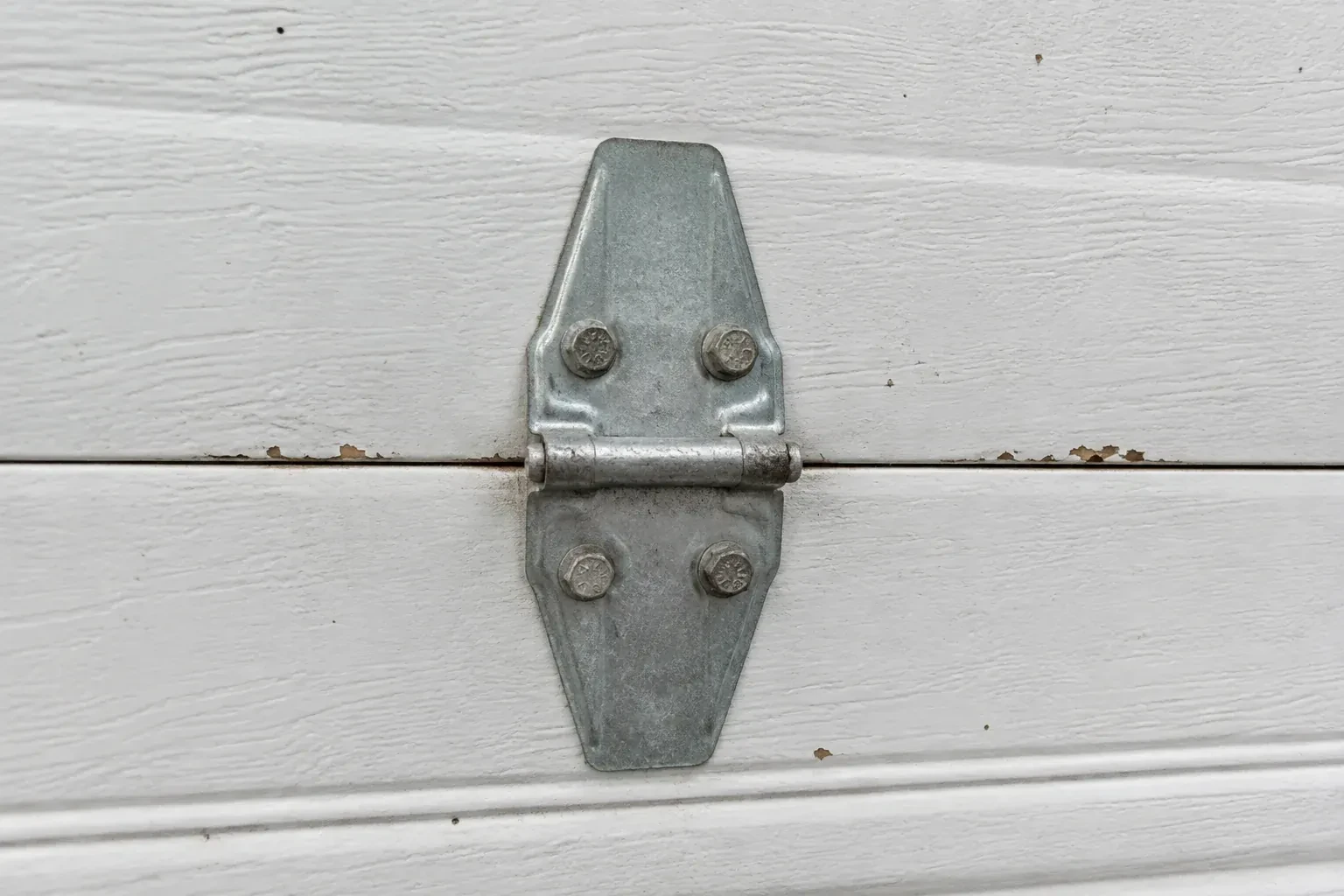
How the visit goesPressing a hand against one of the middle hinges makes it rock on the panel. The screws turn and turn without ever tightening, and there is a rattle from that spot every time the door settles onto the floor.
Garage Door Hinge Replacement
How the visit goes
Why the hinge gave up
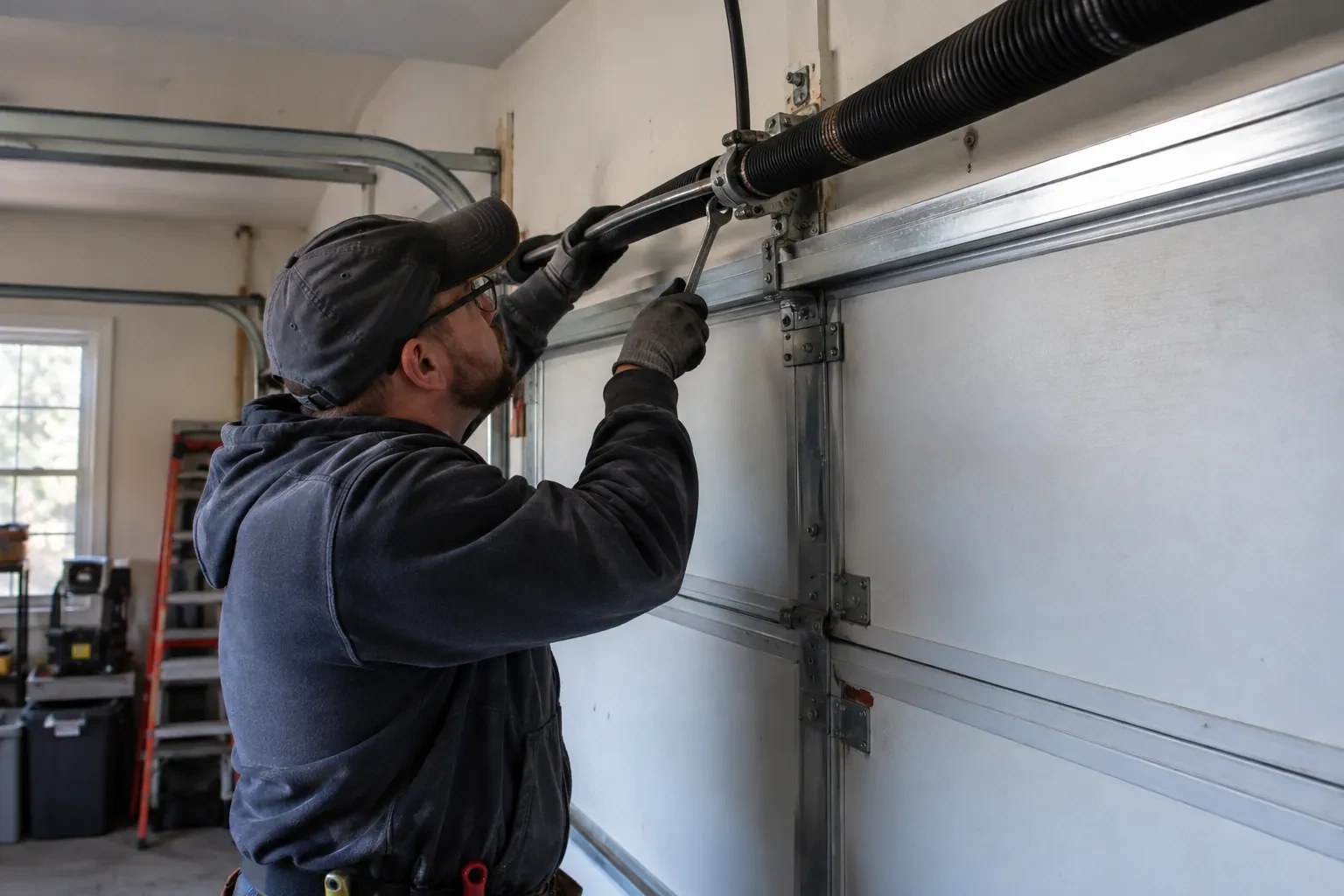
The technician wants the reason as much as the symptom. A door that is out of balance is dragged by the opener, and each hinge takes a share of that force many times a day. A vertical track that has shifted pinches the panels at the curve, and the hinge at that height flexes until it cracks. A bumper touch bends an edge hinge in a way that shows up as rubbing panel edges. Vibration alone works screws loose over the years. You will be asked what the door was doing before the hinge failed, because a stiff, jerky or noisy door before the break points to the cause.
Going over the rest of the hardware
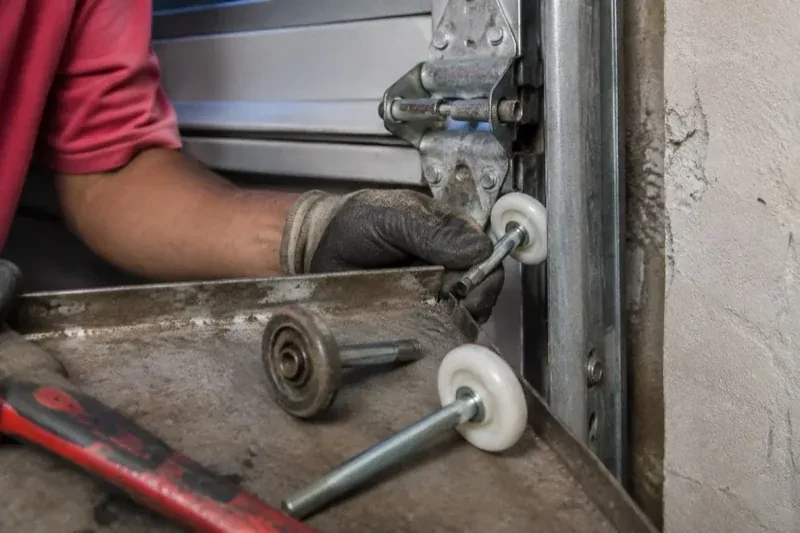
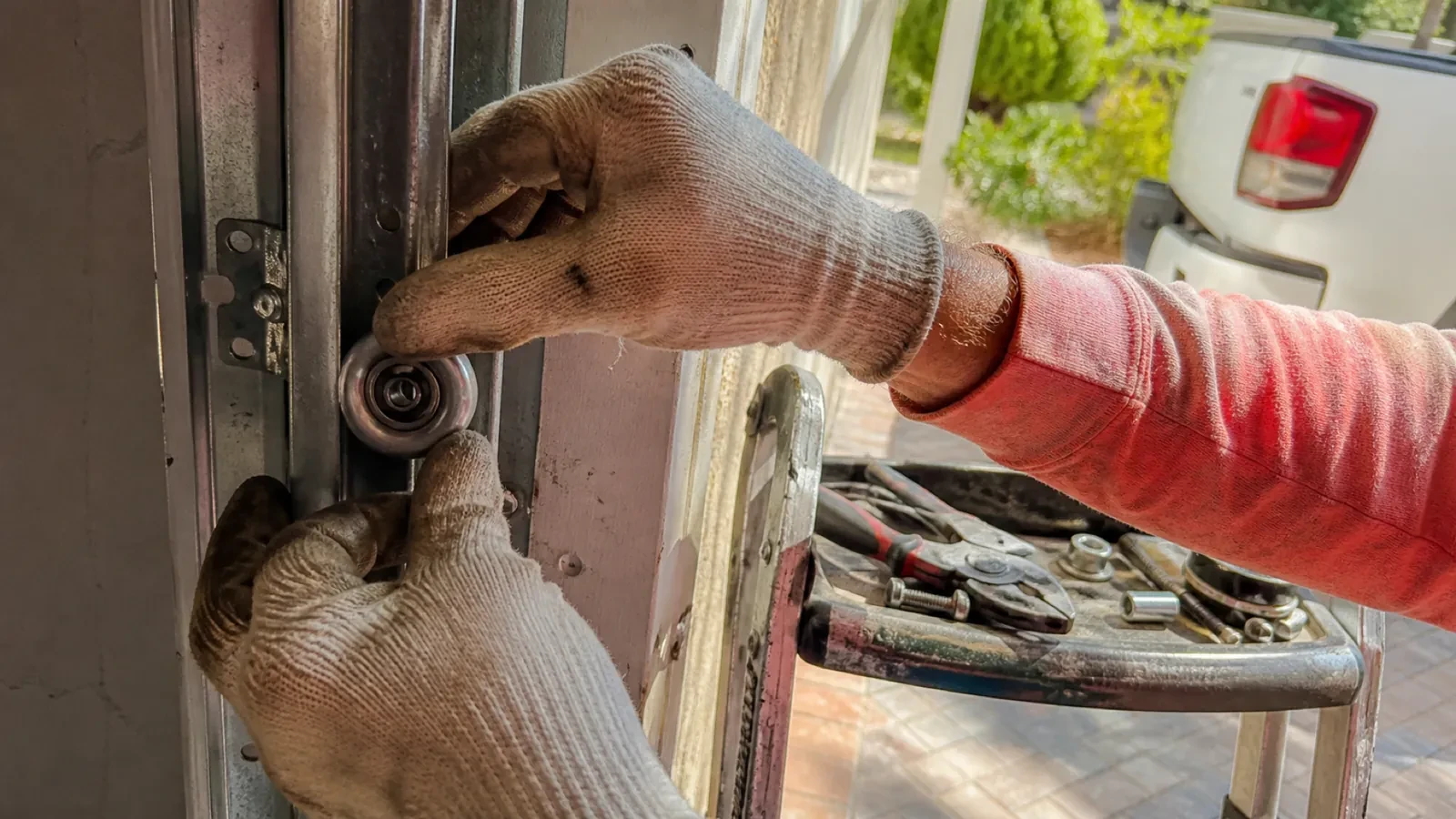
With tools out and the door still, the technician goes down the whole door: every hinge screw snugged, roller stems and hinge knuckles given a garage door lubricant, top fixtures checked for tight fasteners, and the track brackets on the jambs confirmed secure. The bottom brackets are looked at but left alone, because they anchor the lift cables and are under spring tension. Struts and their fasteners get the same pass. This sweep takes little time and usually catches the next loose screw before it becomes the next cracked hinge, so the door leaves in better shape than the single repair would suggest.
Learning the door's new sound
A well-hinged door has a sound, a steady rumble with no clicks, and it is worth getting to know it. A new pop or click at a fixed height points at a hinge or roller at that joint. A grinding note from one end suggests a roller bearing. A rattle when the door settles onto the floor is often a loose centre hinge screw. Because you now know what the door sounds like when everything is tight, a change stands out early, while it is a screw or a single hinge rather than a bent panel. A phone recording of the healthy door is a handy reference.
Garage Door Hinge Replacement
In the van
Track clamps or locking pliers
Hex-head self-drilling screws
Replacement rollers
Centre hinges
Carriage bolts, nuts and washers
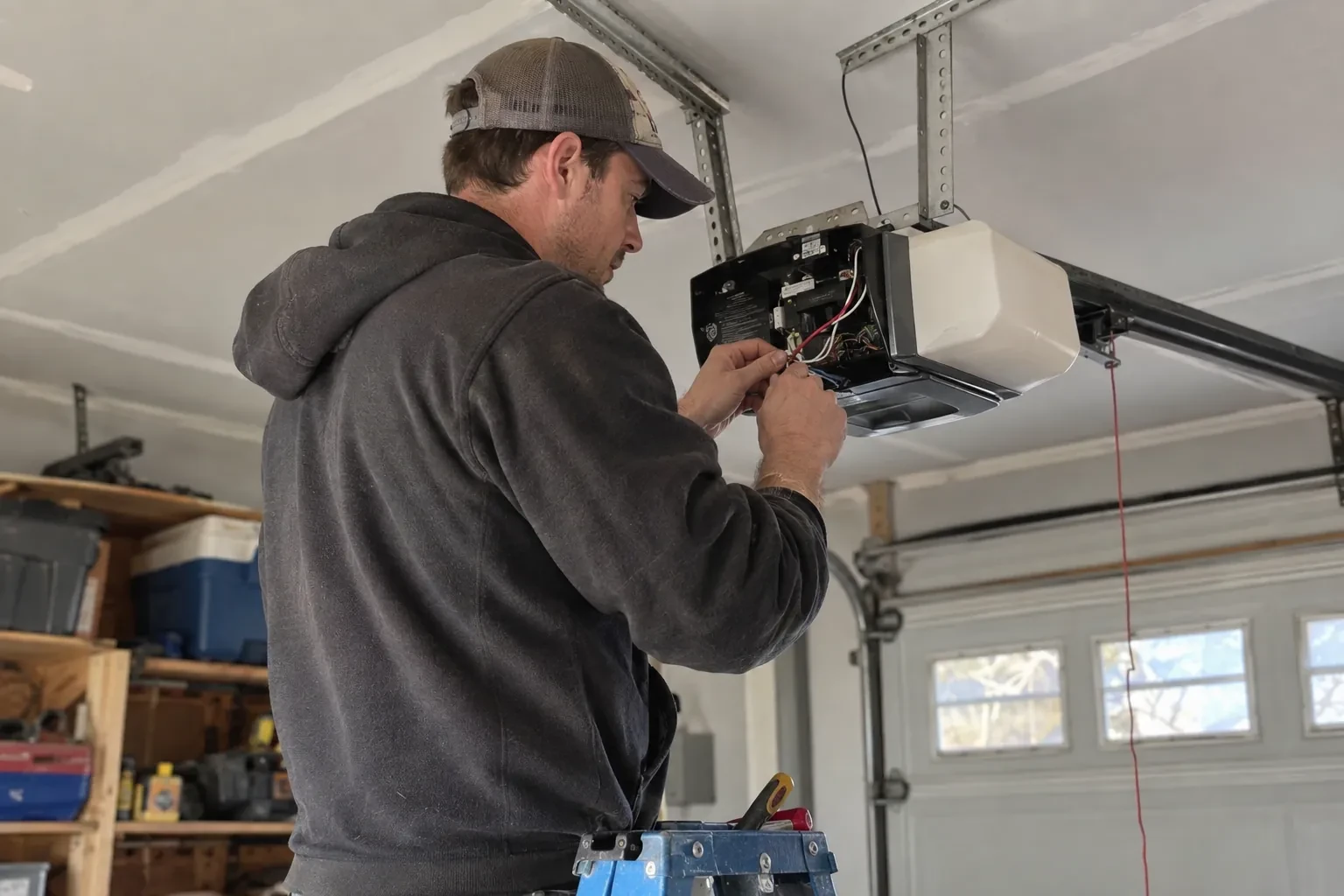
Garage Door Hinge Replacement
What affects the quote
Access to the door
Shelving against the door, a car that has to stay inside, or a tall door that needs a stepladder for the upper joints all affect the time quoted.
Steel, wood or insulated door
A wood door takes different fasteners and often needs timber repaired around the holes; a heavy insulated door may need a heavier hinge. Construction shapes both the parts and the time.
Opener adjustment afterwards
A door that folds freely again sometimes needs the opener's force and travel settings reset and its reversal retested. That adjustment is named when it is needed.
What to have ready
- Has a car, bin or anything else bumped the door recently?
- Is the door a single or a double, and how many panels does it have?
- Do any screws turn without tightening when you press a hinge?
Garage Door Hinge Replacement: questions
QuestionsWhat do the numbers stamped on garage door hinges mean?
They mark the joint the hinge belongs to, counted from the bottom. A 1 goes at the joint above the bottom panel, a 2 at the next one up, then 3, with 4 and 5 on taller doors. Each higher number stands the roller a little further off the door face, so the door leans into the jambs when closed and follows the track as it climbs. Centre hinges use the geometry of a 1.
Is the bracket at the bottom corner a hinge too?
No, and it is the one piece of hardware on the door that stays untouched during hinge work. The bottom bracket in each lower corner holds the bottom roller and anchors the lift cable, so it carries spring tension whenever the springs are wound. Many manufacturers fit tamper-resistant fasteners there. Changing a bottom bracket means unloading the springs first, which is a separate job with its own method.
What is the difference between an edge hinge and a centre hinge?
An edge hinge sits at the end of the joint on the end stile and does two jobs: it links the panels and it holds the roller that runs in the track, which is why it is numbered for its position. A centre hinge sits on an intermediate stile in the middle of the door, links the panels only, and carries no roller. Both let the panels pivot as the door folds around the curve.
Related services
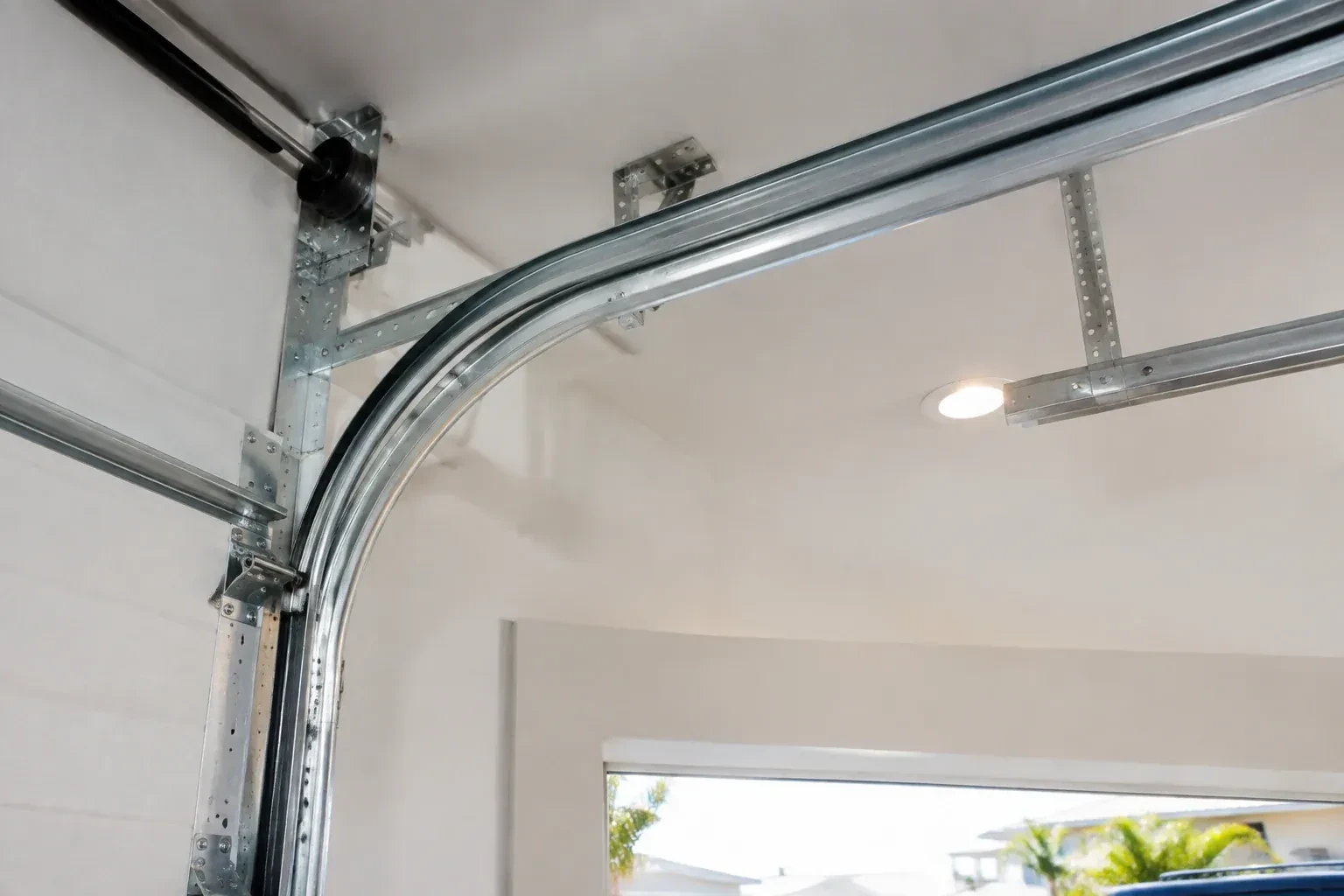
- Garage Door Track Repair or ReplacementYou bought the house with a door that sticks near the top of its travel.
- Garage Door Cable ReplacementSomeone left the snow shovel leaning in the opening and the door came down on it.
- Torsion Spring ReplacementOn a cold morning the remote does nothing useful: the light comes on, the motor turns briefly, the door stays shut.