Springs · West Lynde
Garage Door Hinge Replacement in West Lynde
Every time the door goes up there is a sharp pop from the same spot, about a metre off the floor, and the whole door gives a little shudder.
In plain words
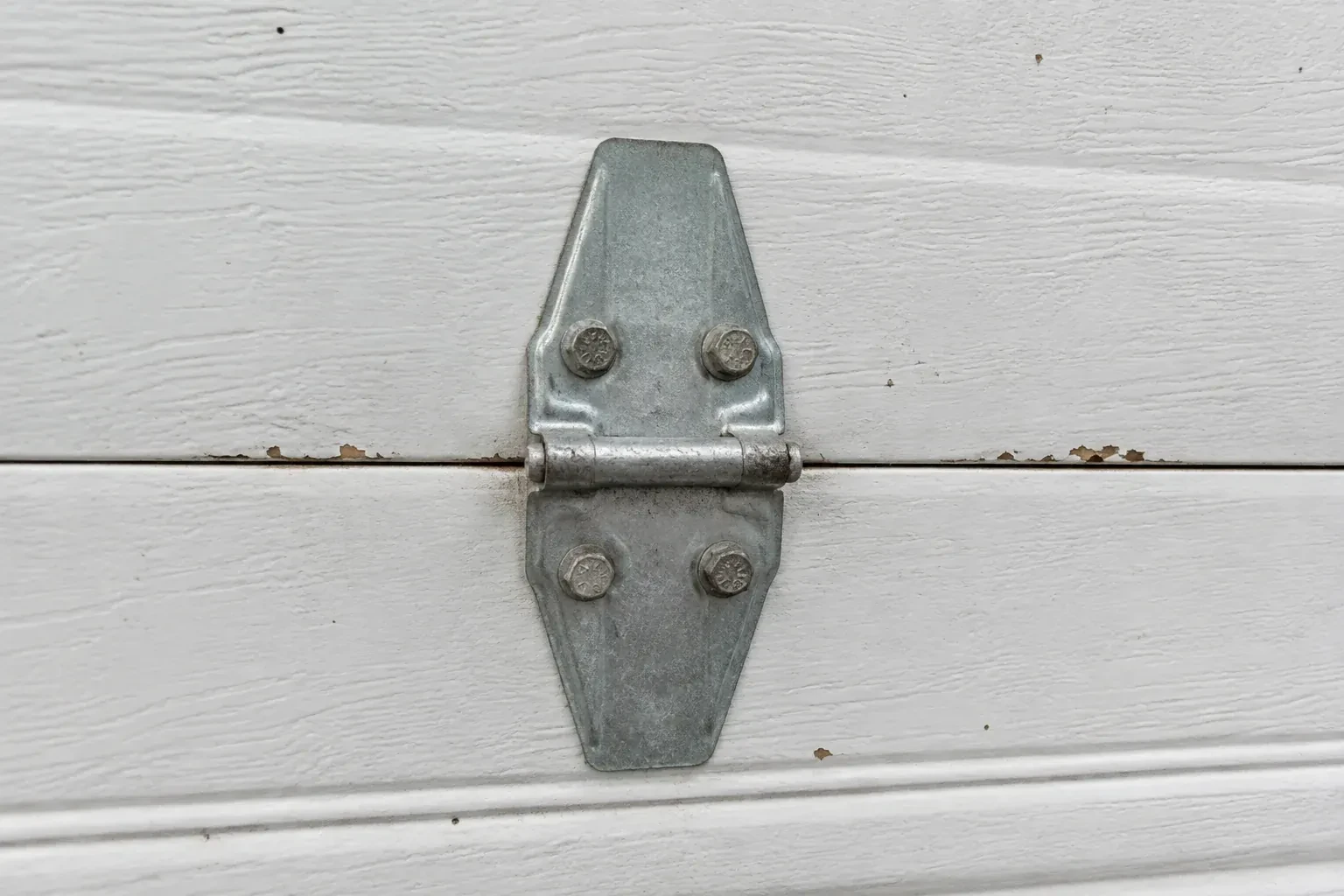
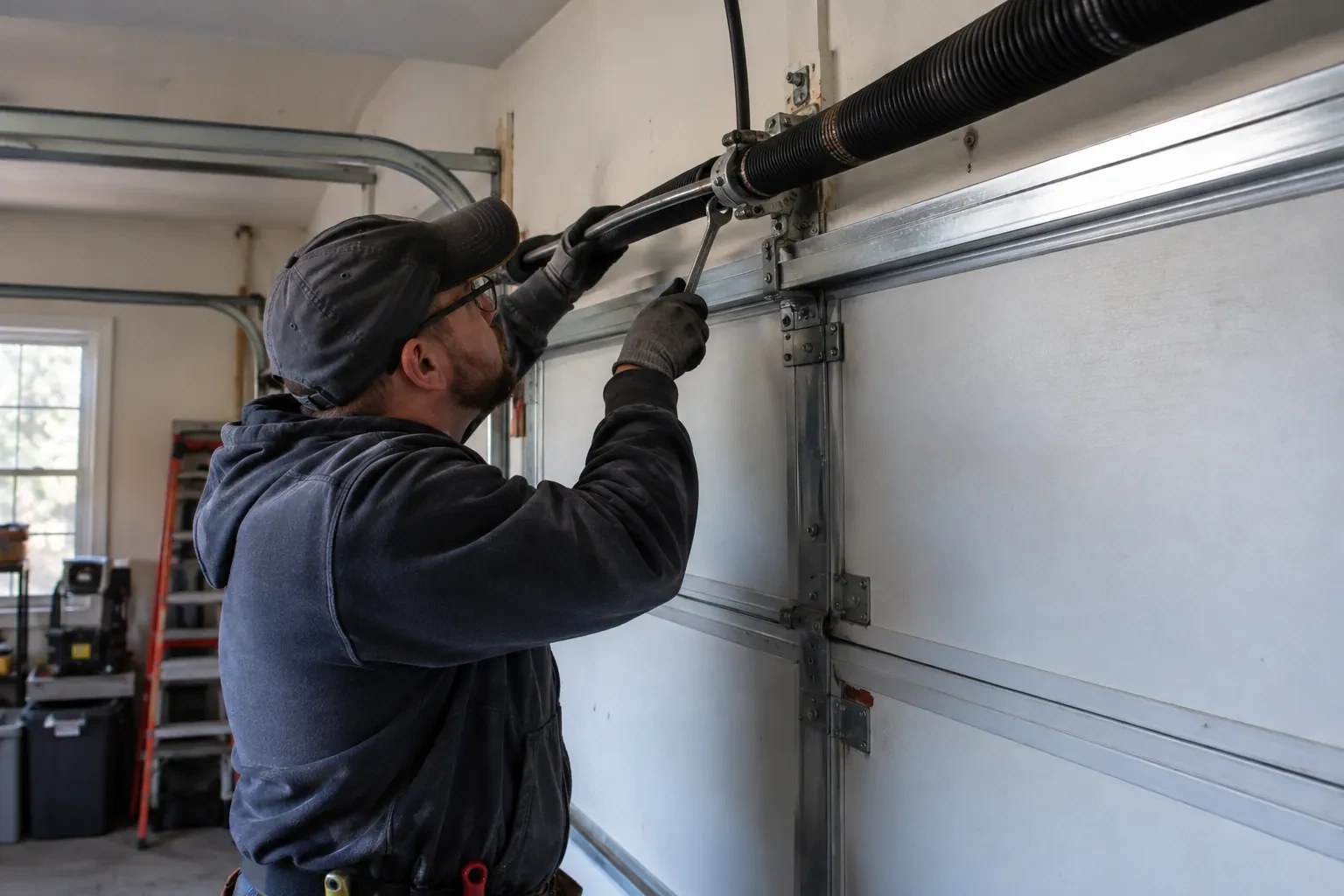
Hinges are the joints of a sectional garage door. Each pair of panels is connected by two hinges at the edges, which also hold the rollers, and by one or more centre hinges along the middle. Hinge replacement removes a hinge that has cracked, bent, worn loose at the pin or lost its grip on the panel and fits a matching one in its place. The technician keeps the door closed and the opener disconnected, changes each hinge on its own, checks the panels line up and the rollers sit true, and runs the door to confirm it folds around the curve as one piece.
How the visit goesWith the door closed and a flashlight on the inside face, one of the hinges near the edge has a crack running from the screw hole to the knuckle. The steel around it is brown with rust, and the pin looks loose in its barrel.
Garage Door Hinge Replacement
How the visit goes
The holes and the stile behind them
A hinge only holds if its fasteners do. The technician tests each screw for grip and looks at the stile it threads into: the folded steel channel at the panel edge on a steel door, the hinge support plate behind the skin where one is fitted, or the solid timber of a wood door. Holes that have stretched, rusted or torn are noted, because a new hinge on a stripped hole rocks just like the old one. Where the metal is thin or the wood is soft, the plan changes from screws to a through-bolt with a nut and washer, or a backer plate that spreads the load across fresh material.
Changing an edge hinge with its roller
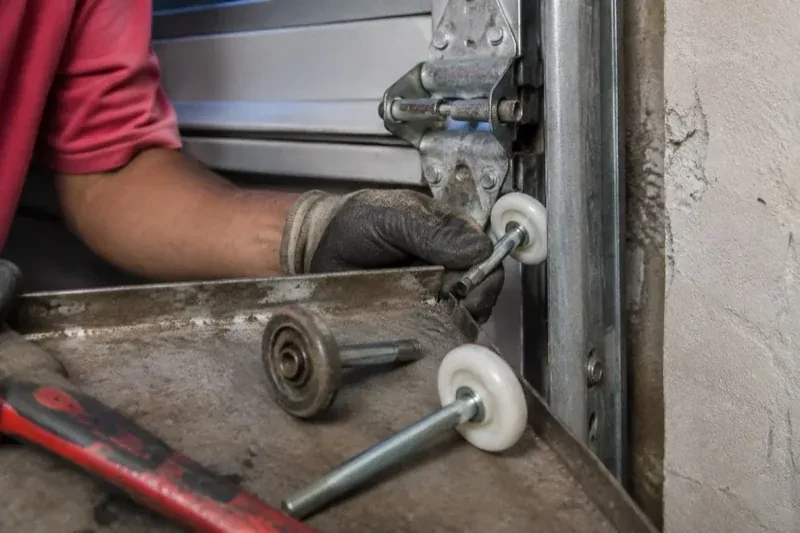
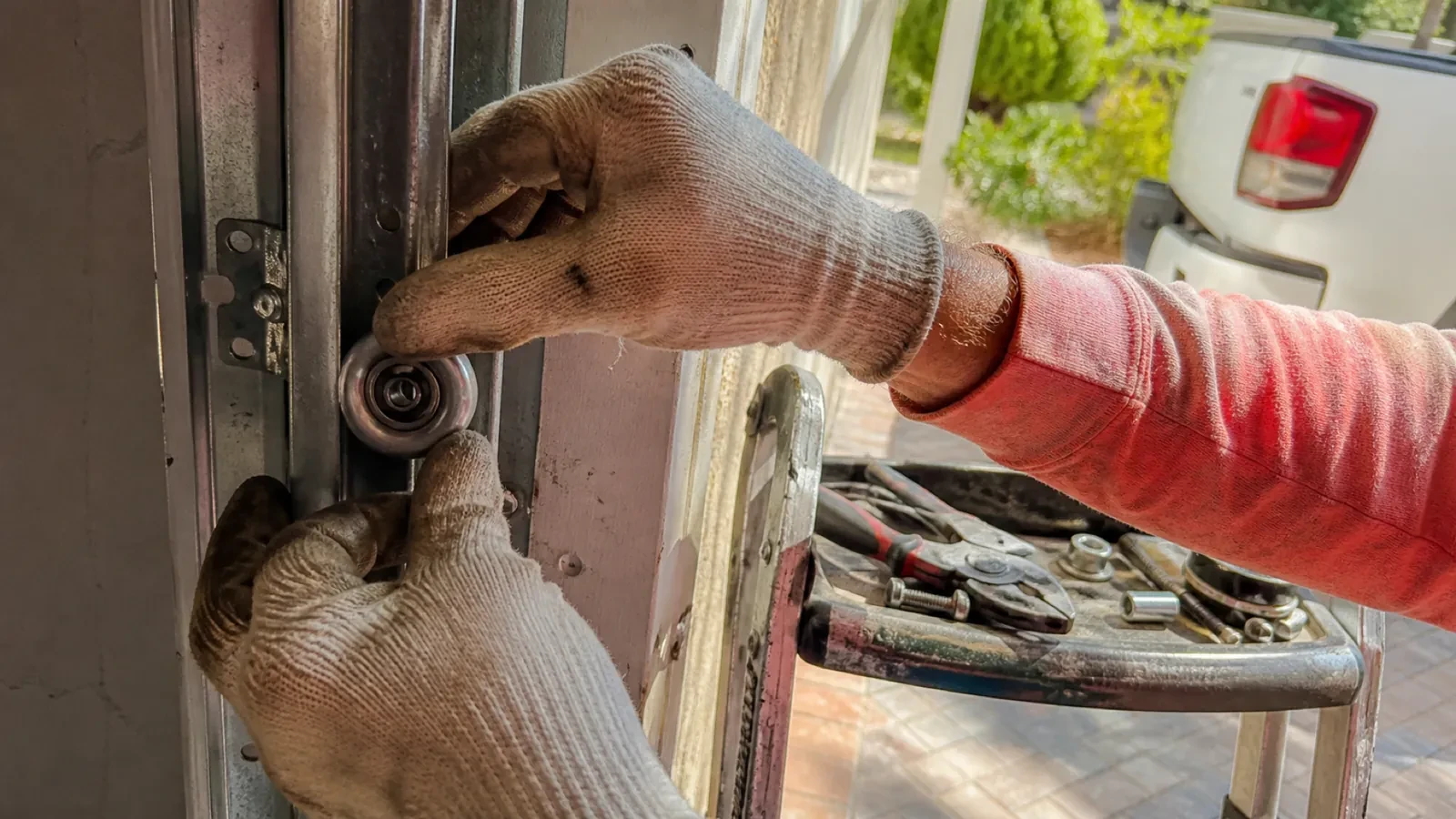
An edge hinge holds the roller in the track, so the roller comes with it. The technician steadies the panel with a clamp, backs out the hinge screws, then eases the roller stem out of the hinge tube while tilting the wheel clear of the track, or loosens a track bracket a fraction to make room. The old hinge comes off, the new one of the same number goes on with the roller stem seated in its tube, the wheel is guided back into the track, and the hinge is fastened. Both edge hinges on a joint are handled this way, one after the other, with the panel alignment rechecked between them.
A monthly look from the inside
The maintenance checklist the door industry publishes asks homeowners to check hinges, brackets and fasteners visually from inside with the door closed, once a month. Stand where you can see both ends of the door and follow each joint with a flashlight: a screw head that stands proud, a hinge leaf lifted off the panel, a fresh crack spreading from a hole, or a rust stain running down from a knuckle. Then watch the door open and confirm the rollers stay in the track. Anything you spot is a small job at that stage. The whole check takes about a minute.
Garage Door Hinge Replacement
In the van
Track clamps or locking pliers
Hex-head self-drilling screws
Replacement rollers
Centre hinges
Carriage bolts, nuts and washers
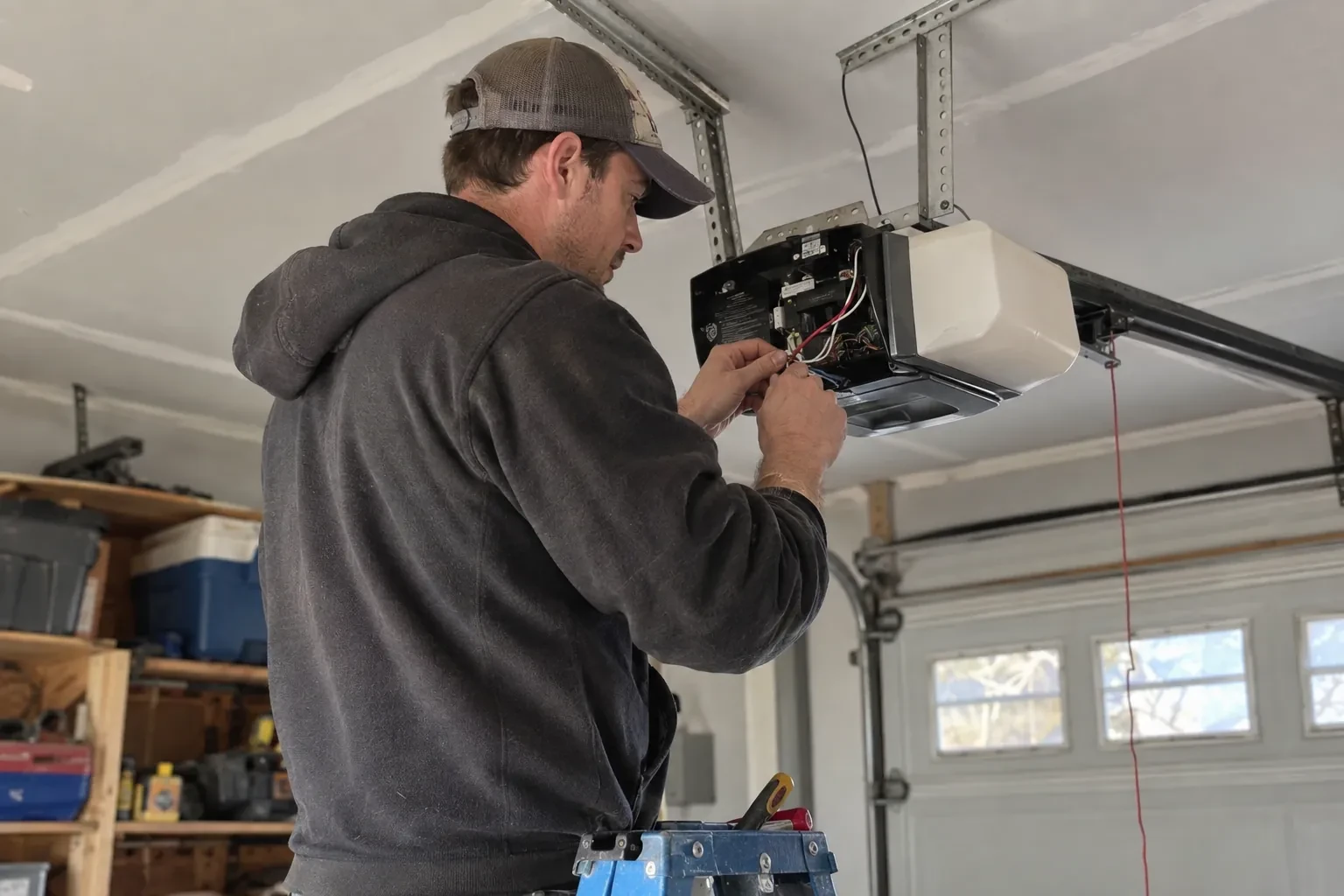
Garage Door Hinge Replacement
What affects the quote
How many hinges are changed
One cracked centre hinge is the smallest job. Several worn hinges across two or three joints, which is common on an older door, means more parts and more time, and the quote lists each.
Gauge and grade of the replacement
Standard 14-gauge hinges are priced differently from heavy 11-gauge parts, and moving a heavy insulated door up a gauge is an upgrade named as its own line in the quote.
Manufacturer-specific hinge patterns
Hinge width and hole spacing differ between door makers. A door that needs a maker-specific hinge rather than a standard one may involve ordering, which the quote notes.
What to have ready
- Can you read a number stamped on the hinges near the edge?
- Do any screws turn without tightening when you press a hinge?
- Is the door a single or a double, and how many panels does it have?
Garage Door Hinge Replacement: questions
QuestionsWhat do the numbers stamped on garage door hinges mean?
They mark the joint the hinge belongs to, counted from the bottom. A 1 goes at the joint above the bottom panel, a 2 at the next one up, then 3, with 4 and 5 on taller doors. Each higher number stands the roller a little further off the door face, so the door leans into the jambs when closed and follows the track as it climbs. Centre hinges use the geometry of a 1.
Is the bracket at the bottom corner a hinge too?
No, and it is the one piece of hardware on the door that stays untouched during hinge work. The bottom bracket in each lower corner holds the bottom roller and anchors the lift cable, so it carries spring tension whenever the springs are wound. Many manufacturers fit tamper-resistant fasteners there. Changing a bottom bracket means unloading the springs first, which is a separate job with its own method.
What is the difference between an edge hinge and a centre hinge?
An edge hinge sits at the end of the joint on the end stile and does two jobs: it links the panels and it holds the roller that runs in the track, which is why it is numbered for its position. A centre hinge sits on an intermediate stile in the middle of the door, links the panels only, and carries no roller. Both let the panels pivot as the door folds around the curve.
Related services
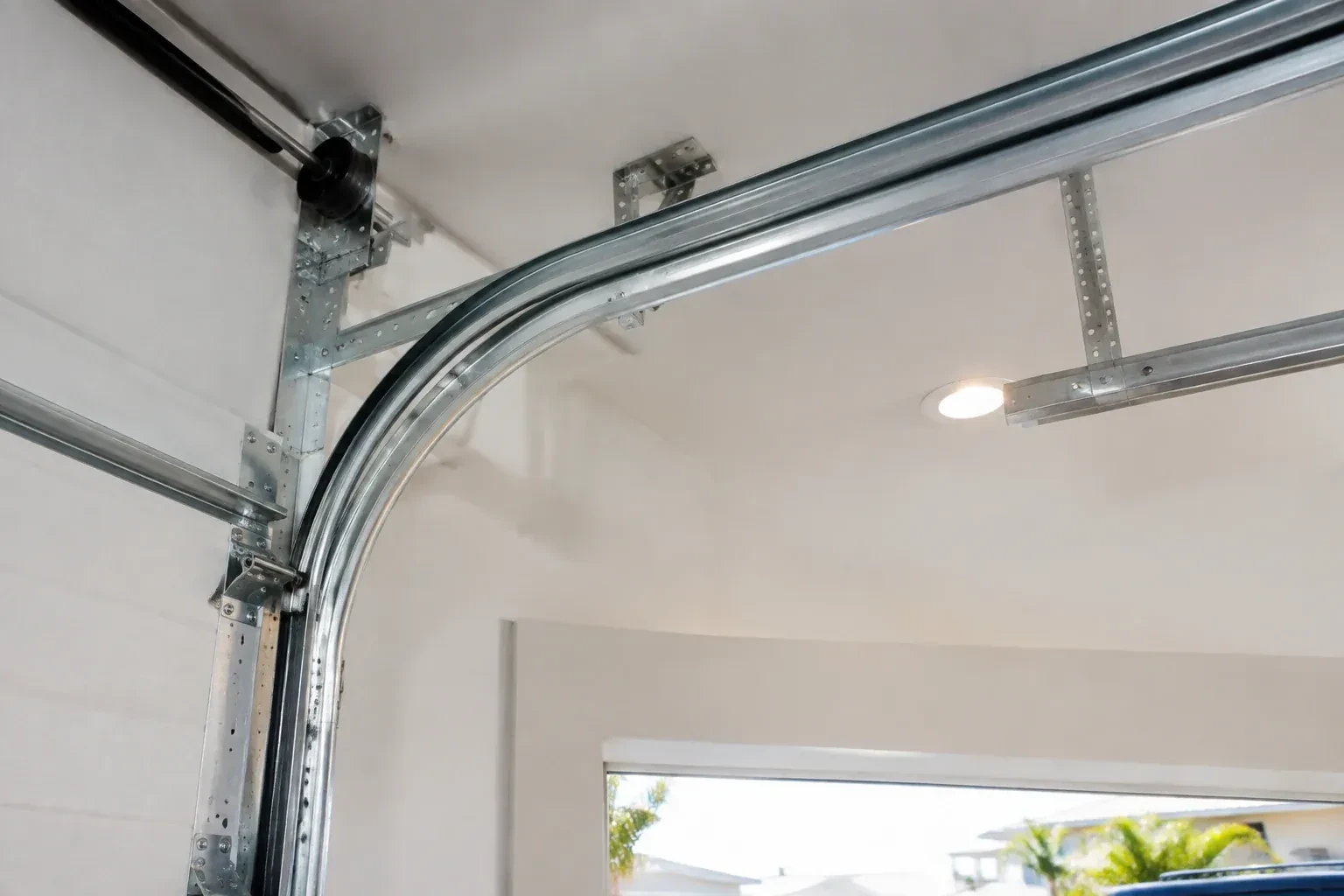
- Garage Door Track Repair or ReplacementYou bought the house with a door that sticks near the top of its travel.
- Garage Door Cable ReplacementSomeone left the snow shovel leaning in the opening and the door came down on it.
- Torsion Spring ReplacementOn a cold morning the remote does nothing useful: the light comes on, the motor turns briefly, the door stays shut.