Repairs · West Lynde
Garage Door Manual Lock Repair in West Lynde
The outside handle wobbles in your hand and the inside knob spins round and round with nothing attached.
In plain words
What you have at the end is a lock that behaves like a lock. The bar slides home with a light push and a definite stop, it draws fully back behind the track edge when released so the door can travel, and the outside handle turns with two fingers rather than two hands. Rusted guides have been cleaned or renewed, fixings that had worked loose are anchored in solid material, and the cylinder takes its key without a fight. If an opener shares the door, the two have been set up so they cannot argue, and a note at the wall button says which comes first.
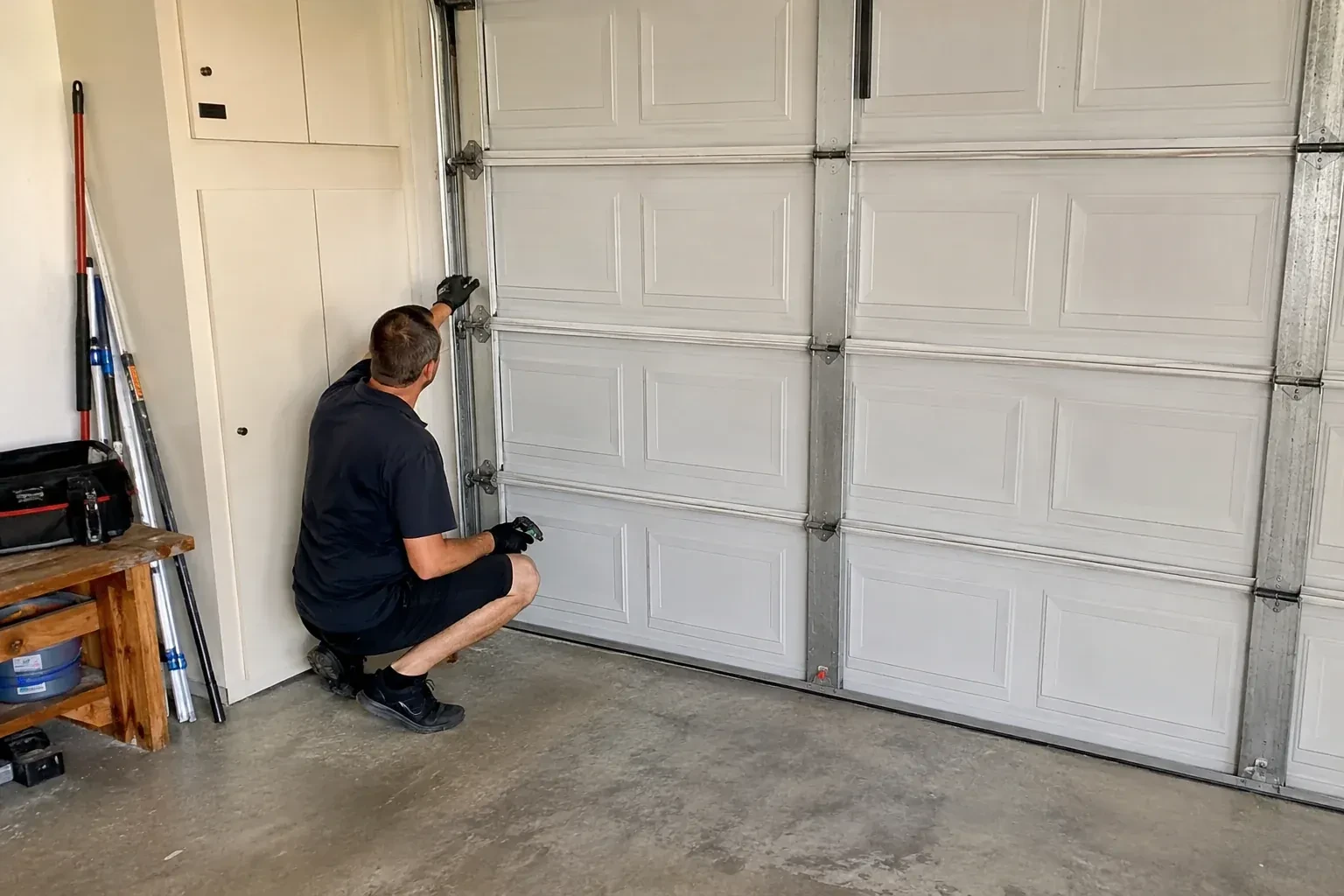
How the visit goesYou pushed the slide bolt across like always, but tonight it stops short of the slot in the track and springs back. The door is down, the bottom seal is on the concrete, yet the bar and its hole are a finger's width apart.
Garage Door Manual Lock Repair
How the visit goes
Which lock the door actually has
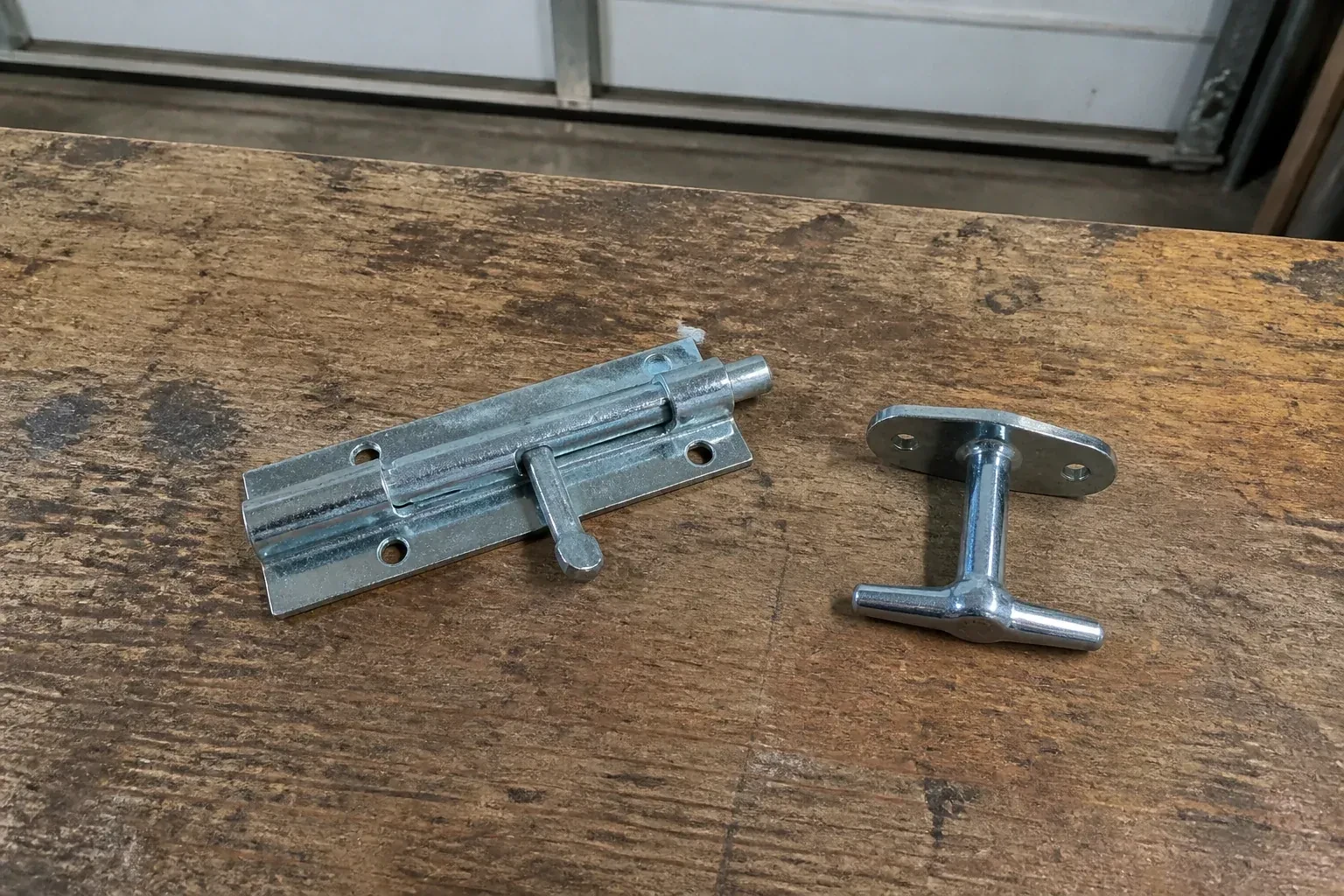
Garage doors carry a few different locks and the first job is to name the one in front of the technician. An inside slide bolt is a short bar on the door's edge that shoots through a slot in the vertical track; some are snap latches that lock on their own when the door closes. An outside keyed T-handle or L-handle works a centre mechanism that throws a bar into each track, or on some models pulls a cable to release a spring latch at each side. Some doors have a keyed cylinder on the side that operates the slide bolt from outside. Each has its own parts and failure points, so naming it correctly sets up everything that follows.
Replacing an inside slide lock
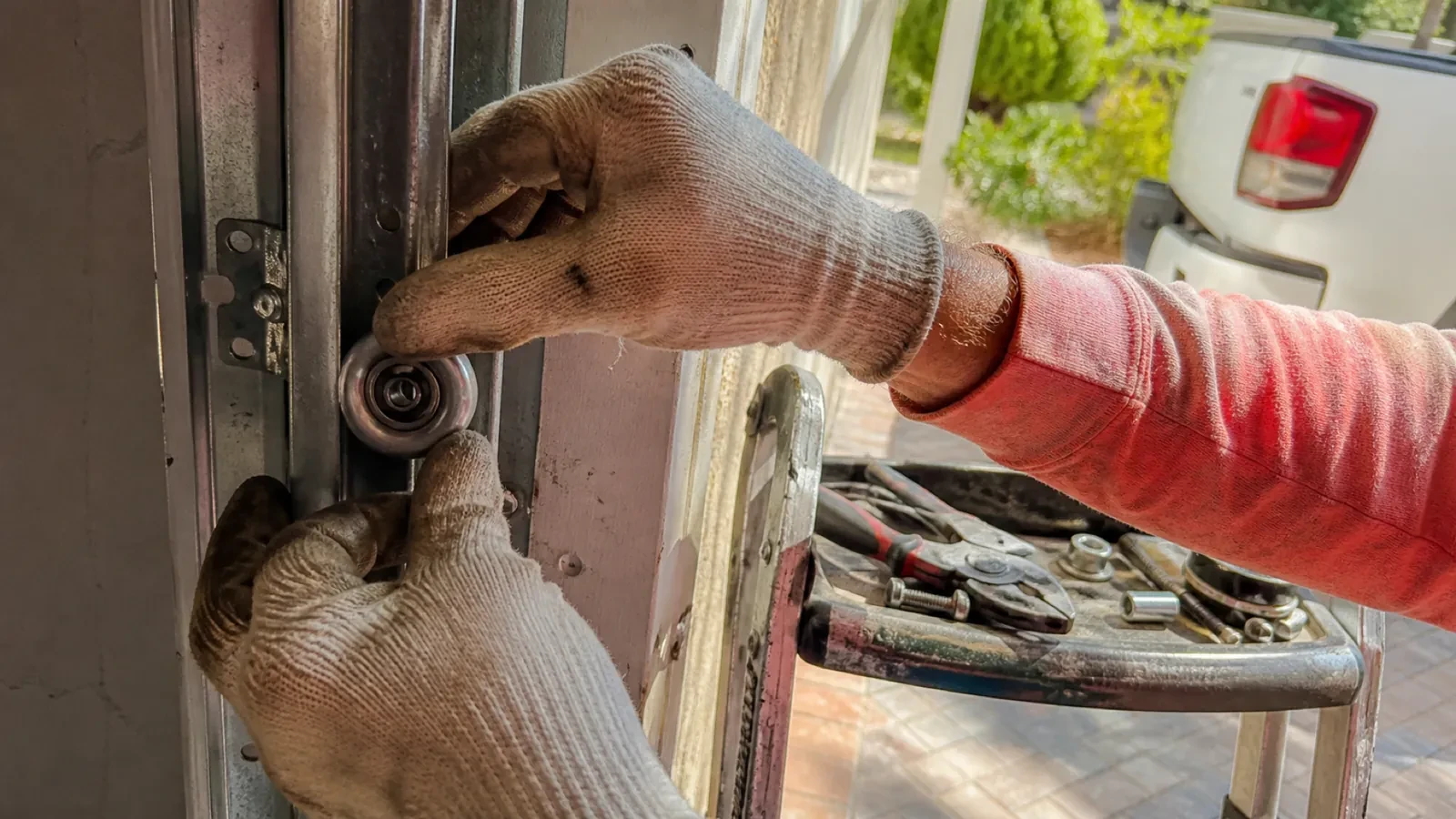
A slide bolt that is bent, seized or missing is replaced with a new lock of the same style, fixed to the door's edge stile so its bar lines up squarely with the slot in the track. Spring-loaded snap latches, which lock by themselves when the door closes, are set so they engage on closing and can be held open with their catch when the door is to be used with an opener. The fixing screws go into solid steel or wood, with through-bolts where the material is thin. The bolt is then thrown and released several times with the door down, and the technician confirms it clears the track fully so the door can rise without catching.
Locking the door when the power is out
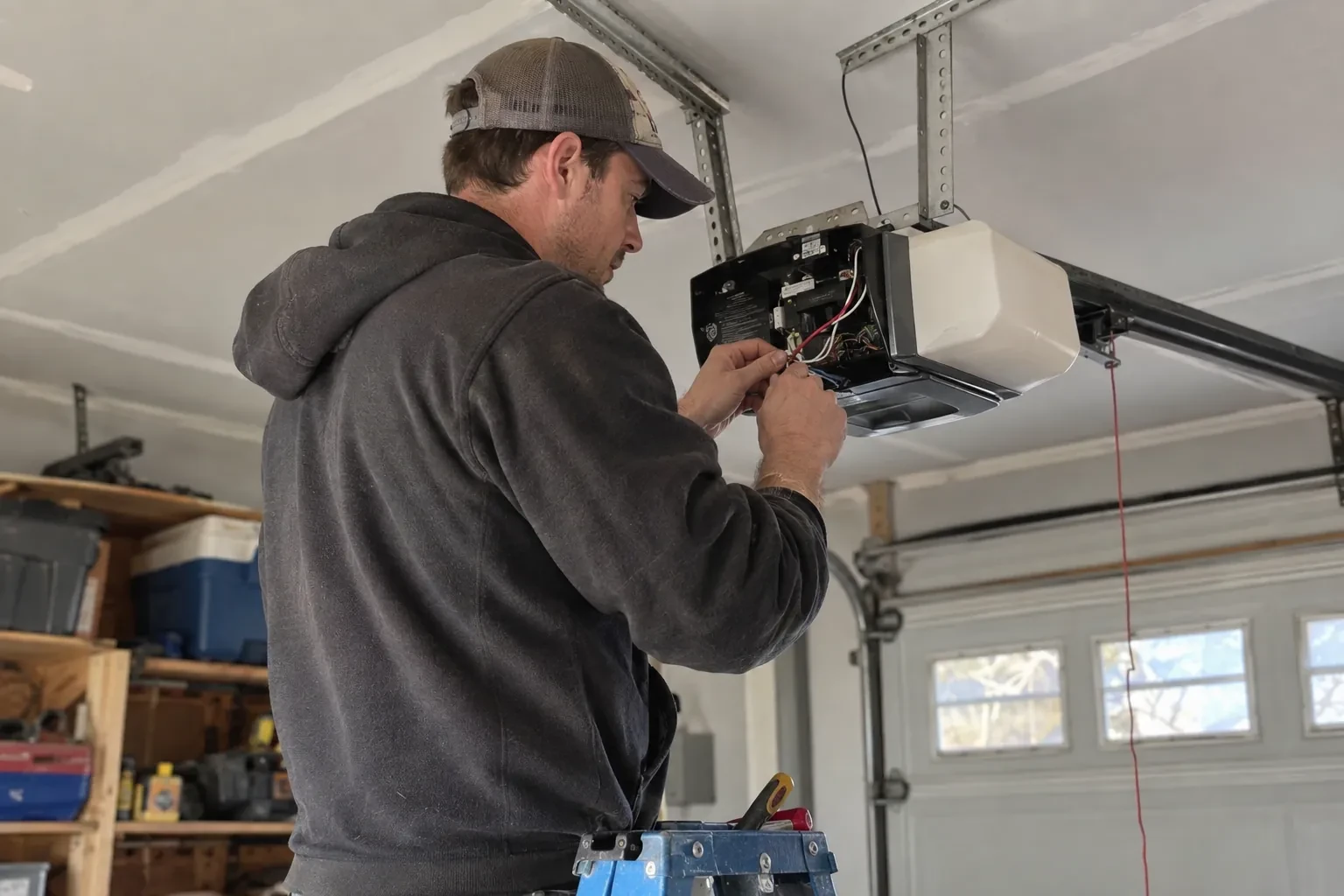
The manual lock is now your plan for a dark evening. The sequence is simple: with the door closed, pull the opener's release cord so the trolley disconnects, then throw the slide bolt or turn the T-handle to lock. In the morning, or when the power returns, reverse it exactly: unlock first, confirm both bars are clear of the track, then re-engage the opener as its manual describes, usually by running it once so the trolley picks up the arm. The technician walks through this with you at the door, and it is worth practising once so the order is second nature before the storm that makes it matter.
Garage Door Manual Lock Repair
In the van
Carriage bolts and backing plates
Track lock-slot punch
Key blanks and rekeying pins
Spring-steel lock bars
Opener lock-out reminder label
Garage Door Manual Lock Repair
What affects the quote
Age and pattern of the lock
Older handles and mechanisms may need a matching-pattern replacement so the existing cutout and bars line up. Sourcing or adapting parts for an uncommon lock shows in the quote.
Whether an opener shares the door
A powered door adds the coordination step: removing or disabling the bars, demonstrating the console lock-out, or installing an automatic deadbolt if you choose one. Each is priced as chosen.
Door thickness and insulation
Insulated and thicker doors take longer spindles, longer through-bolts and sometimes a sleeve through the foam. Matching those parts to the door affects the parts list.
What to have ready
- Does the door close fully to the floor and sit level?
- Is the door steel, wood or aluminum, and roughly how old is it?
- Has the opener ever been run while the lock was engaged?
Garage Door Manual Lock Repair: questions
QuestionsWhat is an automatic garage door lock, and does it replace the manual one?
It is a motorised deadbolt, offered as an accessory by some opener makers, that slides a bar into the track each time the door closes and withdraws it before the door opens, all controlled by the opener. It gives the physical security of a manual lock without the need to remember it. It can sit alongside a manual lock kept for outages, or take its place entirely.
Why should the opener never run with the manual lock engaged?
Because the opener is strong enough to lift a door heavier than a person, and it has no way of knowing a bar is in the track. It pulls, the bar bends, the lock body tears at its screws, the section can crease and the opener's gear or trolley takes the shock. Opener makers ask for manual locks to be disabled or removed when a motor is installed for exactly this reason.
What kinds of manual locks are found on garage doors?
Two are common on sectional doors. An inside slide bolt sits on the door's edge and shoots sideways into a slot in the vertical track; some are spring-loaded snap latches that lock on their own when the door closes. An outside keyed T-handle turns a centre mechanism that throws a bar into each track, though some models pull a cable to release a spring latch instead. Some doors add a keyed cylinder on the side to work the slide bolt from outside.
Related services
- Garage Door Tune-UpTwice this week the door started closing, stopped a metre from the floor and reopened on its own.
- Off-Track Garage Door ResetThe door came down fine but with a scraping noise, and now the vertical track on one side is bowed away from the wall.
- Garage Door Panel ReplacementRust has crept along the bottom edge of the lowest section.