Repairs · Whitby
Garage Door Bottom Seal Replacement
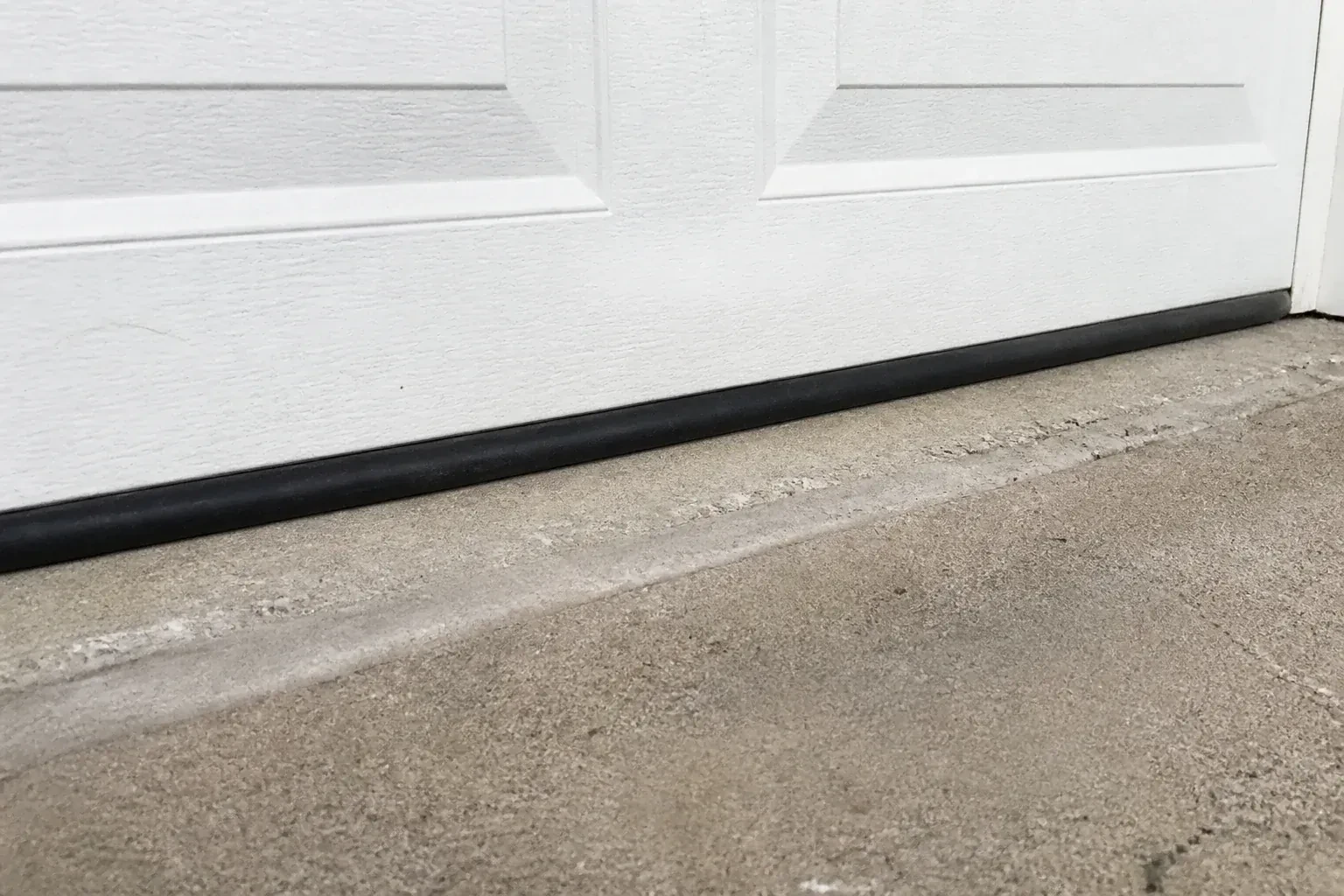
The gap under the door is a finger wide at one end and nothing at the other.
In plain words
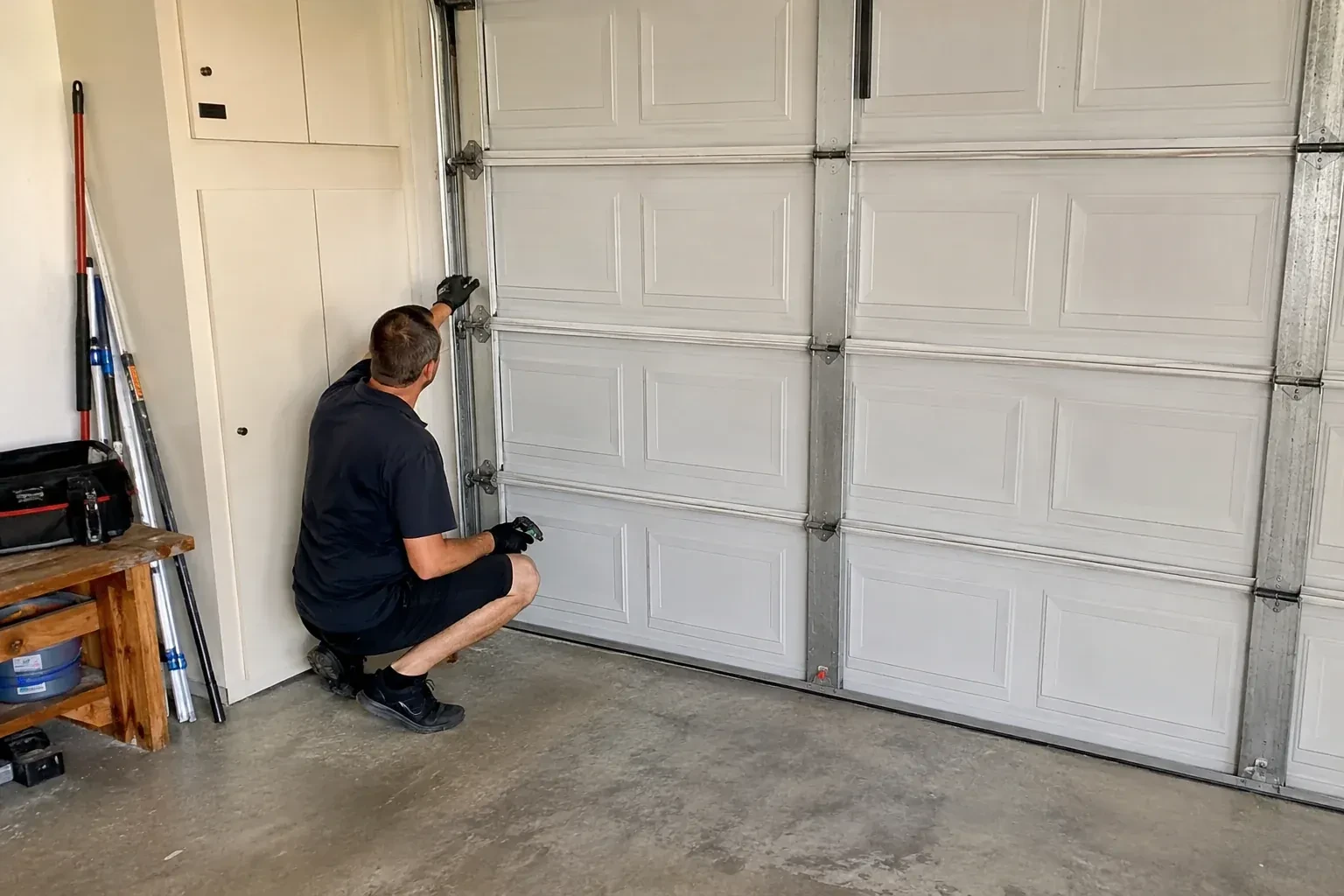
A seal visit runs in a set order. With the door closed, the technician looks for daylight along the floor line and notes whether the gap is even or concentrated at one point. The door is checked for level and the bottom section for straightness, then the retainer is identified and measured. The opener is disconnected and the door secured before the old strip comes out and the channels are cleaned. A new seal, cut a little long, is fed into the channels and trimmed. Finally the door is closed onto the new seal, the opener's limits are reset, and the reversing test is run before the tools go away.
How the visit goesWith the door closed and the lights off, a bright line of daylight runs along the floor from one side to the other. Leaves and grit have blown in under it and gathered in a neat drift against the back wall.
Garage Door Bottom Seal Replacement
How the visit goes
Retainer condition and fasteners
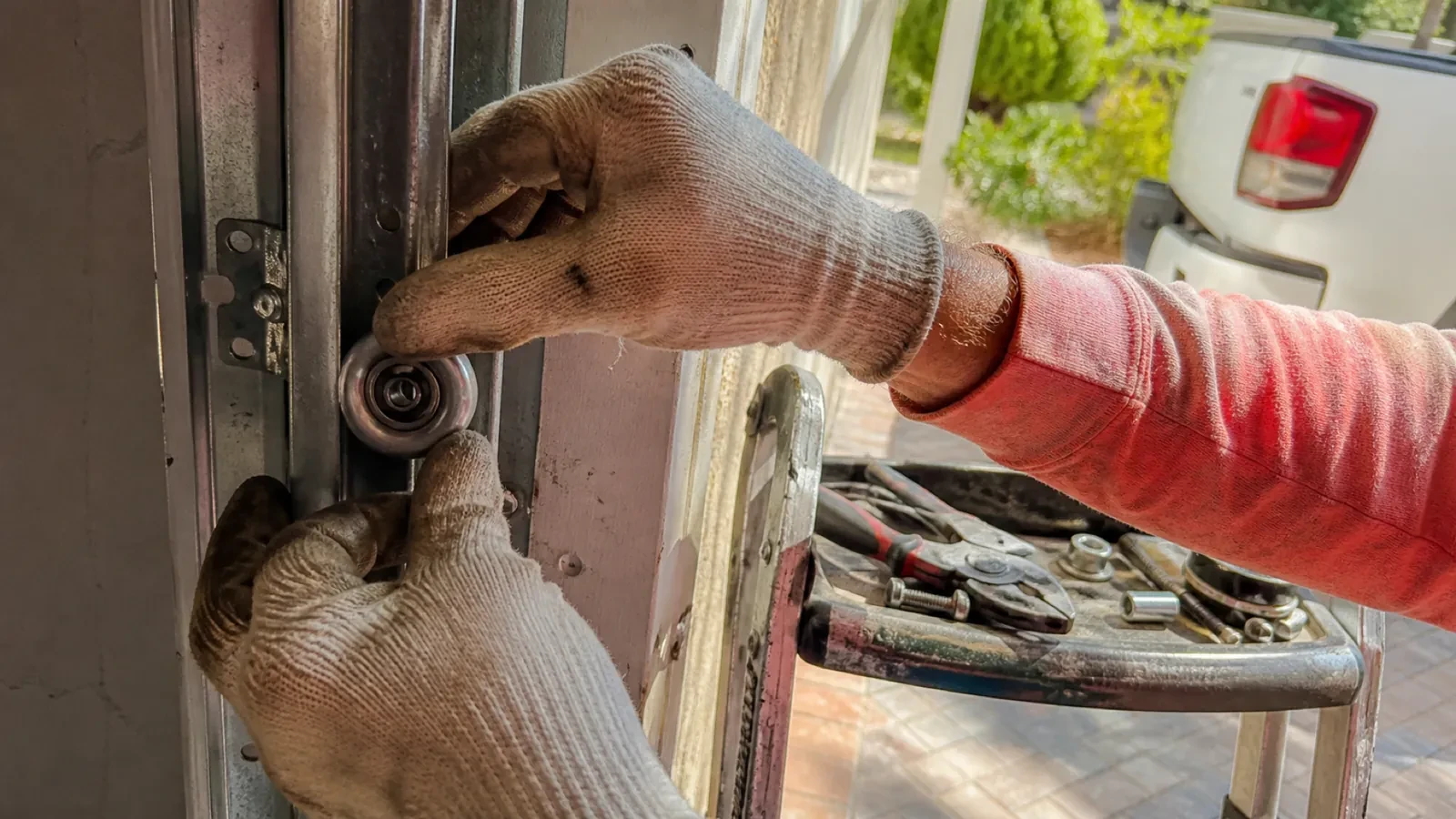
The aluminum or plastic retainer that grips the seal is inspected along its full length. The technician looks for kinks where something struck it, channels that have been spread open, corrosion where salt has sat, and screws that have rusted or pulled loose from the rail. A retainer that is straight and tight is reused; one that is damaged is measured for a matching replacement so both channels line up with the new seal. On doors where the retainer is part of a plastic bottom cap, a cracked cap is noted and a screw-on aluminum retainer is offered as the practical repair.
Feeding the seal into the retainer
Both edges of the new seal are started into their channels together at one end of the door. A spray of soapy water or silicone on the edges lets the strip glide, and the technician works it across in stages, pulling gently from the front end and feeding from the other so the seal is never stretched, since a stretched seal shrinks back and leaves a gap later. Once it is across, the bulb is checked to hang evenly with no twists. The ends are trimmed flush with the door and folded up into the channel or capped, so water running along the seal drains out rather than into the section.
Fewer visitors of the four-legged kind
A continuous seal removes the easy route mice and insects used along the floor. If rodents were part of the reason for the visit, a few habits finish the job: keep birdseed, pet food and grass seed in lidded bins, move firewood and cardboard away from the walls, and check the jamb seals at floor level, where a gap beside the door is as inviting as one under it. Seals with a stainless mesh embedded in the vinyl are available for garages that have had repeated trouble. A sealed bottom edge plus tidy corners keeps the garage a place where nothing wants to nest.
Garage Door Bottom Seal Replacement
In the van
Straightedge and tape measure
Aluminum bottom seal retainer
Silicone spray lubricant
Wire brush and scraper
Threshold seal and adhesive
Garage Door Bottom Seal Replacement
What affects the quote
Rodent-resistant seal
A profile with embedded stainless mesh for a garage that has had repeated chewing costs more per length than plain vinyl and is offered where the history calls for it.
Door width
A single door takes a shorter length of seal than a double, and the widest doors need more time to feed the strip evenly across. The quote starts from the width measured on the day.
Condition of the old seal
A supple strip slides out in a minute. One that has hardened and seized in its channel, or been torn and frozen into the corners, has to come out in pieces, which takes longer.
What to have ready
- Is the door a single or a double, and roughly how wide?
- Are the side and top weather strips also worn or torn?
- Is the old seal hard and cracked, torn, hanging loose, or missing?
Garage Door Bottom Seal Replacement: questions
QuestionsMy garage floor is uneven. What are the options?
Three, and they can be combined. A taller bulb-style seal compresses more and follows a modest dip or crown. A threshold seal fixed to the floor follows the slab's existing contour and gives the door a raised, consistent line to land on where it is dished or sloped. And where the floor has heaved or broken up badly, grinding or patching the concrete is a separate job that makes any seal perform better. The gap map from the first look shows which applies.
Why is the gap much bigger at one corner?
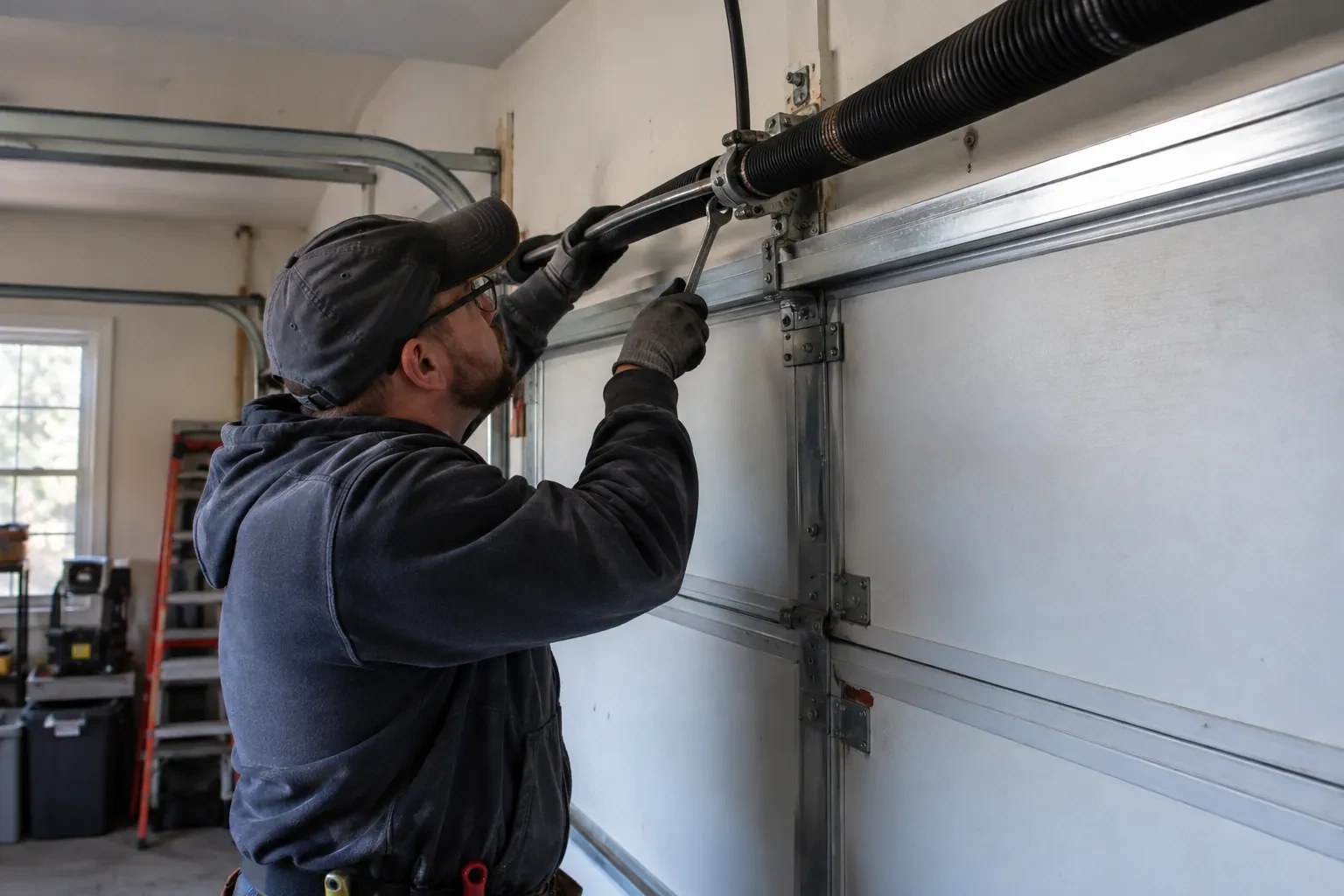
Two causes are common. The door may be hanging out of level because a lift cable has stretched, a drum has crept on its shaft or spring tension is uneven, which drops one corner. Or the slab may have settled or heaved at that end so the floor falls away. The technician checks both before choosing a seal, since a level door and the right seal height together close a wedge-shaped gap.
What happens during the visit?
The technician maps the gap with the door closed, checks the door is level and the bottom section straight, and identifies the retainer and profile. The opener is disconnected and the door clamped at working height. The old seal comes out, the channels are cleaned, a new seal is cut and fed in, and any retainer work is done. The door is then closed under power, the opener reset, and the reversing and photo-eye tests run.
Related services
- Garage Door Tune-UpTwice this week the door started closing, stopped a metre from the floor and reopened on its own.
- Off-Track Garage Door ResetThe door came down fine but with a scraping noise, and now the vertical track on one side is bowed away from the wall.
- Garage Door Panel ReplacementRust has crept along the bottom edge of the lowest section.