New Doors · Whitby
High-Lift Garage Door Conversion
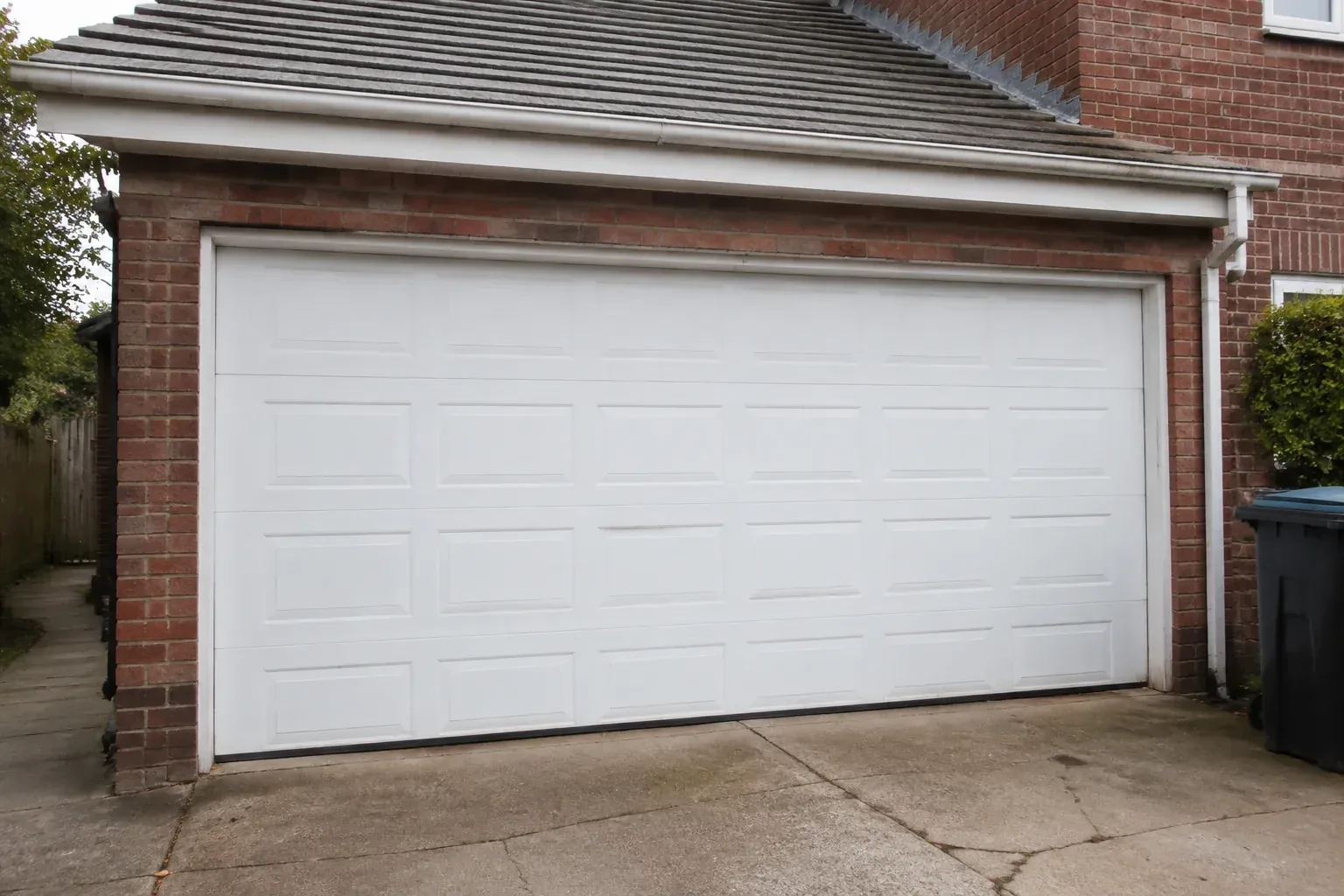
A taller van clears the closed opening comfortably, then loses useful space when the door is raised because the bottom section hangs below the ceiling.
In plain words
A high-lift conversion changes where a sectional door turns from vertical to horizontal travel. Extended vertical track carries the panels farther up the wall, then a new transition guides them toward the ceiling. Because that geometry changes cable movement and the force needed through the cycle, the conversion normally includes matched drums, cables and torsion springs rather than track alone. The result is more usable space beneath the open door for a vehicle lift or another planned use, provided measurements, structure and operator placement support the design.
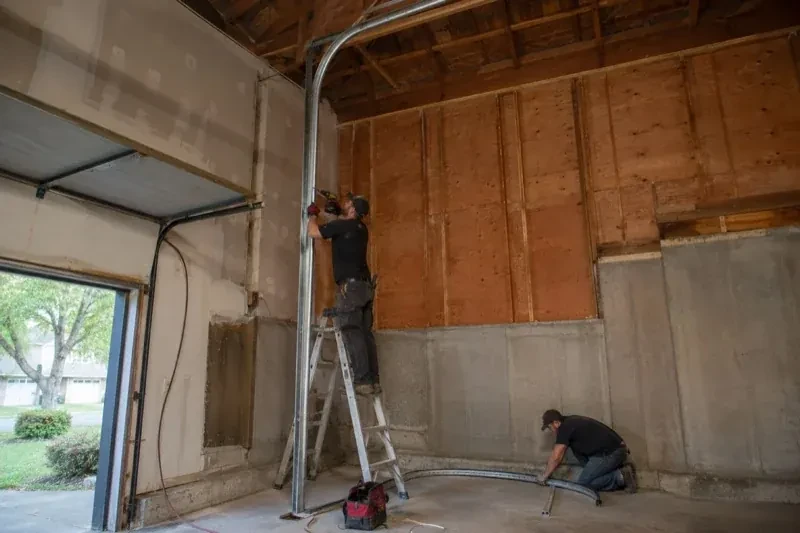
How the visit goesStorage racks were planned near the ceiling, but the existing tracks and centre-mounted opener divide the only practical zone. The wall above the door appears tall enough to move the turning point upward.
High-Lift Garage Door Conversion
How the visit goes

Check the walls and support points
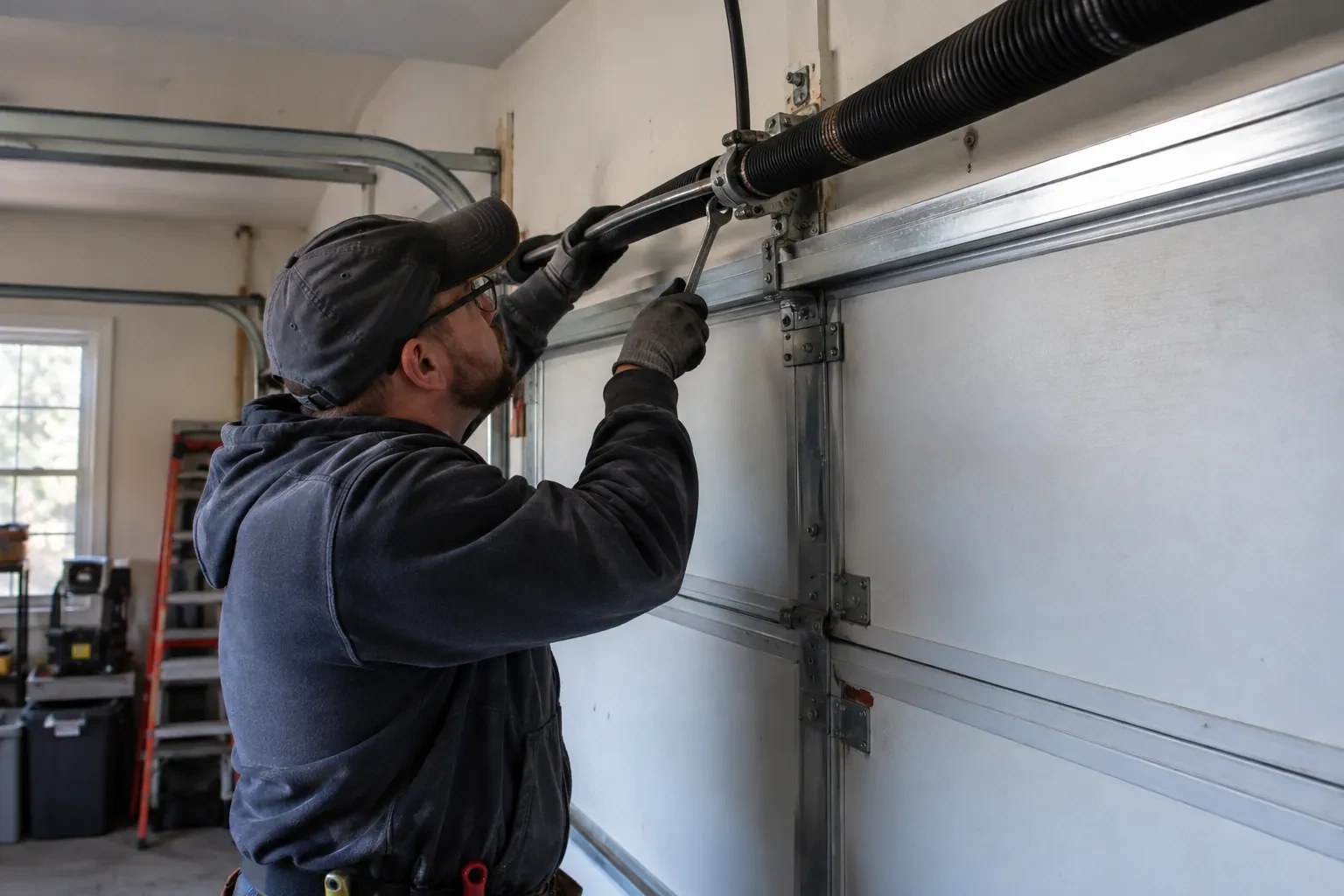
High-lift hardware moves track, shaft and spring loads to planned attachment locations, so the inspection looks beyond surface finishes. The technician notes jamb material, header construction, blocking, ceiling support and the proposed back-hang positions. Accessible framing information is recorded, and any uncertain structural condition is identified for the responsible building professional before the layout is finalized. Clear support details allow brackets and hangers to be placed deliberately and help separate the door conversion from framing work that may need advance coordination.
Build the extended vertical path
New vertical track is positioned plumb on both sides of the opening and spaced for smooth roller travel. The track rises to the calculated high-lift point, where matched transition sections guide the top panel toward the ceiling. Jamb brackets, flag brackets and reinforcing angles are placed according to the layout and suitable attachment points. Technicians compare both sides as they work so elevations, spacing and curves remain symmetrical. Accurate track geometry gives the sections a clean route and provides the foundation for cable and spring setup.
Records for future garage projects
A useful conversion file identifies the high-lift dimension, track arrangement, drums, cables, spring specification, shaft hardware and operator setup. It can also include the final clearance measurement, component labels and the tests completed at handover. Keep this material with the door and opener manuals. If the garage later receives new lighting, ceiling finishes or a different vehicle lift, those records help planners respect the door's travel and service zones. They also give future technicians a clear description of a system that differs from standard lift.
High-Lift Garage Door Conversion
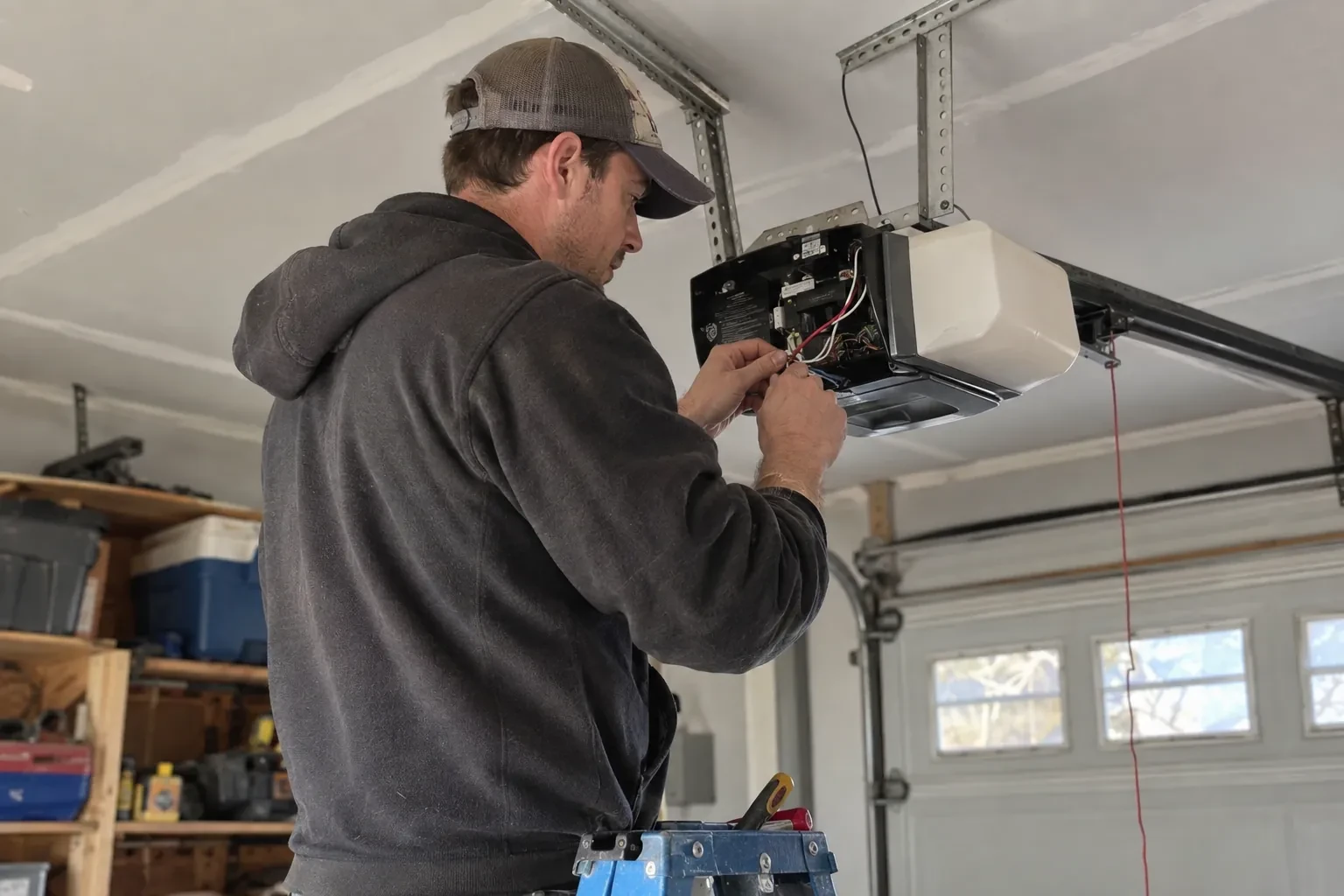
In the van
Calculated torsion springs
High-lift vertical tracks
Centre bearing support
Horizontal track assemblies
Matched lift cables
High-Lift Garage Door Conversion
What affects the quote
Documentation and handover detail
Layout drawings, component records, clearance measurements, control demonstrations and recorded balance or safety tests determine the closeout material included with the project.
Access to the elevated work zone
Ceiling height, fixed storage, vehicle lifts and restricted floor space influence the ladders, lifting equipment, staging and labour needed to reach components safely.
Door and equipment preparation
Removing shelves, ceiling finishes or other items from the planned track and service envelope adds coordination when the bay is not ready for installation.
What to have ready
- Is the ceiling flat, sloped, finished or open to the framing?
- Which spring, drum and opener labels can you photograph safely?
- Are shelving, cabinets or ceiling racks inside the proposed work area?
High-Lift Garage Door Conversion: questions
QuestionsHow is the door tested after conversion?
Testing starts with controlled manual travel. Technicians observe balance at several positions, level movement, roller engagement, cable seating, clearances and transition through the curves. After the mechanical system performs properly, powered cycles verify open and closed limits, operator behaviour, emergency release and applicable protective functions. Fasteners, supports and component records receive a final review before demonstration.
Do the torsion springs change during conversion?
The spring specification is recalculated because track geometry and drum profile change the counterbalance requirement. Door weight, high-lift distance, cable travel, drum dimensions and desired use all inform the selection. Technicians then refine the installed setup through controlled manual-balance checks. Carrying over an old spring solely because it looks serviceable would leave out essential design information.
What information helps assess feasibility from photos?
Useful photos show the full inside opening, both track sides, the wall above the header, the complete ceiling run, spring and shaft area, opener, beams, lights and other obstructions. Include a wider image showing the planned vehicle lift or equipment zone. Measurements remain necessary, but clear images help identify questions and prepare an efficient site assessment.
Related services
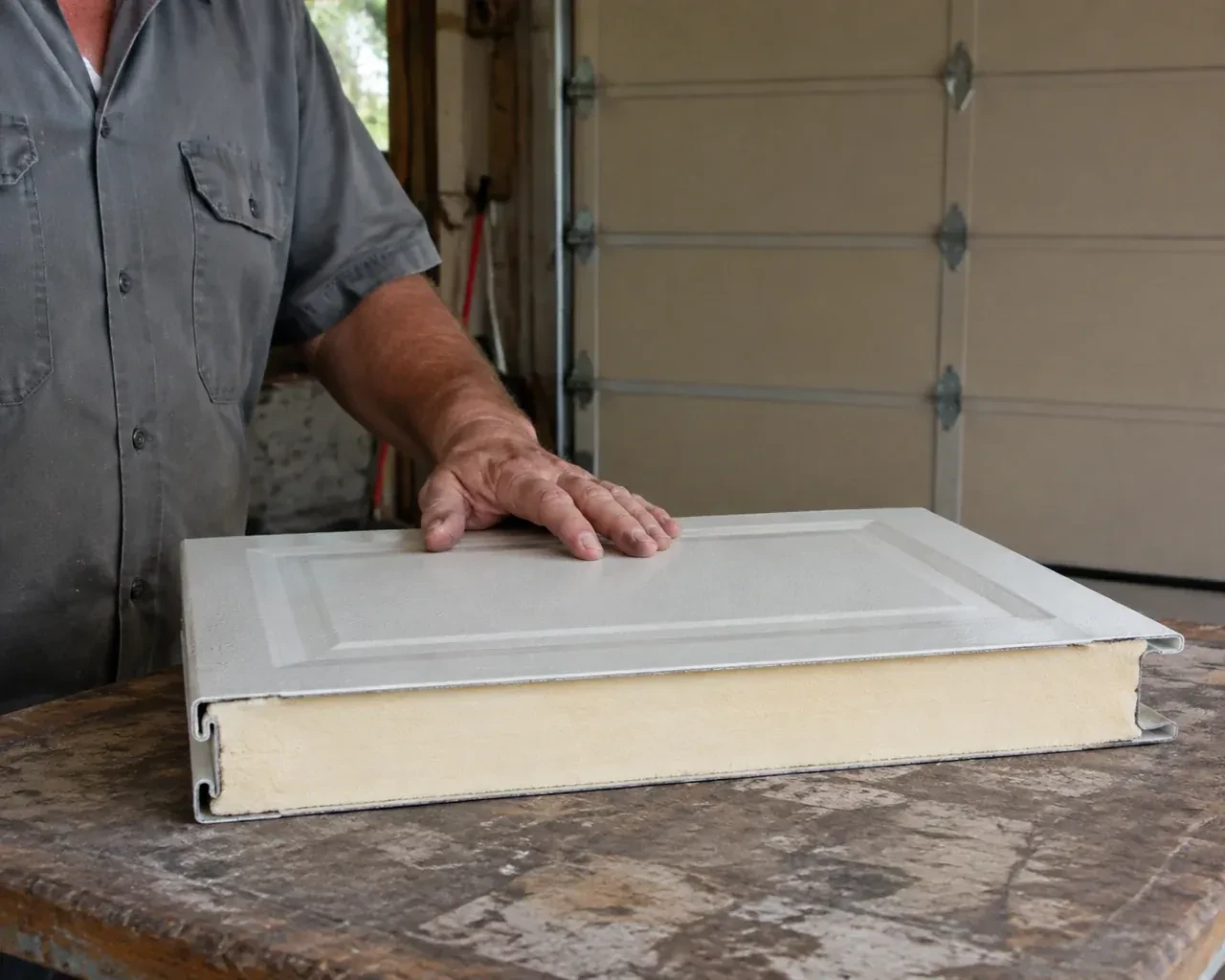
- Insulated Steel Garage Door InstallationYour garage is becoming a workshop, but the thin single-skin door rattles, sweats and lets outdoor temperatures shape the whole room.
- Wind-Rated Garage Door ReplacementA recent wind event left one section slightly creased, a strut twisted, and several track fasteners loose.
- Carriage-House Garage Door InstallationThe existing door has reached the point where panels, rollers and finish all look tired.